Up next

Sunday Smiles – HotAir
Spoiler Alert: This list contains spoilers for multiple shows.A television show’s success is often defined by the way it ends. It’s a daunting task that every series, provided it has the privilege to conclude on its own terms without the threat of cancellation, must eventually face. Some shows have mastered the art of the finale. There’s Breaking Bad, which broke viewers’ hearts with the tragic downfall of Heisenberg. Meanwhile, The Sopranos jolted audiences with an unbelievable and somewhat blasphemous ending.
Sometimes, even the most revered television franchises have a hard time wrapping up their last moments. Game of Thrones is one such case, delivering a finale that became the stuff of controversy within its loyal fanbase. In the past decade, several TV series have done their jobs to bring their shows to a full circle — some better than others. From the tale of a family dynasty going up in flames to getting over past grievances, here are the greatest TV endings of the last 10 years, ranked.
5
‘Chernobyl’ (2019)

On 26 April 1986, the world experienced one of the deadliest nuclear explosions — which is neatly and tightly chronicled in HBO’s Chernobyl. Chronicling the incidents before, during, and after the disaster, it’s difficult to grasp that a catastrophe of this scale is the result of a man’s ignorance towards safety warnings from operators. While that looks to be the case in Episode 1, Chernobyl eventually reveals the true problem has long been covered up by the government. Soviet officials were aware that the RBMK reactor had design flaws, but did not communicate them to the plant management. The AZ-5 emergency shutdown button, which should have saved the day, only made the situation worse — and it’s all because the government refused to come clean about their defects to protect the country’s reputation.
This government intervention is the crucial basis for Chernobyl‘s finale. Soviet scientist and central protagonist Valery Legasov (Jared Harris) is finally called up to court to testify against the Chernobyl plant officials, explaining that this is the fault of an operator error. That is the truth the government wants him to tell. Legasov, fully aware of the consequences, blindsides the Soviet authorities by telling the truth. Legasov is effectively stripped of his scientific reputation, but that doesn’t stop him from pushing. In the aftermath of the trial, Legasov records audio tapes so that the world will know of the Soviets’ crimes. While the tapes survived, unfortunately, Legasov did not. The finale is a heavy reminder that there will always be a cost to being honest. However, the truth will set you free.
4
‘The Good Place’ (2016–2020)

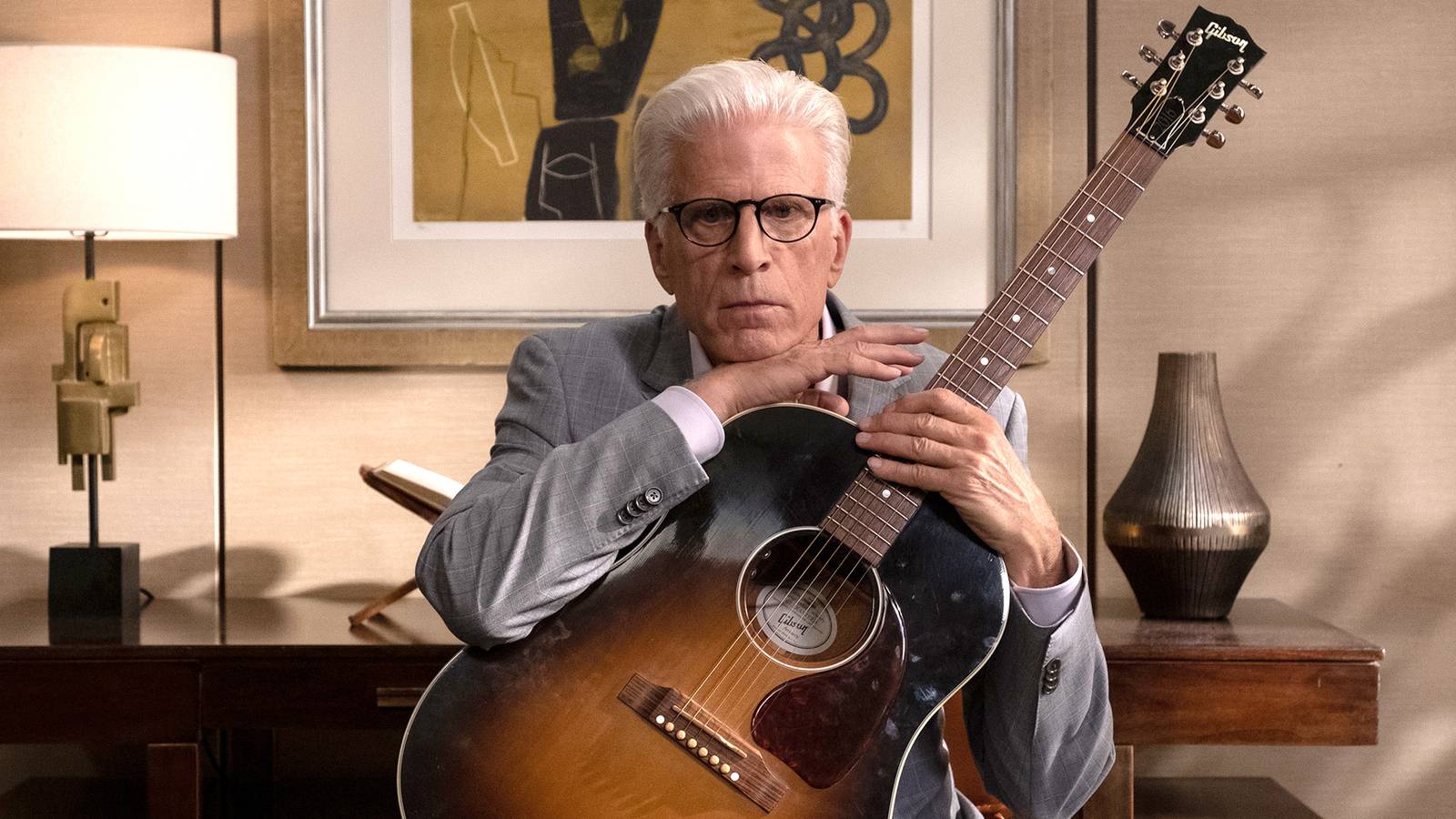
The afterlife gets a makeover in The Good Place. It’s never pleasing to talk about life after death. Thankfully, the show’s beloved Soul Squad is doing everything they can to make passing on a comfortable experience. However, the gang wasn’t always this nice — especially The Good Place‘s leading woman, Eleanor Shellstrop (Kristen Bell). The selfish and dishonest former human is dumbstruck that someone like her could end up in the Good Place (a.k.a. Heaven). And as her instincts prove, she’s right — her being in the Good Place wasn’t a mistake, because the Good Place is actually the Bad Place (a.k.a. Hell). Instead of fire and black coals, afterlife architect Michael (Ted Danson) designed the Bad Place as a seemingly innocent neighborhood to conduct a torture experiment that feeds off the squad’s worst anxieties.
Seasons 2 to 4 eventually become this back-and-forth situation between criticizing the afterlife points system and figuring out how to get to the Good Place. When Eleanor realizes just how outdated the points system is, making it virtually impossible to enter the Good Place because of how unassumingly “problematic” modern life can be, it is Eleanor who designs a new neighborhood where the newly dead are given the right resources to turn over a new leaf — essentially a second chance to change in the afterlife. Only then can they enter the Good Place. But that’s not the most exciting part of the finale. With no baggage left, the Soul Squad can enter the Final Door — a passage leading to unknown, eternal bliss. But as much as an eternity of peace sounds delightful, The Good Place has always been about the journey, not the destination. It is the journey of becoming a better person, which the Soul Squad and even Michael undertake. Audiences have no clue what the afterlife has in store for them, but given our limited time on Earth, the best way to make use of it is to do good, no matter how many tries it takes. Because what matters more is intention, not results.
3
‘Mare of Easttown’ (2021)

Mare of Easttown begins with the despondent Mare Sheehan (Kate Winslet) facing criticism for failing to solve a previous missing-person case. When another young girl is reported missing, Mare seizes the opportunity to throw herself even deeper into her work. But for all of her workaholic tendencies, police work is really just an excuse to avoid dealing with her personal struggles. In the aftermath of her son’s death, Mare hasn’t been the same. Although the town sympathizes with her, she remains emotionally closed off. Mare is the kind of person people can tolerate being around, but she’s too consumed by her grief to let anyone in.
Mare of Easttown is very much a slow-burn drama, so it’s unsurprising that some viewers may struggle to warm to Mare at first. Consumed by grief over her son’s death, she throws herself into police work as a way to avoid confronting her own pain. But once she begins approaching her cases with a clearer head, the show delivers a devastating final twist. Mare discovers that the real person responsible for Erin McMenamin’s (Cailee Spaeny) death is Lori Ross’ (Julianne Nicholson) young son, who accidentally shot Erin while trying to protect his family from yet another one of his father’s affairs. Lori, who has stood by Mare throughout the series, blames her for tearing the Ross family apart, even though Mare simply followed the truth. The ending shows that some tragedies just can’t be fixed, as the people left behind learn how to live with the unavoidable.
2
‘Fleabag’ (2016–2019)

A bittersweet love letter to the frazzled English woman trope, Fleabag introduces a young woman with all sorts of dysfunction. Referred to as “Fleabag,” played by Phoebe Waller-Bridge, one of the show’s running gags is that she has a habit of breaking the fourth wall. While others would rather keep their thoughts to themselves, Fleabag shares them with the audience in this imaginary space. Although it’s a kitschy plot schtick, it symbolizes Fleabag’s dissociation that not many of those around her tend to notice, except for Season 2’s Hot Priest (Andrew Scott). With Fleabag dealing with her older sister’s emotional distancing, her father’s upcoming marriage to an annoyingly passive-aggressive future stepmom, and the death of her best friend/business partner, breaking the fourth wall becomes her safe zone.
Breaking the fourth wall becomes an important storytelling device that makes Fleabag’s ending one of the most subtle yet perfect finales on television. In Season 2, Fleabag is forced to confront the consequences of her past mistakes, leading to an emotional revelation about herself. Although Fleabag and the Hot Priest don’t end up together in the finale (“It’ll pass.”), she doesn’t leave feeling defeated. As Fleabag stands up and walks away from the bus stop, the audience — which serves as her fourth wall — follows closely behind her. She pauses for a moment and breaks the fourth wall one last time, but instead of pouring her thoughts, she simply smiles and gestures for us not to follow her. What once served as a coping mechanism to distance herself from her emotions is no longer necessary. She has become someone who can face life directly, even in the midst of grief.
1
‘Succession’ (2018–2023)
The fight for the Waystar Royco throne has finally come to an end in the Succession finale. Over four seasons, the Roy siblings have fought nail and tooth to claim the company they believe is theirs. But business aside, Succession is a heartbreaking story of a dynasty family who’ve been raised and taught that validation can only be earned, even if it’s from your own father. It sounds like a heinous parenting method, but when that father is the brutally sadistic CEO Logan Roy (Brian Cox), it all makes sense. Apart from the Roy children, Tom Wambsgans (Matthew Macfadyen), the husband to the youngest child Shiv Roy (Sarah Snook), also believes he has what it takes to take over the company. Of course, the Roys laugh it off, until it no longer becomes a joke.
The Succession finale is a huge slap in the face for the Roys. Corporate has never been easy, but anyone would think that inheriting a family dynasty would make success much easier. However, when GoJo CEO Lukas Matsson (Alexander Skarsgård) decides who will partner with him after the merger with Waystar, he’d rather have someone who will comply with his vision than a troublesome Roy who is bound to challenge his authority. His decision leads to the show’s biggest plot twist: Tom becomes CEO of Waystar Royco. The outsider who was constantly mocked for kissing up to Logan in order to earn a place within the family’s inner circle prevails and gets what he wants — even if it comes at the cost of his dignity. The Roys’ downfall is that they refuse to swallow their pride, and in doing so, they lose the company altogether. It’s an ironic twist of fate, which culminates in the show’s final scene: former golden boy Kendall (Jeremy Strong) sitting by the Hudson River, staring into oblivion as an empty, hollow man.

Succession
- Release Date
-
2018 – 2023
- Network
-
HBO Max