
The trilogy is the purest and most perfect iteration of the cinematic franchise because it offers a definitive beginning, middle, and end. While this might seem like a simple way of describing story formatting, it’s something that has become far too rare due to Hollywood’s obsession with franchises. It is rare that film series that have a satisfying ending are allowed to conclude on their own terms without being forced into obsolescence by critical or financial burdens. The first three Indiana Jones films, for example, might have been considered to be an all-time great trilogy, on the level of Star Wars or The Lord of the Rings, had there not been two lesser sequels that followed them. A similar complaint could be lodged against the Bourne and Pirates of the Caribbean franchises, which screwed up their perfect track records with unnecessary sequels that didn’t even reunite the entire original casts.
Perfect film trilogies have become even rarer because of how hard it is to nail every single installment. Sam Raimi’s first two Spider-Man films are among the best comic book adaptations of all-time, but Spider-Man 3 was a colossal disappointment that ended the trilogy on a sour note. Similarly, Star Wars: The Force Awakens and Star Wars: The Last Jedi were terrific legacy sequels that had their reputations tarnished by Star Wars: The Rise of Skywalker, a horrific miscalculation that ended the entire “Skywalker saga” on a frustrating conclusion. While the following might not be the most famous film trilogies, as they will never attain the popularity of Back to the Future or Evil Dead, they deserve to be recognized as masterpieces.
6
The Apu Trilogy (1955-1959)

Pather Panchali is the first installment in a trilogy of films by the great Indian filmmaker Satyajit Ray, whose means of creating social realism were ahead of their time. Pather Panchali is already one of the greatest coming-of-age films ever made, and Ray was bold to ever think about continuing the story in a way that would betray the innocence of the first installment. However, the sequels Aparajito and The World of Apu are both arthouse masterpieces in their own right; together, they follow the story of the protagonist Apu through childhood, adolescence, and maturity.
The “Apu Trilogy” is an example of how a franchise can continue by following the natural progression of growing up, which is similar to what Richard Linklater would do with the Before trilogy four decades later. Given that Apu grows up to become an artist by the end of the final installment in the series, the “Apu trilogy” itself can be seen as Ray’s purest expression of his love of storytelling.
5
The Bill & Ted Trilogy (1989-2020)

Bill & Ted’s Excellent Adventure is more than just a fun ‘80s comedy, as it’s a film with a tremendous amount of clever historical allusions, endearing philosophy, and incredible chemistry between Keanu Reeves and Alex Winter. It’s rare that comedy sequels are even “good,” as many of them end up being flat-out disasters like Caddyshack II or The Hangover: Part II. However, Bill & Ted’s Bogus Journey refused to play by the rules because it developed a wild storyline involving Bill and Ted being trapped in Hell and forced to battle evil robot clones; no one would have expected that a sequel to Bill & Ted’s Excellent Adventure would end up having an extended homage to the Ingmar Bergman masterpiece The Seventh Seal.
There were rumors about a potential third installment in the franchise for decades, and it was eventually the popularity of Reeves’ role in the John Wick franchise that finally pushed the trilogy-capper out of development hell. Bill & Ted Face The Music wasn’t only a clever recognition of growing older and having to adapt to modern times, but a terrific showcase for Bill and Teds’ offsprings, played memorably by Samara Weaving and Jack Traven in their breakout roles.
4
The Steven Soderbergh Ocean’s Trilogy (2001-2007)

There weren’t exactly high expectations for the remake of Ocean’s Eleven, as the original film starring Frank Sinatra, Dean Martin, and the other members of the “Rat Pack” was a forgettable, overlong heist comedy that couldn’t coast purely on their charisma. The remake of Ocean’s Eleven is exactly the type of reboot that Hollywood should make more of, because it took a flawed original with a good idea, and made it far more accomplished and entertaining. Steven Soderbergh understands how to work with movie stars better than nearly any other living director, and he was able to make a thrilling caper that also allowed the audience to “hang out” with an impeccable group of A-listers.
Ocean’s Eleven is one of the most rewatchable films of the 21st century, and it is a credit to Soderbergh that he did not feel the need to do the same exact thing with the sequels. Ocean’s Twelve is a clever satire of Hollywood excess and star personas, and Ocean’s Thirteen is a total blast that made the brilliant choice of bringing back the original film’s villain, Terry Benedict (Andy Garcia), as an ally to the original crew. Although the spinoff Ocean’s Eight attempted to tie in to the original chronology, it didn’t quite capture the same magic that Soderbergh had so perfectly bottled up.
3
The Vengeance Trilogy (2002-2009)

Oldboy is one of the most influential and groundbreaking contemporary crime thrillers, but it was actually the second installment in a spiritual trilogy of films from director Park Chan-wook. 2002’s Sympathy For Mr. Vengeance was a loaded revenge drama that featured some of the most disturbing imagery ever seen in South Korean cinema, but it also included loaded commentary about classism that is just as relevant today. 2009’s Lady Vengeance, which was made after Park experimented with the psychological drama I’m A Cyborg, But That’s OK, might actually be the best of the three films because of how thoroughly it deconstructs the justice system.
Park is an unapologetic filmmaker who swings for the fences with potentially divisive material, but there is an undercurrent of black comedy within all of his work that makes it even more entertaining. Even if these three films don’t literally take place in the same universe, they are thematically linked in a way that makes viewing them all absolutely essential.
2
The Unbreakable Trilogy (2000-2019)

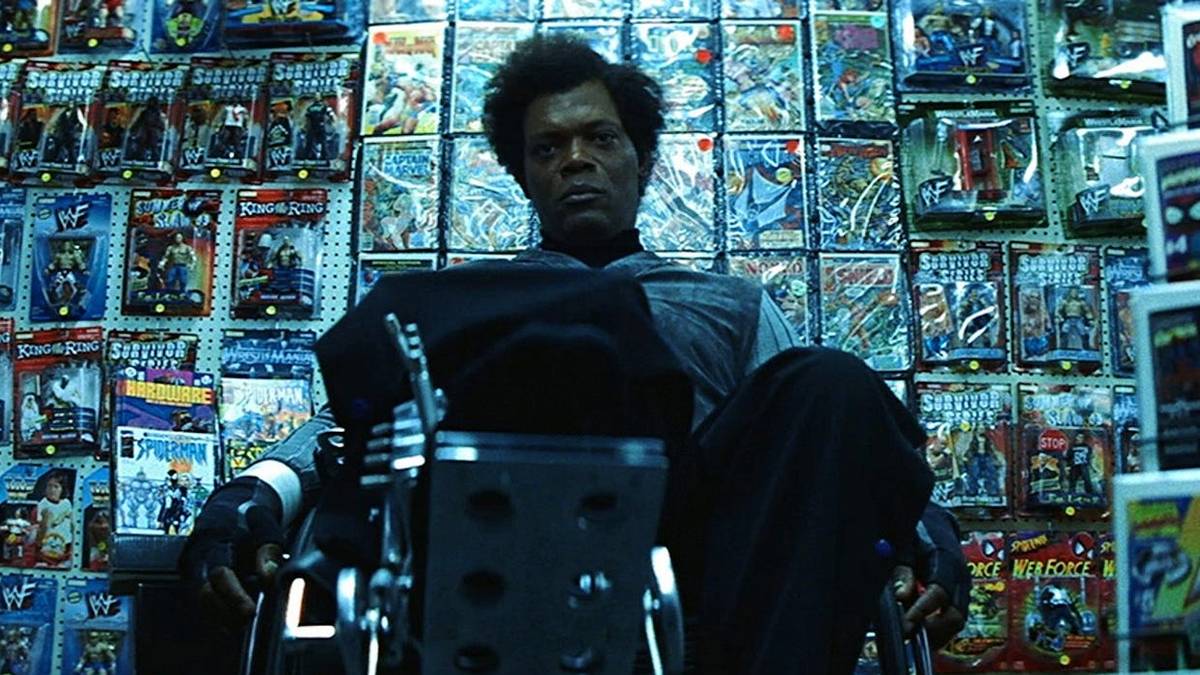
Unbreakable is one of the best examples of a film that was ahead of its time, as M. Night Shyamalan was able to explore the obsession with superheroes the same year that the first X-Men kicked off a craze of comic book adaptations; it’s a deep film with one of Shyamalan’s best twists, and it likely would have been a massive success had it been released a few years into the superhero era, after Spider-Man and X2 signified the genre’s longevity. Although rumors about a sequel began to dissipate after Shyamalan’s career declined, he shocked everyone by revealing that Split, a new psychological thriller starring James McAvoy, was actually in the same universe.
Split worked as a follow-up because it didn’t rely on nostalgia in the slightest, as audiences were already sold on the story of “The Hoard” before learning that it also involved the superpowered everyman David Dunn (Bruce Willis) and his archenemesis Elijah Price (Samuel L. Jackson). Glass, the third installment in the series, remains Shyamalan’s most underrated film. It was a film that proved to be divisive because superhero fanboys had expected a more action-packed showdown, but what Shyamalan provided was a thoughtful consideration of why society represses extraordinary people out of fear of individuals reaching self-actualization. Shyamalan has had what is by no means a perfect track record, but Glass is a film that deserves to be “reclaimed” now that the dust has settled and people can think about it more objectively.
1
The Librarian Trilogy (2004-2008)

The Librarian is a popular television series that actually began as a series of television films starring Noah Wyle as Flynn Carsen, a geeky university student who is recruited by a mysterious order to become a guardian for a treasure trove of mythological artifacts. While it may have at first looked like a cheap Indiana Jones clone, The Librarian: Quest for the Spear was a smart, funny television film that became popular enough to inspire two sequels. The Librarian: Return to King Solomon’s Mines took Flynn on an Egyptian adventure reminiscent of The Mummy franchise, and The Librarian: Curse of the Judas Chalice was an appropriately spooky gothic thriller that addressed the vampiric history of New Orleans.
The Librarian films are frankly far more entertaining than they had any right to be, and filled a void in adventure cinema that Hollywood had mostly abandoned. That they exist on a television budget with some restrictions is part of the charm, especially since there is such an excellent supporting cast that includes Bob Newhart, Jane Curtin, and Kyle MacLachlan. Now that Wyle has become more popular than ever thanks to the success of The Pitt, fans of his work should check out what is easily the most underrated role of his entire career.