
Ever since the dawn of television entertainment, crime drama has been a defining genre of the form. However, it looks very different in today’s world than it did many decades ago, when it exuded a warm and comforting simplicity, a sense of innocent heroism and morality that reassured people that the police would catch the bad guys and the world would be okay. Crime shows today tend to focus on more piercing and profound thematic ideas, but the genre didn’t switch to more confronting overnight, but through a litany of series that dared to push boundaries.
Covering everything from pioneering cop shows in the ’80s and ’90s to defining highlights of television’s golden era in the 2000s, and even to more modern masterpieces that have continued to evolve the genre in fascinating ways, these series have each rewritten the rules of crime television. Be they rich immersions into the nature of organized crime or gritty illustrations of the nuances of police work, they have all evolved the genre exponentially with their boldness and brilliance.
8
‘Hill Street Blues’ (1981–1987)

Airing in an era where television crime drama was defined by campy allure, catchy theme tunes, and eccentric flourishes of action carnage, Hill Street Blues opted to go against the grain, focusing on character drama as it delivers a realistic look at police work that is rarely clear-cut or rewarding. Rather than tackling different cases, the series simply follows the lives of the officers and staff workers of Hill Street Station.
Its desire to extract drama and tension from authenticity would prove to be pioneering, especially as Hill Street Blues developed a penchant for criticizing the inefficiency of institutional bureaucracy in the police force and combining its character-centric storylines with pressing themes of police corruption, racial tension, and the emotionally taxing nature of the job. This endeavor to examine its police officers as flawed human beings rather than mythic heroes was a monumental pivot for the genre, one that has seen Hill Street Blues age far more gracefully than many of its contemporaries, and one that has inspired countless cop shows over the ensuing decades.
7
‘Homicide: Life on the Street’ (1993–1999)

A clear expansion on the ideas presented in Hill Street Blues that still manages to be its own thing entirely, Homicide: Life on the Street marked another descent down the road of gripping realism in police procedural television, though it achieved this feat with a more vicious rawness and a less complimentary vision of the law enforcement system. Based on Baltimore crime reporter David Simon’s nonfiction book, it immerses viewers in the homicide unit of a police precinct in West Baltimore, covering the many societal and institutional obstacles that they face as they try to bring justice to the city’s streets.
Not only did the series break new ground with its attention to detail and its piercing realism, but it also innovated the filmmaking style of crime television with its handheld camerawork and on-location shooting in Baltimore, conjuring a sense of gritty authenticity that the more polished police shows that predated it simply couldn’t rival. Further challenging the norm with its story structure, pressing moral ambiguity, and its deviation from procedural formula, Homicide: Life on the Street laid the groundwork for the serialized and confronting crime television of the modern day.
6
‘The Shield’ (2002–2008)

Some of the most noteworthy cop shows of the 80s and 90s found a dramatic weight in humanizing their central characters. The Shield represented the next step in the cycle. Set in a district of L.A. plagued by gang violence and drug crime, the FX series follows Vic Mackey (Michael Chiklis) as he leads a police squad known as the Strike Team tasked with upholding law and order. The team uses illegal and unethical methods to accomplish their goals while opportunistically profiteering from the crime they fight and showing no limit to the lengths they’ll go to in order to avoid facing the consequences for their actions.
It effectively took law enforcement from being regarded as titanic, impenetrable heroes and beacons of morality to depicting police as corrupt and amoral thugs who abuse their authority for self-gain. Such an unflattering approach to police drama was unprecedented at the time The Shield started, even though other morally complex crime stories had begun to grace the screen. Its impactful use of gritty and realistic camerawork and its emphasis on Mackey’s anti-hero qualities were also instrumental in paving a new dawn of dramatic depth for crime television in the 21st century.
5
‘True Detective’ (Season 1) (2014)

There has perhaps never been a better single season of television than what True Detective produced with its debut. With its rich cinematic visuals, methodical slow-burn pacing, and breathtaking lead performances from Matthew McConaughey and Woody Harrelson, the absorbing crime series redefined what murder mystery drama could be on the small-screen. Laced with a sense of narrative ambition, the non-linear story transpires over three distinct timelines, covering two Louisiana detectives’ investigation of an occult serial killer that has ties to some of the region’s most powerful figures.
With the entire season being written by Nic Pizzolatto and directed by Cary Joji Fukunaga, it exudes a captivating, cohesive vision of a single auteur rather than an idea being crafted by committee, by writing groups, and multiple directors. This step alone was groundbreaking for television, but given True Detective’s first season also made an immediate impact with the complexity of its central case and characters, moody Southern Gothic atmosphere, rich philosophical dialogue, and restrained tempo, it can only be considered an eight-episode run of excellent crime drama that re-shaped how the genre’s stories are told on television, especially in short-formats like miniseries.
4
‘The Wire’ (2002–2008)
.jpg?q=49&fit=crop&w=500&dpr=2)
It will come as no surprise to anyone that many of the best and most groundbreaking crime series are products of HBO. While it was released just after the cable network’s spree of series in the late 90s, The Wire is still every bit as influential and important as its contemporaries, especially considering its impact spanned far wider than just crime television. An all-encompassing deep-dive into the drug hierarchy of Baltimore that also analyses the systemic issues in the city’s societal institutions, The Wire is a pioneering example of a visual novel approach to television.
In many respects, the series didn’t just showcase the possibilities of realistic and sprawling television drama, but it informed audiences of just how vast, intricate, and complex an epic they could digest and enjoy as well. Also premiering in the same year as the aforementioned The Shield, its highlighting of police corruption and institutional failures, as well as the coarse nature of the drug trade, came at a time when audiences were ready for more piercing and dramatic stories, and a time when television was ready to evolve into a prestige form of entertainment.
3
‘Twin Peaks’ (1990–1991)

Throughout his career, David Lynch cultivated a reputation as being one of the most hypnotically enigmatic and tonally daring directors cinema has ever seen. As such, it should come as no surprise that his foray into television still stands as a masterpiece of unnerving, genre-blending glory. Following FBI agent Dale Cooper (Kyle MacLachlan) as he investigates the killing of a teenage girl in a small Californian town, Twin Peaks excels with its ability to take a typical murder mystery formula and enrich it with flourishes of cerebral horror, absurdist comedy, and even soap opera melodrama.
Even after 35 years, Twin Peaks remains one of the most unique and entrancing crime series in television history, a fact that is as much a testament to its surreal, dream-like atmosphere as it is to its winding mystery. Perhaps even more important than its quality is its impact on the medium, with Lynch’s unflinching dedication to his own vision instigating an air of change regarding television drama. The series’ success proved that unconventional and audacious ideas could thrive on the small screen, a triumph that would be instrumental towards the end of the 90s when some of the medium’s most defining and innovative series began.
2
‘Oz’ (1997–2003)

As HBO’s first-ever one-hour-long scripted drama series, Oz occupies a very special place in the annals of television history, even if its legacy has been somewhat overshadowed by other titles from its era. Furthermore, the series stands as one of the most groundbreaking and essential releases in the context of the sort of content that can be put on television today, with its depiction of ultra-violence, graphic nudity, explicit sexuality, and ferociously nihilistic storytelling all being unprecedented on the platform when it began airing in 1997.
While HBO’s ability to bypass censorship regulations helped it achieve this, audiences quickly came to embrace Oz because of how its viscerally shocking subject matter elevated its bleak and brutal story of life in a maximum-security prison. It was sheer gratuity, but an essential element of the story that illustrated the horror of a prison sentence. While the approach of narrative realism had been done before in television, no series had committed to the grim authenticity of real-world crime to such an extent as Oz did. Its unflinching and raw realism combines with flourishes of experimental storytelling to make for one of the most defining and important television series of the 1990s and early 2000s, and an instrumental success in the context of HBO spearheading television’s rise towards prestige drama.
1
‘The Sopranos’ (1999–2007)

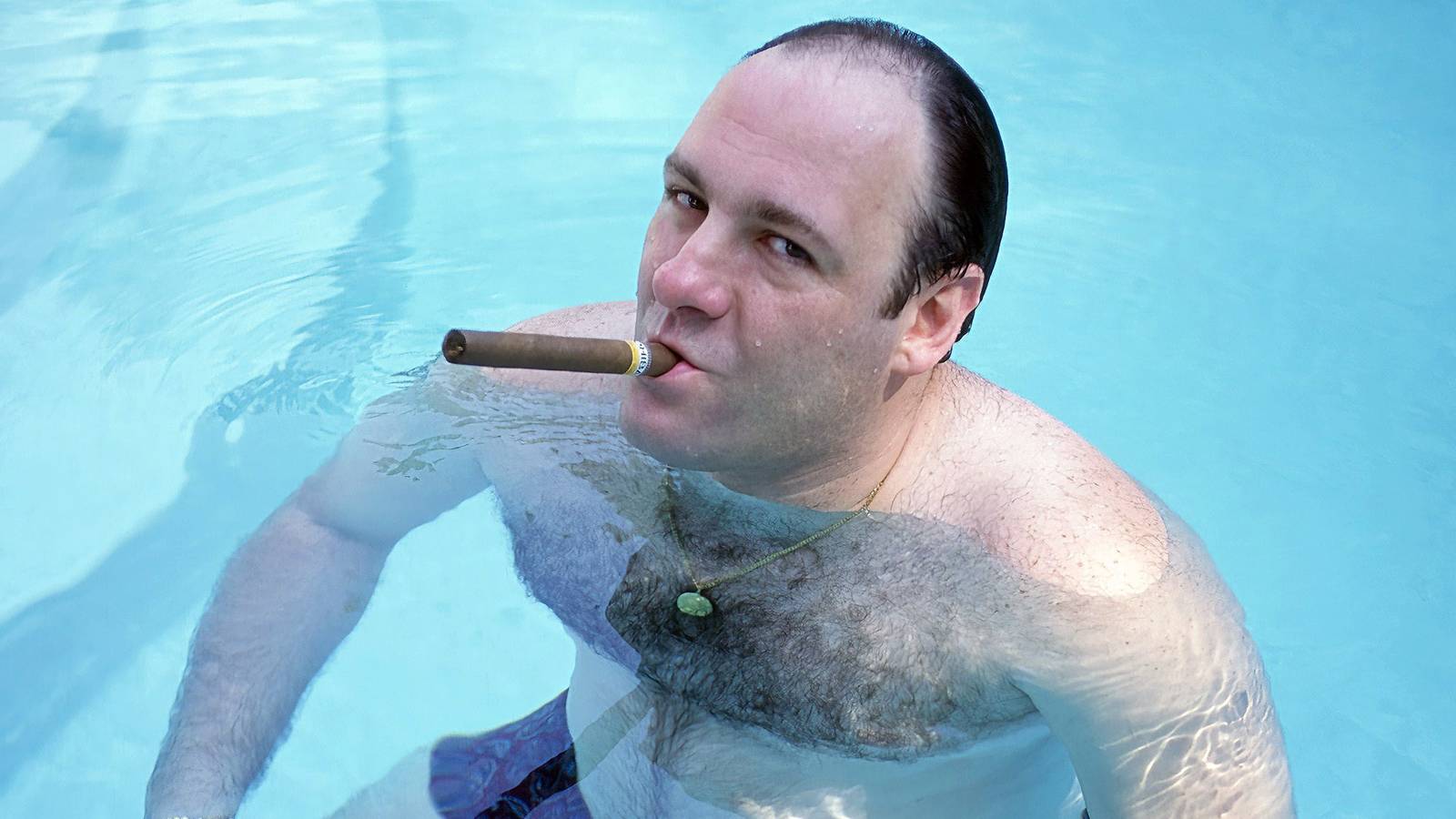
No series in any genre of television has been as important in defining the nature of the medium in the 21st century as The Sopranos. The HBO crime classic follows New Jersey mobster Tony Soprano (James Gandolfini), a rising figure in the mafia who begins seeing a therapist in secret when his difficulty balancing his violent, high-intensity profession with his suburban family life leads to him suffering a series of panic attacks.
Most obviously, The Sopranos elevated the quality of dramatic storytelling on TV with its incredible script and performances while also doing its part to push against the boundaries of what was deemed appropriate for the medium with its high-impact violence, prolific coarse language, and nudity and sex scenes. However, it also broke new ground with regard to storytelling style and thematic depth, with Tony Soprano effectively standing as television’s first-ever true anti-hero, and the series investing heavily in his complex psychology and moral code. Popularizing serialized storytelling in the format as well, The Sopranos is the most influential series in television history in terms of how shows are made today.