
There are plenty of underrated movie trilogies out there, but only a select few feature three perfect masterpieces. Though movie franchises often stretch on for much longer, the trilogy is the ideal way to tell a long-form story in cinema. Mirroring the three-act structure of most stories, trilogies offer narrative symmetry.
Popular franchises like The Godfather and Back to the Future are some of the most famous trilogies in history, but many others have flown under the radar. This could be chalked up to the obscurity of the films themselves, or could be because the trilogy is somewhat informal. Some trilogies are loosely connected by ideas instead of an ongoing storyline.
Getting it right three times in a row is a near-impossibility in filmmaking, so only a few trilogies are perfect from start to finish. Whether they’re classic works of foreign cinema, or modern art-house gems, underrated trilogies open a world of movies that exist beyond the mainstream. Despite their obscure status, they are often must-sees for any true film fan.
The Whit Stillman Trilogy

Known for his witty comedies of manners, Whit Stillman delivered his “trilogy” of films throughout the 1990s. Comprised of Metropolitan, Barcelona, and The Last Days of Disco, Stillman’s ’90s trilogy is linked by its themes and by the personalities of its characters. Always young, upwardly mobile, and heartbroken, Stillman’s characters are witty and erudite.
Punctuated by long dialogue scenes, Stillman’s trio of classics often have the aspect of theater plays. Nevertheless, they are never dull, and are anchored by strong performances by memorable ensemble casts. Each film is very similar to the next, thus linking them, but the variations on a theme don’t grow stale. Instead, it grows deeper across all three.
The Samurai Trilogy

Released between 1955 and 1957, Hiroshi Inagaki’s Samurai Trilogy is one of the greatest achievements in samurai cinema. It chronicles the trials and tribulations of Musashi Miyamoto as he learns to become a master swordsman and eventually must fight to protect his newfound freedom. With its beautiful color photography and excellent choreography, the trilogy is a feast for the eyes.
The Samurai Trilogy consists of Samurai I: Musashi Miyamoto, Samurai II: Duel at Ichijoji Temple, and Samurai III: Duel at Ganryu Island.
In terms of structure, the Samurai Trilogy is an excellent reflection of a hero’s journey. Musashi’s adventures are linked directly, and each piece is important to the next. Because the samurai genre is filled with so many classics, the Samurai Trilogy is often overlooked. However, it’s not only a perfect trilogy but a perfect representation of samurai storytelling.
Infernal Affairs

Though Infernal Affairs was famously remade in the U.S. as The Departed, the Hong Kong crime thriller and its sequels remain all-time underrated classics. The first movie is noted for its jaw-dropping twists and turns, but Infernal Affairs II and III are just as compelling. Jumping between the past and present, the series keeps the viewer on their toes.
Infernal Affairs works well as a standalone film, but the two sequels do something many other films cannot. The semi-prequels expand the story of the first film without feeling arbitrary, and each new wrinkle makes the entire narrative feel bigger. Infernal Affairs has been somewhat isolated from its trilogy status, but it deserves praise as a perfect threesome.
The Before Trilogy

Director Richard Linklater likes to experiment with characters in longform, and the Before Trilogy is perhaps his best character-driven work to date. As told in Before Sunrise, Before Sunset, and Before Midnight, two lovers meet and eventually reunite for brief trysts over several decades. Minimalism at its finest, the Before Trilogy is almost entirely composed of dialogue scenes.
Though this can be somewhat daunting to casual moviegoers, the trilogy has all the trappings of a sweeping romance, but on a small scale. Julie Delpy and Ethan Hawke give a trio of stellar performances, and the time allows them to mature along with their characters. Each piece is a masterpiece, but the whole picture is even better.
The Lisbeth Salander Trilogy

David Fincher’s adaptation of The Girl with the Dragon Tattoo was not the first stab at Stieg Larsson’s book; in fact, a whole trilogy had already been produced in Sweden. It concerns journalist Mikael Blomkvist and the rebellious hacker Lisbeth Salander as they investigate crimes while dodging the law themselves. Amazingly, all three films were released in 2009.
The trilogy includes The Girl with the Dragon Tattoo, The Girl Who Played with Fire, and The Girl Who Kicked the Hornet’s Nest.
Perhaps the most noteworthy example of Nordic noir, The Girl with the Dragon Tattoo and its sequels are gritty and earnest, hearkening back to the golden era of the gumshoes and cynical mysteries. Each movie has its own strengths, but they really shine when the trilogy is examined together. They remain three of the most underrated movies of the 2000s.
The Vengeance Trilogy

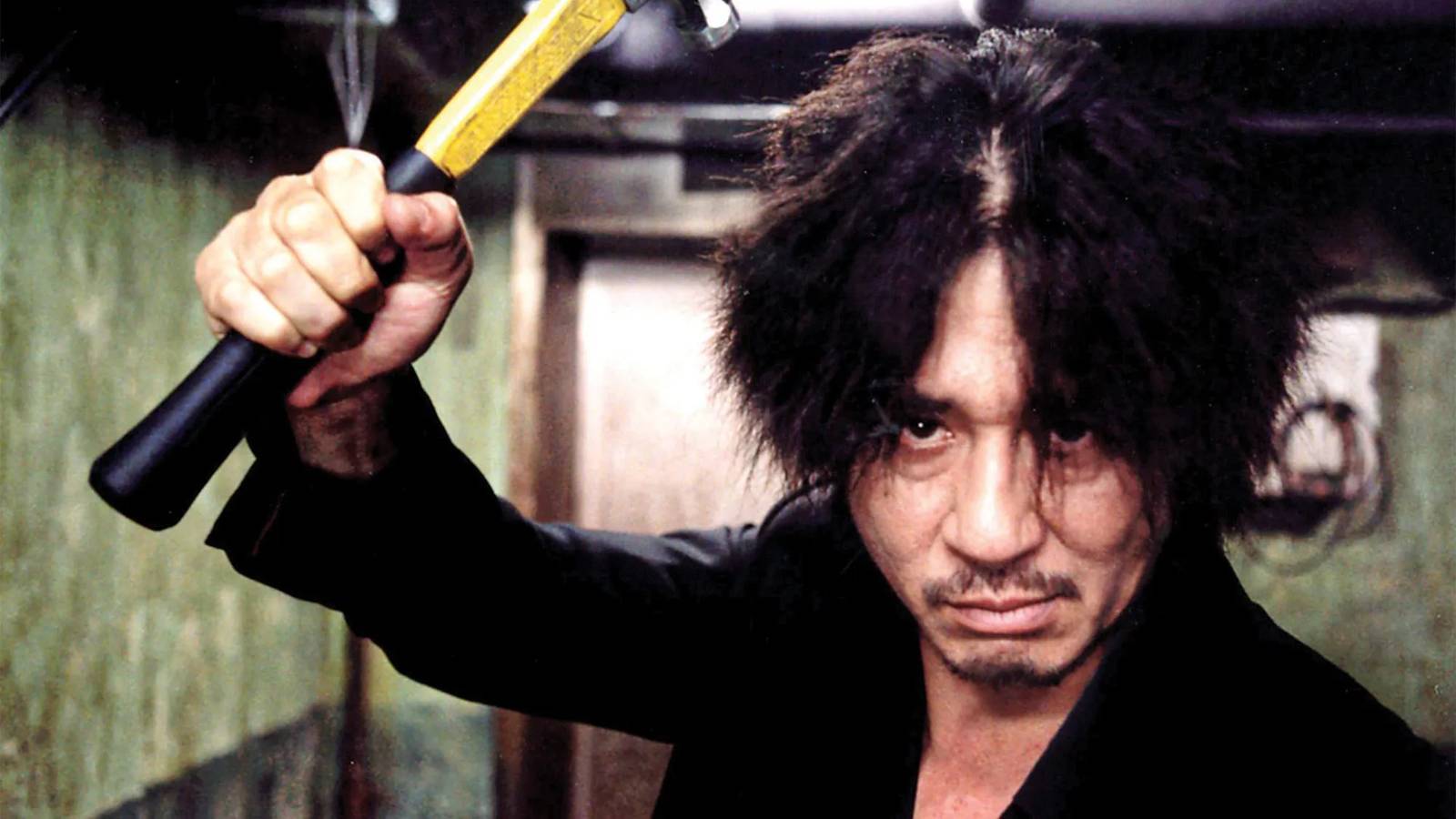
As the name suggests, Park Chan Wook’s Vengeance Trilogy is all about one thing. In three wildly different tales of violence, the trilogy examines the pursuit of retribution and what it does to the person getting revenge. Oldboy is perhaps the most well-known, but it’s sandwiched between Sympathy For Mr. Vengeance and Lady Vengeance.
Though they appear to be celebrations of violence on the surface, they are also subtle condemnations of the same. Each movie is so disparate from the next that each has its own strengths. Nevertheless, the Vengeance trilogy is still a coherent series because its themes are so overt that they are inextricably linked.
Three Colors Trilogy

The ambitious Three Colors Trilogy by Krzysztof Kieślowski is perhaps the most intricately themed trilogy in cinema. Each piece represents a color on the French flag (Blue, White, and Red), as well as a theme from the French motto (liberty, equality, fraternity). The movies share characters occasionally, but each installment is distinct from the others.
The brilliance of the trilogy is its layers, and the three films are not only examinations of their themes, but the underlying ideas of their genres too. Taking a decidedly psychological approach, Red, White, and Blue each deconstruct drama, comedy, and other traditional narrative structures in a way that few films have.
While the final movie, Red, was nominated for three Academy Awards, the Three Colors Trilogy isn’t something designed for mainstream audiences. Nevertheless, the trio of perfect movies is worth seeking out for those looking for something deeper and more refined.
Once Upon A Time Trilogy

Forever overshadowed by his Dollars Trilogy, Sergio Leone’s Once Upon a Time Trilogy deserves just as much praise. Unlike the aforementioned Clint Eastwood series, Leone’s other trilogy starts with a pair of westerns but eventually branches out into the gangster genre. Once Upon a Time in the West is a classic, but its successors are amazing too.
The most overlooked part of the trilogy is 1971’s Duck, You Sucker! a rousing adventure set during the Mexican Revolution. It’s unique from Once Upon a Time in the West, and its successor, Once Upon a Time in America. The trilogy-capper is one of the greatest gangster films ever made, illustrating Leone’s sweeping mastery of cinema as entertainment.
Despite the looseness of its connection, the Once Upon a Time Trilogy is still a perfect grouping. They are all strong films alone, and don’t necessarily need the others to be a complete experience. However, like most perfect film trilogies, they can be watched as a unit, and they reveal a bit more about themselves in the process.