
In 2016, The Revenant finally brought Leonardo DiCaprio his long-delayed Oscar. In Alejandro González Iñárritu’s film, DiCaprio commits fully, pushing himself through a physically punishing role that practically dares the Academy to look away. It’s a grueling performance, both physically and emotionally, and few would argue that he didn’t earn the trophy.
The problem is that it should have been at least his second win. By the time DiCaprio won for The Revenant in 2016, the narrative had already hardened in that the honor was a career award masquerading as recognition for a single performance, meant to settle years of perceived snubs. DiCaprio’s most complete and challenging work had actually come more than a decade earlier, in a film that demanded far more than survival. His first Oscar should have been for Martin Scorsese’s The Aviator.
‘The Aviator’ Uses the Whole DiCaprio

Released in 2004, The Aviator marked the second film in what would become one of modern cinema’s defining actor-director partnerships: Leonardo DiCaprio and Martin Scorsese, following Gangs of New York. It’s also the performance that most fully harnesses everything DiCaprio brings to the screen. As Howard Hughes, he operates at full scale, initially portraying him as a man fueled by momentum, charm, and unshakable confidence. He moves through Hollywood and high society like a force of will, brilliant and fast-talking, convinced the world will bend to his imagination.
This is DiCaprio leaning into his movie-star power rather than hiding it. He’s funny, sexy, and commanding, weaponizing the charisma that defined his early stardom and turning it into a character. Scorsese understands exactly how potent that presence can be and builds the film around it. The confidence never feels hollow; it feels earned, a natural extension of Hughes’ intellect and ambition. It’s easy to see why Katharine Hepburn – played by Cate Blanchett, who did win an Oscar for her work – would fall for him and why the public devoured every tabloid report of Hughes’ exploits.
What’s most impressive is how effortless the performance initially appears. DiCaprio makes Hughes’ genius look casual, almost breezy. He speaks quickly, moves decisively, and controls every room he enters. That sense of ease establishes a baseline of control that allows the film and the performance to gradually unravel without losing credibility; just as DiCaprio understands how to express charm and intelligence, he’ll perfectly craft the more troubling side of Hughes’ persona as well.
DiCaprio Doesn’t Shy Away From Hughes’ Dark Side
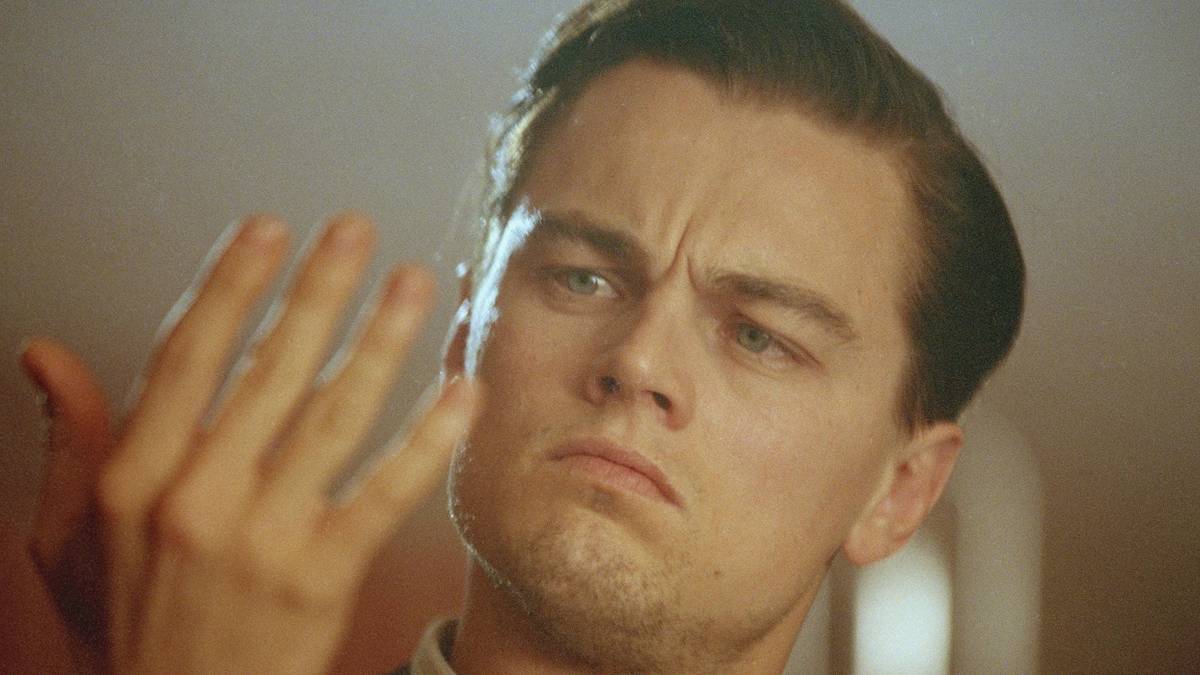
As The Aviator progresses, DiCaprio begins dismantling that control piece by piece. Hughes’ real-life paranoia and obsessive-compulsive disorder don’t arrive as sudden plot devices; the collaboration between DiCaprio, Scorsese, and screenwriter John Logan ensures they creep in, tightening their grip until they overwhelm him. DiCaprio’s performance grows increasingly abrasive, leaning into repetition, physical tics, and emotional volatility without sanding down the edges. He’s unafraid to ruffle his movie-star image, and when Hughes isolates himself from the public, DiCaprio is willing to look gaunt, bearded, and unwell. The film refuses to sanitize Hughes’ mental illness, and DiCaprio refuses to soften it.
Many biopic performances telegraph breakdowns in ways designed to cue sympathy or applause, smoothing over the discomfort and framing suffering as noble. DiCaprio does the opposite. Hughes’ deterioration is messy, isolating, and often unpleasant. Scenes linger as he repeats phrases, locks himself away, or spirals into fixations that render him almost unrecognizable from the man introduced earlier in the film. There’s no inspirational framing and no neat arc toward redemption; it’s one of DiCaprio’s best performances.

10 Essential Leonardo DiCaprio Movies, Ranked
“Sell me this pen.”
DiCaprio’s precision keeps the performance from collapsing under its own weight. The chaos is carefully calibrated. Every tic, pause, and shift in energy feels intentional. Rather than performing madness for effect, DiCaprio inhabits it, trusting the material and the audience, to sit with the discomfort. It isn’t showy or redemptive; it feels authentic, which is harder to reward. It was also a risk at a crucial moment in his career. Only seven years removed from Titanic, DiCaprio uses Hughes to shed the boyishness that still clung to performances in films like The Beach, Gangs of New York, and Catch Me if You Can.
Why ‘The Revenant’ Became DiCaprio’s Oscar Film
DiCaprio received an Academy Award nomination for The Aviator, ultimately losing to Jamie Foxx for Ray. He was nominated again — and arguably should have won — for his big, surprisingly funny performance in Scorsese’s The Wolf of Wall Street, losing that year to Matthew McConaughey for Dallas Buyers Club.
It was The Revenant that finally secured DiCaprio his trophy. It’s a strong performance, almost entirely physical and defined by endurance, suffering, and silence. The effort is legible in every frame, which helps explain why it resonated so strongly with awards voters.
But difficulty is not the same as depth. In The Revenant, DiCaprio spends much of the film reacting to the environment. The role strips away language, wit, and the dynamic interplay that has long made him such a compelling screen presence. It’s survival acting rather than transformational acting, a test of stamina rather than range. It’s one of his best performances, but it’s hard not to see it as secondary to his far more complex work with Scorsese.
But it arrived at the perfect moment, offering a performance that could stand in for years of frustration over DiCaprio’s Oscar history. The win honored both the grueling work of that film and the body of work he had already amassed. DiCaprio would return to the Oscars again for Once Upon a Time in Hollywood…, though he lost to Joaquin Phoenix for Joker. He will very likely be nominated again for his work in Paul Thomas Anderson’s One Battle After Another. Still, The Aviator remains the clearest expression of DiCaprio’s abilities, balancing charm and cruelty, control and collapse, and intellect and impulse. His Oscar wasn’t late; it just missed the performance that truly deserved it.
The Aviator is available to stream on Paramount+.