
“Pure cinema” is a curious and tantalizing phrase that was reportedly favored by the Master of Suspense throughout his career. Though the definition of this term has proven to be somewhat malleable over the decades, surely the core of it is about what cinema gives you that every other medium simply cannot. One of the greatest minds in entertainment history, one that can and must be remembered as a genius, Alfred Hitchcock innovated and mastered countless methods of visual storytelling in delivering entertainment that audiences of the time flocked to in droves. He would set the bar for sophistication, and he was a provocateur. The way he had to tiptoe around censors of the time often made him greater and more creative.
This is one of the greatest filmographies in history, if not the greatest, so narrowing down to the five most essential and artistically perfect is something of a Hail Mary. Several of the best movies ever made haven’t made the cut, including Strangers on a Train, Rebecca, The Birds, The 39 Steps, Shadow of a Doubt, and The Lady Vanishes. Obviously, you should watch those, too.
5
‘North by Northwest’ (1959)
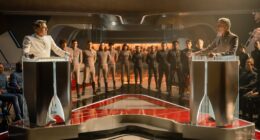
Cary Grant had a long-running working partnership with Hitchcock that yielded four successful films; the most popular and iconic of these is undeniably North by Northwest, a deliriously entertaining comic spy thriller which sees Grant in top form as a wrong man who’s unwittingly involved in a conspiracy that sees U.S. intelligence playing hardball with a powerful career criminal.
There’s a case to be made for North by Northwest being the first modern action film. Its DNA is all over countless media that followed, most obviously in the James Bond franchise and the Mission: Impossible films. Even something like Die Hard can be traced back to this, though. The wrong man narrative was something Hitchcock revisited and honed throughout his career, perfecting it here. It’s also Hitchcock’s funniest film, one of the more consistently laugh-out-loud movies ever made across all genres, in fact. Ernest Lehmann‘s script intertwines jokes that always land with tension that always grips, relentlessly, for 136 minutes. And this is the performance of Grant’s career; it’s as if everything had led to this.
4
‘Rear Window’ (1954)
Six years before Michael Powell’s masterpiece Peeping Tom took this kind of thing too far for audiences of its day, Hitchcock delivered an incisive yet widely beloved and successful thriller about voyeurism and, subtextually, its relationship with movie-going. Jimmy Stewart is in top folksy everyman form as a wheelchair-bound photographer who may have discovered a murder across his courtyard. Rear Window is one of the most rewatchable of all films, and along multiple planes. The most obvious is for its pure entertainment value, but the more you break the picture down, the more you’re astounded by the achievement of Hitchcock and screenwriter John Michael Hayes. Rear Window is packed with metaphor moment-to-moment, It’s disturbing and morbid at times, even by today’s standards and likely enhanced by its taste and restraint. It’s also hilarious throughout. It’s a 72-year-old film that somehow has retained most of its bite.
Hitchcock arguably stages his best romantic arcs and love scenes with even more obsessive precision than scenes of action and violence. The evolution of Lisa Carol Fremont (Grace Kelly) from well-meaning socialite to risk-taking adventuress makes for some of the most heart-tugging material of Hitchcock’s career. 1954 was the greatest year of Kelly’s acting career, and though she won an Oscar for The Country Girl, she gives her best and most historically significant performance here. Much of the credit goes to screenwriter Hayes, for giving the actress an electrically lively role with some basis in her own life. It’s a great progression from a somewhat stiff turn in Hitchcock’s Dial M for Murder earlier that same year.
3
‘Vertigo’ (1958)
A war veteran with a naturally likable demeanor, weighty acting chops and commanding presence, Jimmy Stewart was an audience-favorite leading man for years, even before his collaboration with Hitchcock began in 1948’s Rope. Hitchcock loved casting actors against type, perhaps never more effectively than inserting Stewart into his color-rich, VistaVision loose adaptation of the French psychological thriller D’entre les morts, where the actor played a private eye who becomes disturbingly obsessed with a gorgeous, icy blonde (Kim Novak) he’s assigned to follow.
Vertigo was a critical and commercial disappointment upon its release in 1958, though Hitchcock’s reputation with audiences recovered rapidly with the one-two punch of North by Northwest and Psycho. Over time, the uncomfortable and operatic Vertigo has been reappraised as perhaps Hitchcock’s most artistically accomplished statement, with the 2012 installment of Sight and Sound’s Top 100 critics poll notably citing the picture as the single greatest movie of all time. The picture is a despairing look at cyclical, unhealthy obsession. Modern reassessments have made it clear that in Vertigo, Hitchcock is confessing.
2
‘Psycho’ (1960)
Right after Hitchcock enjoyed considerable critical and commercial success with the relatively breezier, warmer North by Northwest, he made his first true horror film, adapted from a well-reviewed novel of the same name by Robert Bloch. The director was at war with the censors for virtually his entire career, and Psycho is, as much as it’s a masterpiece, an act of aggression. A year after the runaway success of cross-dressing and queer-coded antics in Billy Wilder‘s timeless farce Some Like It Hot pretty much struck a death blow to the longstanding censorship code’s relevance, Hitchcock’s depiction of sex and violence in Psycho turned some critics off but was instantly a must-see box-office behemoth. It’s the director’s greatest financial success and, to this day, it remains the most profitable black-and-white film ever made. Its success was in part due to the director’s iconic mandate that cinemas refuse late seating at risk of spoiling the explosive twist halfway through.
Some have said this is the first modern horror movie. Others have called it the greatest horror film. Variety even named it the best movie of all time. An assertion that’s fact, not opinion, is that this is a movie that changed culture forever.
1
‘Notorious’ (1946)
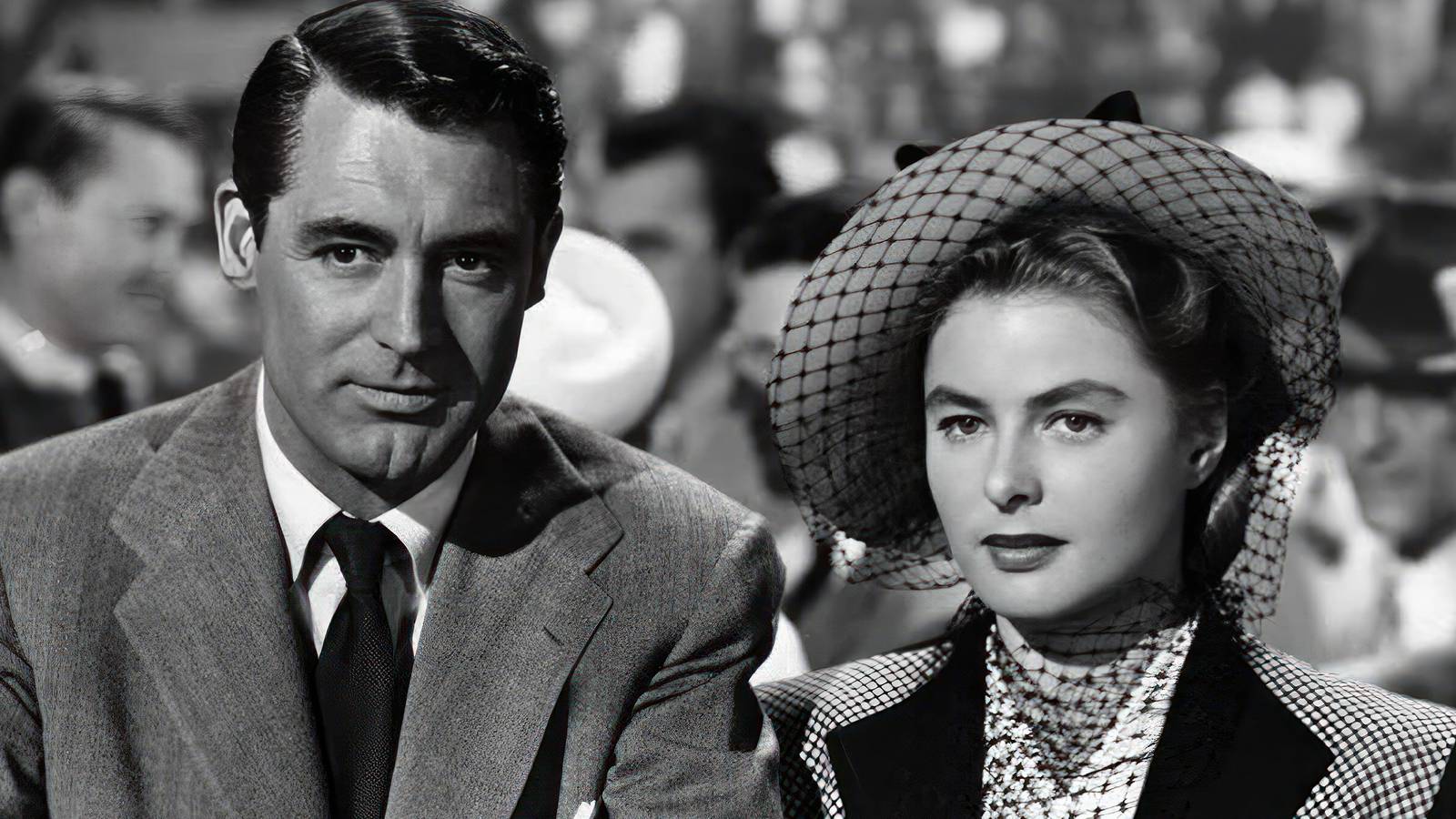
Even though the other movies on this list are more ubiquitous throughout pop culture, it shouldn’t be too much of a hot take to say Notorious is Alfred Hitchcock’s greatest work. A lot of the Master’s movies have aged really well; Notorious is one of those hyper-rare classic movies that appears to be aging in reverse. Alongside turns in Gaslight and Casablanca, Ingrid Bergman gives one of the three 1940s performances that will preserve her legacy, playing the notorious Alicia Huberman, hard-drinking daughter of a Nazi. Cary Grant is at his best—and, more notably, his darkest—here, as steely American agent Devlin, who pushes Alicia to infiltrate the vestiges of her father’s associates in post-war South America, after the two have begun falling in love. Roger Ebert included Notorious on his 2012 list of the 10 greatest movies ever made, and he called it “the most elegant expression of the master’s visual style.”
It’s easy to sink into morbid curiosity around the ending of Notorious, thinking about what might transpire after the dark, sometimes cynical film’s reasonably happy ending. Devlin is a masochist, and Alicia is an alcoholic—so where are they going to be in their relationship in a few years, or even a few months? Musings like this do nothing to detract from the fact that the final stretches of Notorious are year zero for perfecting romantic thriller filmmaking, realizing the maximum effects of both genres. The final action set piece is merely four people walking slowly down some stairs, and what an effect it has, as Hitchcock’s camera glides. It’s no kind of hyperbole to call this the greatest secret agent movie ever.

- Release Date
-
August 15, 1946
- Runtime
-
101 Minutes