Marvel and DC have produced some seriously successful superhero movies over the course of the two companies’ respective runs, and this is perhaps best evidenced by their 15 films that have garnered over a billion at the box office – though some are arguably better and more highly regarded than others. While box office results aren’t always reflective of quality, the highest grossing films in the superhero genre do largely consist of the best of the best for this corner of the world of cinema.
With staggering visuals and dramatic fights galore, the top contenders in the superhero genre box office-wise generally make sense in terms of their broad appeal. Though almost every superhero movie that’s netted itself this kind of fiscal result is a solid movie in some form, the quality of some of this roster does stand out even among their similarly well-received peers.
Avengers: Age Of Ultron

To say Avengers: Age of Ultron is an outright bad movie would be to lie – but the film does deal with several teething issues the MCU was facing at this point in its history all at once. This means that the movie has long been one of the more unfavorably looked upon superhero releases, with this reputation having only been unfortunately bolstered by the staggering successes of the other Avengers films.
That said, the 2015 Avengers movie – which sees its titular hero team face off against Ultron after Iron Man tries to build the entity as a global protective force – is still a solid film in its own right, and a major milestone for the MCU timeline as the second installment of what is now the biggest superhero movie series of all time by a country mile.
Aquaman

Aquaman is the only movie from the DCEU timeline to have made it past the billion milestone in terms of its box office, and a good portion of what appears to have led to this result is the breath of fresh air that its fantasy-esque rendition of Earth’s underwater empires feels like.
With Aquaman having been one of the most tragically underappreciated superheroes in DC’s history, the character has seen few live-action adaptations that have truly gone into his lore, and the wealth of wonder and adventure that delving into DC’s stories around Atlantis can hold.
As such, it’s in some ways par for the course that the first blockbuster effort in this regard netted itself such a considerable box office sum – even if Aquaman played into a range of superhero and fantasy tropes that made it feel like less original fare to some.
Captain Marvel

Captain Marvel is another major feather in the MCU’s proverbial cap, as the first major live-action movie adaptation of the hero in question. Captain Marvel was also the MCU’s first movie centered entirely around a female superhero, making it all the more welcome that the film’s story resonated strongly with audiences and netted itself major box office success.
As Carol Danvers’ superhero origin story, Captain Marvel is able to delve back into some of the earlier parts of the MCU timeline – providing a fascinating look into a younger Nick Fury’s life alongside Danvers’ own – and also expands the MCU’s galactic setting with its depiction of the Kree and Skrulls, meaning the movie balances a lot alongside its development of the titular Captain Marvel and her story.
The Dark Knight Rises

The Dark Knight Rises is the weakest installment in The Dark Knight trilogy, but even this sentiment is still a concept that’s essentially a compliment, given the quality of the other two films in the series in question.
Though The Dark Knight Rises‘ depiction of Bane is lastingly divisive, the film manages to be a swansong for the iconic Batman trilogy that provides a largely satisfying ending to the overall story – which is impressive in of itself, given endings for popular movie series tend to be the most fraught and complicated part of the franchise to get right.
The Dark Knight Rises sees Bruce Wayne face off not only against Bane, but also with the concept of Batman, and with the legacy of his costumed vigilante career. As such, it’s both an enjoyable action romp that displays Christopher Nolan’s meticulous and awe-inspiring directorial style, and a love letter to the idea of Batman and what it means to be a hero, which is enjoyable on several levels.
Iron Man 3

The success of the third Iron Man is a testament to the series that jump-started the MCU, and how it shot Tony Stark from being a relatively well-known superhero for those who enjoyed the comics, to one of the most famous figures in the genre altogether.
While Iron Man 3 is not a perfect movie – especially since its big final act, which sees Tony decide to scrap his collection of suits, doesn’t appear to really affect him in later chapters of the MCU – it does reflect a lot of what people loved about the series, and Iron Man and the MCU more broadly speaking, which gives it a metric ton of charm that no doubt played a key role in its stellar box office result.
Deadpool & Wolverine

As one of the newest superhero movies to break the billion dollar box office margin with its $1.3 billion results, Deadpool & Wolverine is a fascinating example of what a modern superhero film needs to do to obtain these lofty financial takings in an era wherein the genre seems to face more challenges reaching such heights.
Ultimately, Deadpool & Wolverine‘s success reflects its multi-layered appeal. For those simply hoping for R-rated spectacle – in terms of jokes and gore galore – Deadpool & Wolverine certainly provides, making good on the promises the prior Deadpool movies unofficially made for the third release in the series while also keeping a fair dose of heart in the story to balance everything out.
That said, for those wanting to see a multiversal romp that uses the MCU’s Multiverse Saga to its fullest, Deadpool & Wolverine also provides, allowing audiences to see a host of beloved Fox X-Men characters once more – and allowing Hugh Jackman to appear as a variant of Wolverine in a way that didn’t entirely retcon the events of Logan.
Spider-Man: Far From Home

Several Spider-Man movies had previously come close to reaching the $1 billion threshold before 2019’s Spider-Man: Far From Home – with Spider-Man 3 memorably making close to $900 million all the way back in 2007. That said, there are plenty of reasons that Far From Home was the first to take this proverbial cake for Peter Parker, and only one of them is that Spider-Man: Homecoming set its sequel up so well.
Spider-Man: Far From Home is immediately fascinating in that it’s set close after Avengers: Endgame, and thus directly follows up on what the death of Iron Man means for Spider-Man after the MCU spent years establishing the mentor bond between Tony Stark and Peter Parker.
The result is twofold, both in that we see Spider-Man confronted with going it alone not long after finally building a healthy connection with Iron Man, and in that the action and tension of all of Far From Home is naturally upped, as it’s clear Peter is facing new threats and fears without the safety net and guide he previously had to protect and help him.
Joker

One of the four DC movies to have made above a billion dollars in the franchise’s history, Joker is especially interesting since it’s such an outlier compared to the majority of other superhero movies that have made this much money. First and perhaps most importantly, Joker is technically a supervillain movie versus being a superhero movie, as it’s an origin story of sorts for the titular Clown Prince of Crime.
Seeking to be a darker and more serious take on the character and on DC’s lore altogether, Joker’s Taxi Driver-esque tone and story served to convince a cavalcade of people who otherwise don’t connect with the superhero genre to give the film a chance.
With Joker‘s glowing reviews also encouraging further theatrical success, the 2019 movie swiftly became one of DC’s biggest box office results in the franchise’s history. Joker also appears to have paved the way for more R-rated superhero films going forward, which the DCU looks set to capitalize further on with the likes of the upcoming Clayface.
Black Panther

Despite Black Panther having existed since the 1960s, the live-action side of the franchise did little with the character or the world of Wakanda for decades. This all changed with Black Panther, which swiftly proved the opportunities that had been missed by not delving into the character and his lore more beforehand.
That said, adapting T’Challa’s story in 2018 did allow Chadwick Boseman to take on the role, and imbue the hero with a three-dimensional characterization that still resonates with fans to this day, meaning it was well worth the wait for the $1.3 billion hit that emerged in the end.
While Black Panther is culturally significant as the first MCU movie with a Black director and predominantly Black cast, it’s also a prime example of how superhero origin movies can be stellar standalone films that still contribute immensely to a wider franchise’s landscape, further cementing its place as one of the most important superhero movies of all time.
The Avengers

There are few superhero movies that are as much of a game changer as The Avengers proved to be after its debut in 2012 – and few that have had as clear a lasting impact on the superhero genre for now over a decade.
The Avengers brought one of Marvel’s most important superhero teams to the big screen in a major way, and served as a solid film in its own right that additionally worked as a proof of concept regarding the potential of broad-reaching Marvel crossover movie stories.
The Avengers also has a natural extra spot of drama as the first film to see the titular team come together, given the group does so decidedly reluctantly in their first foray – making it primed for character development and the construction of a range of important bonds in a way that other later films have mirrored, but arguably not replicated in as effective a way.
Spider-Man: No Way Home

After years of some uncertainty about whether the MCU could pull off the concept of the multiverse in a way that truly enamored audiences, Spider-Man: No Way Home nailed the concept in a way that may never be topped again in the live-action superhero sphere.
Drawing on decades of beloved Spider-Man movies, No Way Home brought back prior Spider-Man actors Andrew Garfield and Tobey Maguire – alongside a selection of their best movie villains – for a narrative that served as the next chapter for all of their stories, and capitalized on the hopes of generations of Spider-Man fans.
Spider-Man: No Way Home balances the trials of being one of the most fun and fantastical Spider-Man movies of all time, and also conveying a lot of the weight of the responsibilities of being Spider-Man – especially since its central hero goes through his biggest trials yet in the film, and as the story ends with a new, albeit somewhat painful, beginning for Marvel’s beloved web-swinger.
Captain America: Civil War

Captain America: Civil War is an interesting addition to the MCU roster in the sense that it’s, technically, far closer to the other releases in the Avengers series in some ways than a regular addition to the Captain America series itself.
The universe-wide conflict around how to handle hero responsibilities – and how much the world’s governments should be able to control superheroes – is a fascinating conflict that’s relevant for every single figure in the MCU, and adapts Marvel’s Civil War comic of the same name with relative tact despite having to effectively rewrite the source material’s events and approach entirely.
With a unique premise that focuses more directly on internal conflicts in the hero community than the movie’s actual villain, Captain America: Civil War remains one of the biggest superhero movies of all time, and for good reason.
Avengers: Infinity War

Avengers: Infinity War is one of the golden examples of what the superhero genre is capable of – and indeed, achieved a whole assortment of things that people had otherwise thought could be impossible when it came to adapting comic stories onto the big screen, which will remain eternally impressive.
Infinity War redefined how big the scale of a superhero movie could be in many ways, and managed to pull off a truly sprawling crossover story that still felt like it gave important roles to the majority of its cast despite the time and story constraints it also had to navigate.
Though its film successor is generally credited with being the MCU’s best movie, Avengers: Infinity War is the cornerstone of many of the franchise’s biggest storylines, and many of the franchise’s best moments, which – combined with its jaw-dropping cliffhanger ending, which was essentially unheard of at the time – spell out why it was such a monumental box office success.
Avengers: Endgame

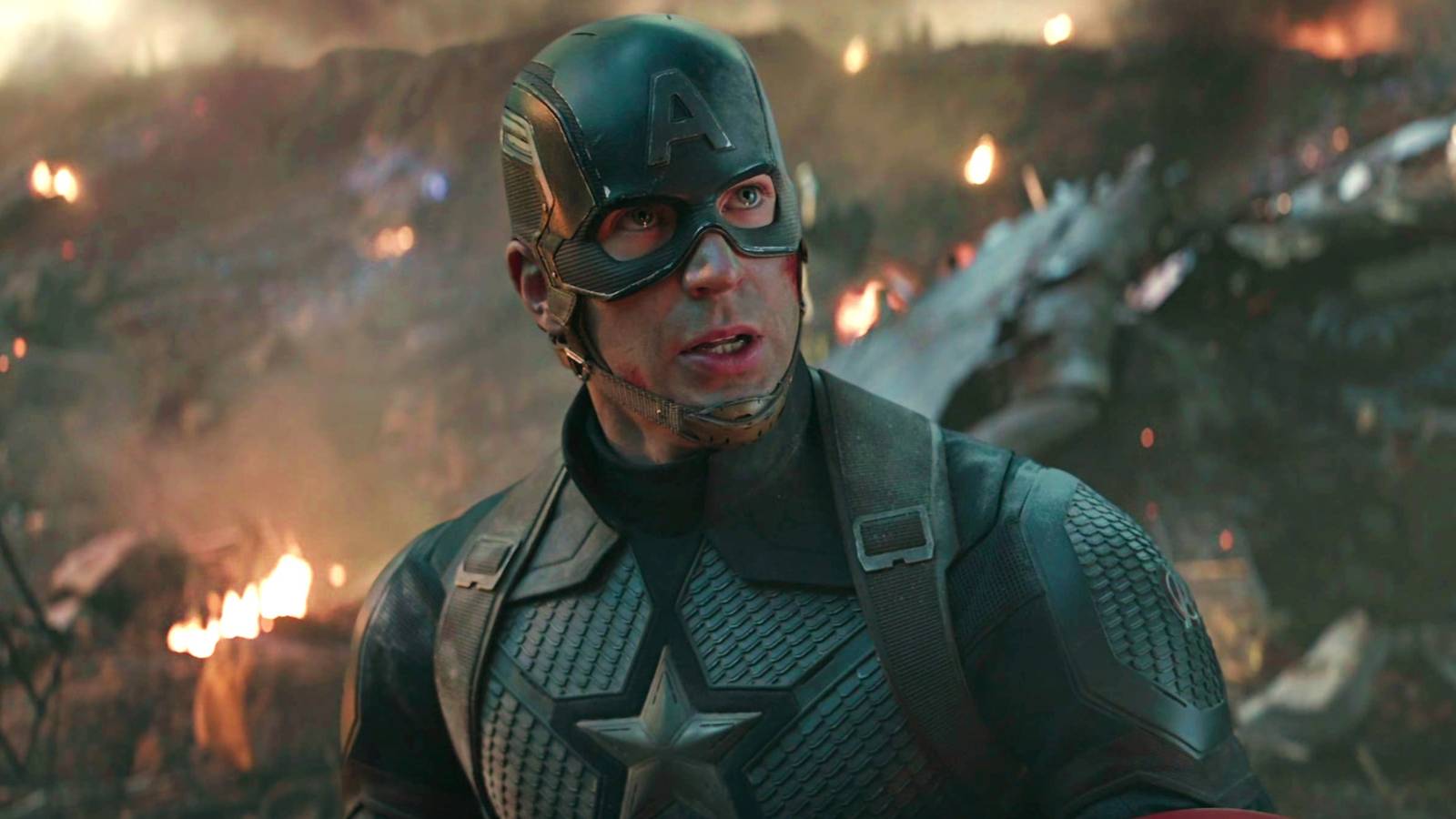
With a $2.7 billion box office result and a colossal pop culture impact, Avengers: Endgame is a monolith for the superhero genre, and having reached a milestone that may not be matched by another superhero movie ever again. Indeed, the MCU’s only real issue with Avengers: Endgame is that it was so good that it served as a satisfying conclusion to the franchise for many fans, which has presented issues for more recent installments.
Avengers: Endgame requires plenty of homework in order to get the full impact of its story, but doing so results in a viewing experience unlike just about anything else, as the film truly builds on everything that came before it, and goes to great lengths to serve as a suitable tribute to every installment that played a part in helping it earn the second-biggest box office result in recorded history.
The Dark Knight

There have been many arguments about whether Avengers: Endgame or The Dark Knight is the better movie since Endgame released, and broke a slew of box office records with its fiscal results. While this is of course partly a subjective matter, it can be said that Avengers: Endgame is a better reflection of what a superhero movie can be and what the potential of a cinematic universe holds, whereas The Dark Knight is the better standalone movie.
The Dark Knight is remarkable as a film that manages to feel entirely grounded while still embracing the larger-than-life elements of Batman’s story and lore – such as his various gadgets and gizmos, and him having an evil clown for a nemesis – and while still retaining a serious action movie atmosphere that only wavers for the occasional joke to add a moment of levity.
Having redeemed Batman’s live-action movie legacy following the divided reception to Batman & Robin and Batman Forever, The Dark Knight is one of the best examples of how a superhero movie can adapt its comic source material while also forging its own distinct path forward. It’s also a movie that can be enjoyed by those who adore superhero movies, and those who may otherwise not be interested in them whatsoever, giving it a universal appeal thanks to the sheer quality of the installment.