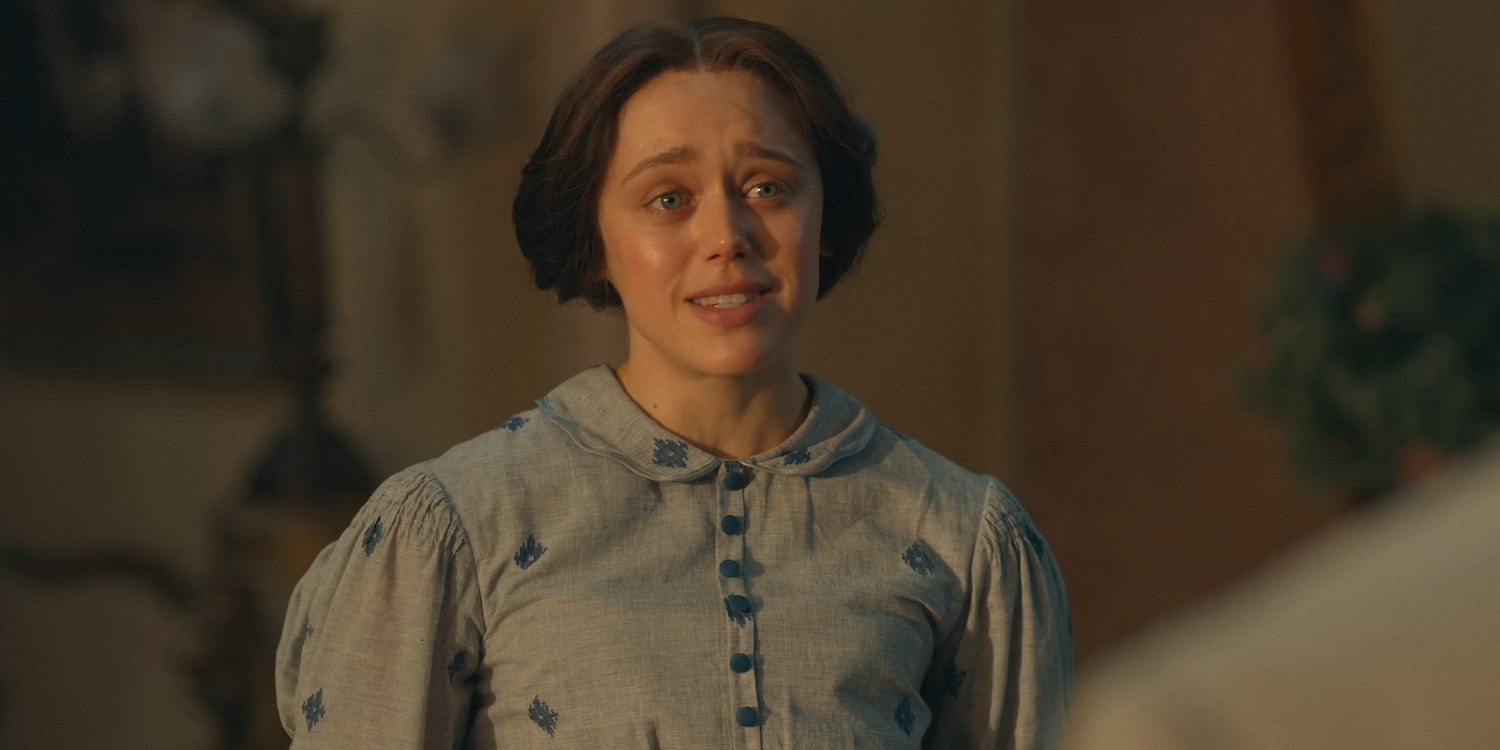

Elizabeth Van Lew and Mary Jane Richards lead the narrative in ‘The Gray House‘ as pertinent members of the Union spy network working in the South during the Civil War. Mary Jane is a formerly enslaved woman who grew up in the Van Lew’s Union-sympathizing household. As a result, she earns her freedom as a young woman and even embarks on adventures beyond America. Nonetheless, she eventually finds herself returning to her home in Richmond, Virginia, where she quickly gets involved in pro-Union activities in a city steadily leaning toward the Confederacy.
As the South grows strong and the town becomes the capital of Jefferson Davis’ Confederate State, Elizabeth’s Underground Railroad transforms into a secret pipeline for espionage. As a result, a network of spies is soon formed, populated with unsuspecting individuals who gather vital intel and pass it along to the soldiers of the North. Both Elizabeth and Mary Jane’s characterization in the show is rooted in the real history of Union espionage in the American Civil War.
Elizabeth Van Lew was a Real Union Spy Who Oversaw Operations in Richmond, Virginia
‘The Gray House’ is based on a number of true historical accounts dating back to the 1860s Civil War between the Confederacy and the Union. Although the show relies on substantial creative liberties in order to chart its cinematic story, the foundation of the narrative remains rooted in reality. This is most true for the character of Elizabeth Van Lew, who is directly inspired by an eponymous historical figure. The real-life Elizabeth Van Lew was a Richmond-born Unionist Spy, who went against her hometown’s Confederacy loyalties to fight against slavery.
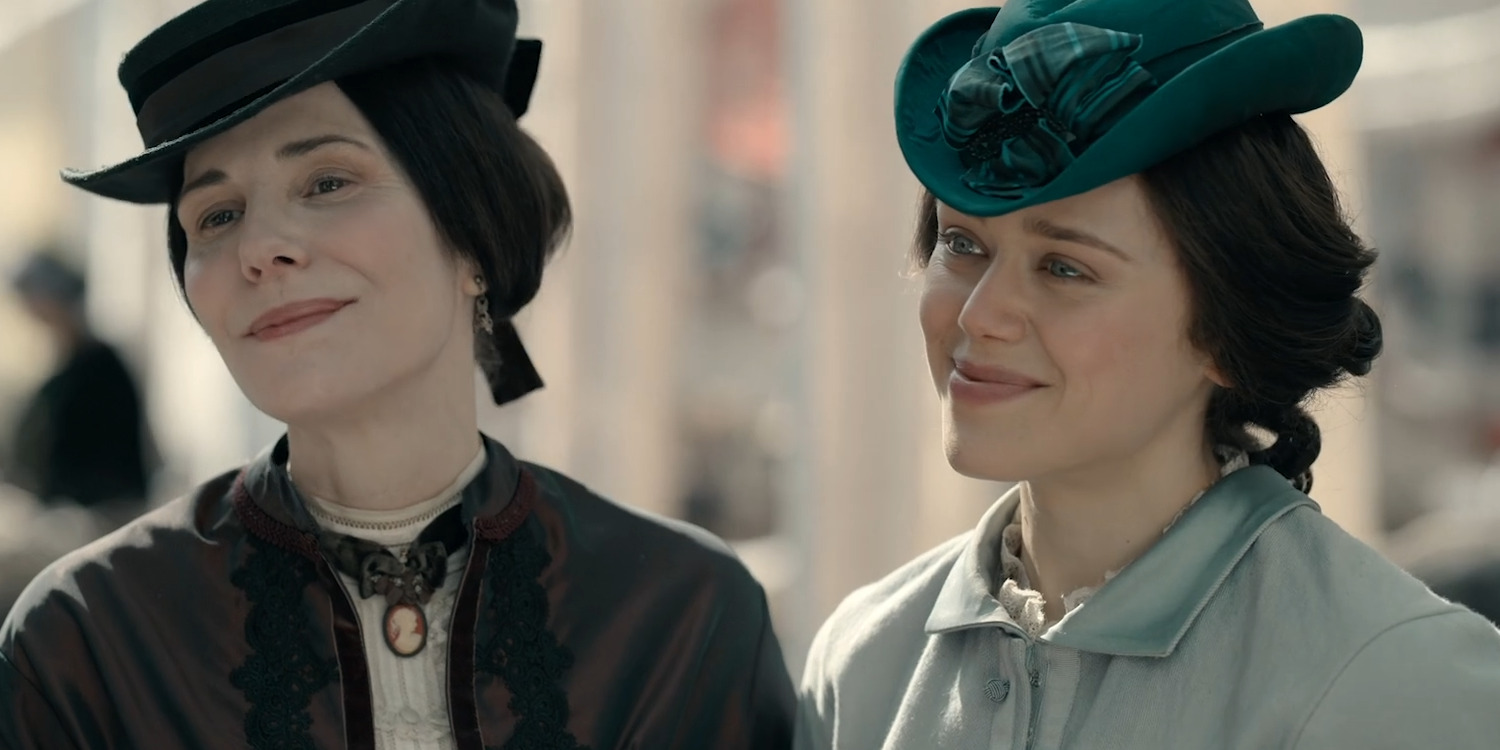
The remarkable woman was born on October 15, 1818, to parents John Van Lew and Eliza Baker. Even though her family was originally from the North, they still owned multiple enslaved individuals. Nonetheless, Van Lew developed a firm anti-slavery stance following her education at Philadelphia’s Quaker school. In the aftermath of her father’s death, her mother, Eliza, worked toward freeing some of the enslaved individuals from their household. The mother-daughter duo’s anti-slavery sentiments remained publicly steadfast in the 1860s in the buildup to the Civil War. They formed an underground and worked with Union prisoners held at the town’s Libby Prison, smuggling intelligence for the Union soldiers in the North.
On occasion, the Van Lews would also aid and abet escaped prisoners, such as Captain William Lounsbury. Their spy network consisted of common folk like the town’s baker, or the many sex workers who operated in the city and had regular encounters with government or military officials. The messages circulated amidst this network were smuggled in shoe soles and eggshells, hidden behind coded messages and transported through multiple couriers. Elizabeth Van Lew’s prominent involvement in the network earned her the codename Babcock, and her pro-Union efforts ended up having a significant impact in shifting the tides of the war in favor of the North. While ‘The Gray House’ fictionalizes certain aspects of Van Lew’s life, notably her interpersonal relations and everyday realities, it uses the historical accounts of the real-life spy as a foundational base for her on-screen counterpart.
Mary Jane Richards Was a Real Union Spy With Many Fables Attached to Her Name
Much like Elizabeth Van Lew, her co-protagonist Mary Jane Richards also possesses a notable basis in reality, which serves as the base inspiration for her characterization in ‘The Gray House.’ The real Ricahrds was born around 1840 in Richmond, Virginia, as an enslaved individual to the Van Lew family. From early on, she remained favored by the family, who sent her up North, somewhere in Philadelphia, New Jersey, or Princeton to get an education. Later, in 1855, she went on a trip to Liberia with a white Reverend J. W. Horne, his wife, and a group of Black emigrants to become an American Colonization Society’s missionary.
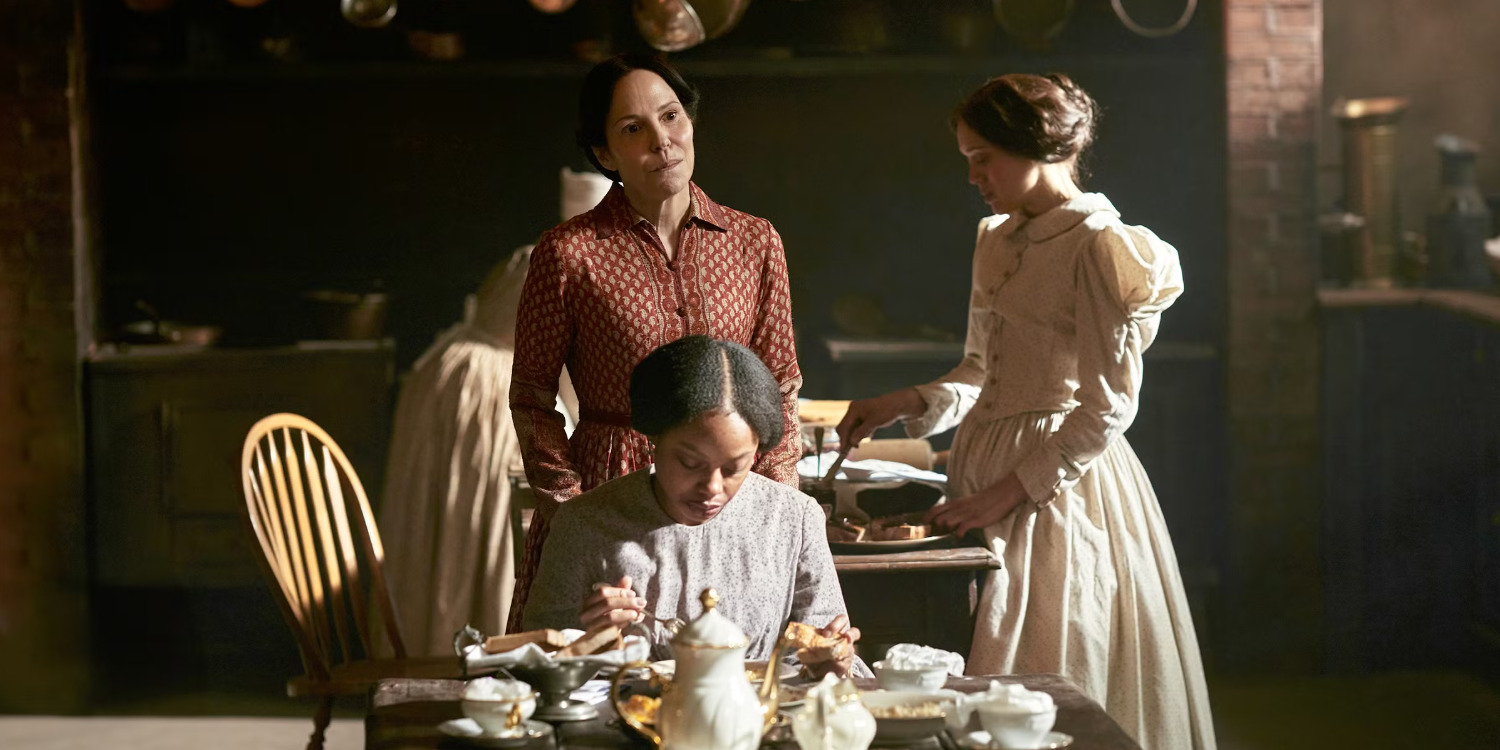
After spending five years in the West African country, Richards left the colony and returned home due to difficult conditions. Her voyage back to Richmond was funded by the Van Lews, with whom she remained in constant correspondence. Once back in her hometown, she began working for Elizabeth Van Lew’s spy network as a crucial operative. Historically, rumors have circulated about Richards infiltrating the Confederate President Jefferson Davis’ home as a strategically placed servant. Nonetheless, this account is widely considered to be false.
Reportedly, as per Richards’ own admission, she only entered Davis’ home once, when the President was away. During this time, she looked around for any valuable information, which is what inspired the original rumors about her spywork in the politician’s house. Although ‘The Gray House’ remains true to other aspects of Richards’ life, it also plays into this fabled version of reality. As a result, the on-screen Mary Jane ends up sporting some evident dissimilarities from her real-life counterpart. Even so, these divergences remain based on actual legends and rumors that surrounded the real Unionist Spy.
Elizabeth Van Lew Passed Away at 82 After a Battle With Illness
Throughout the war, Elizabeth Van Lew’s loyalties remained with the North. However, she never saw her pro-Union sympathies as a betrayal of the values of Richmond, Virginia. Instead, she considered Confederates to be the real traitors. As a result, she chose to stay in her hometown once the Civil War ended, despite the social ostracism she received from her fellow Richmond residents. By 1869, Ulysses S. Grant appointed her to be Richmond’s postmaster throughout his two terms in office. She made notable contributions to modernizing the city’s postal system and sponsored a local library for African Americans, which was inaugurated in 1876. She was also known to employ multiple African American workers in her office.
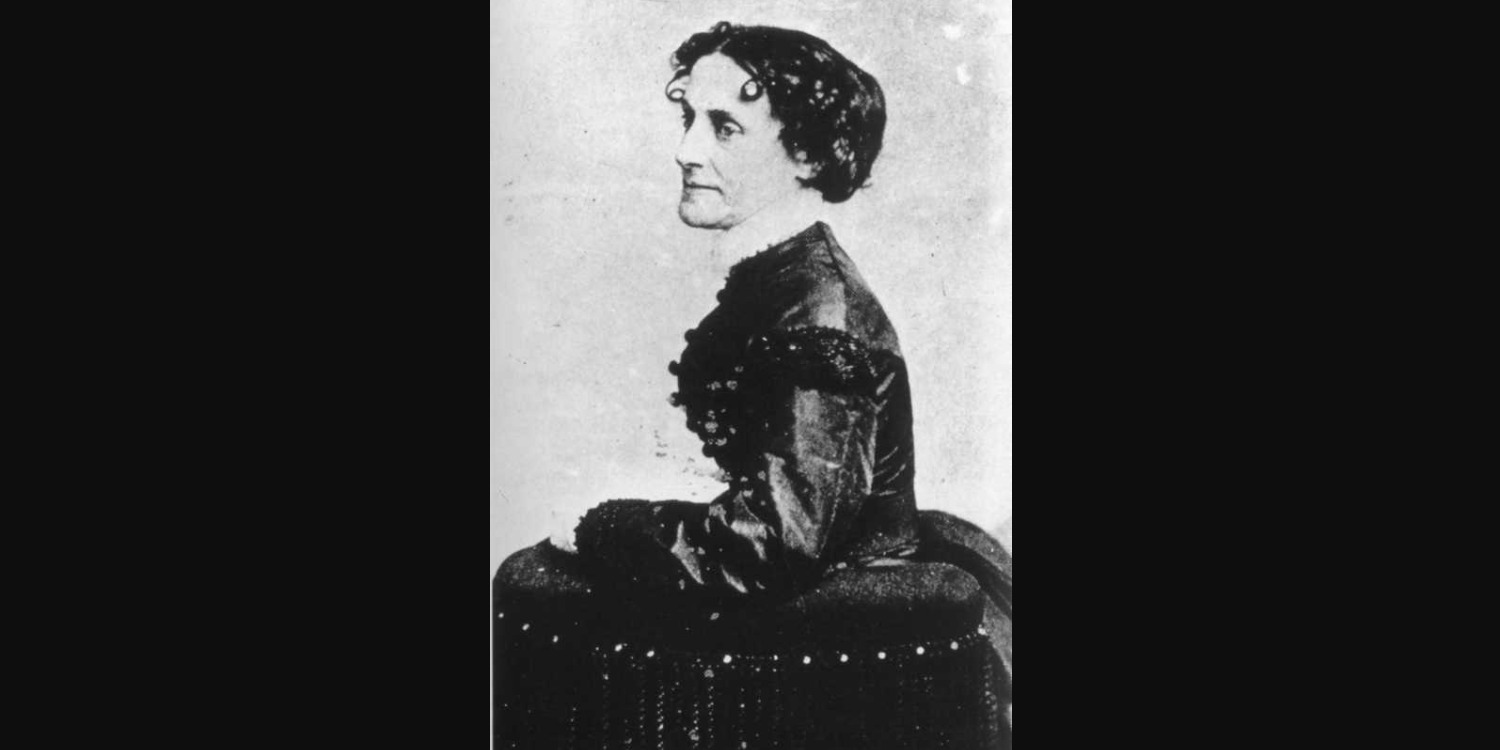
Eventually, Van Lew’s political career was cut short as a result of gender discrimination and partisan politics. As a result, in the aftermath, she went on to become a steadfast supporter of the African American rights movement as well as the Women’s suffrage movement. Although she never married or had kids in her life, she was close to her nieces. In her 80s, she suffered through an unidentified illness and passed away on September 25, 1900, inside the Van Lew mansion in Richmond, which remained her home until the very end. Her friends from Boston, Massachusetts, paid for her funeral, and she was buried in Richmond’s Shockoe Cemetery. Soon after Van Lew’s death, the city destroyed her house and opened up a school at the location.
Mary Jane Richards’ Final Demise is Yet Unknown
In the aftermath of the Civil War, Mary Jane Richards, also sometimes known as Mary Elizabeth Bowser, among other names, went on to have a career as a teacher. She worked with the government agency Freedman’s Bureau and taught at Virginia-based schools like Richmond, Manchester, and Norfolk. Eventually, she also stayed in Jacksonville, Florida, for a while before moving to St. Marys, Georgia, where she opened up a school. She also became a speaker in New York, where she spoke about her experiences as a missionary in Liberia.
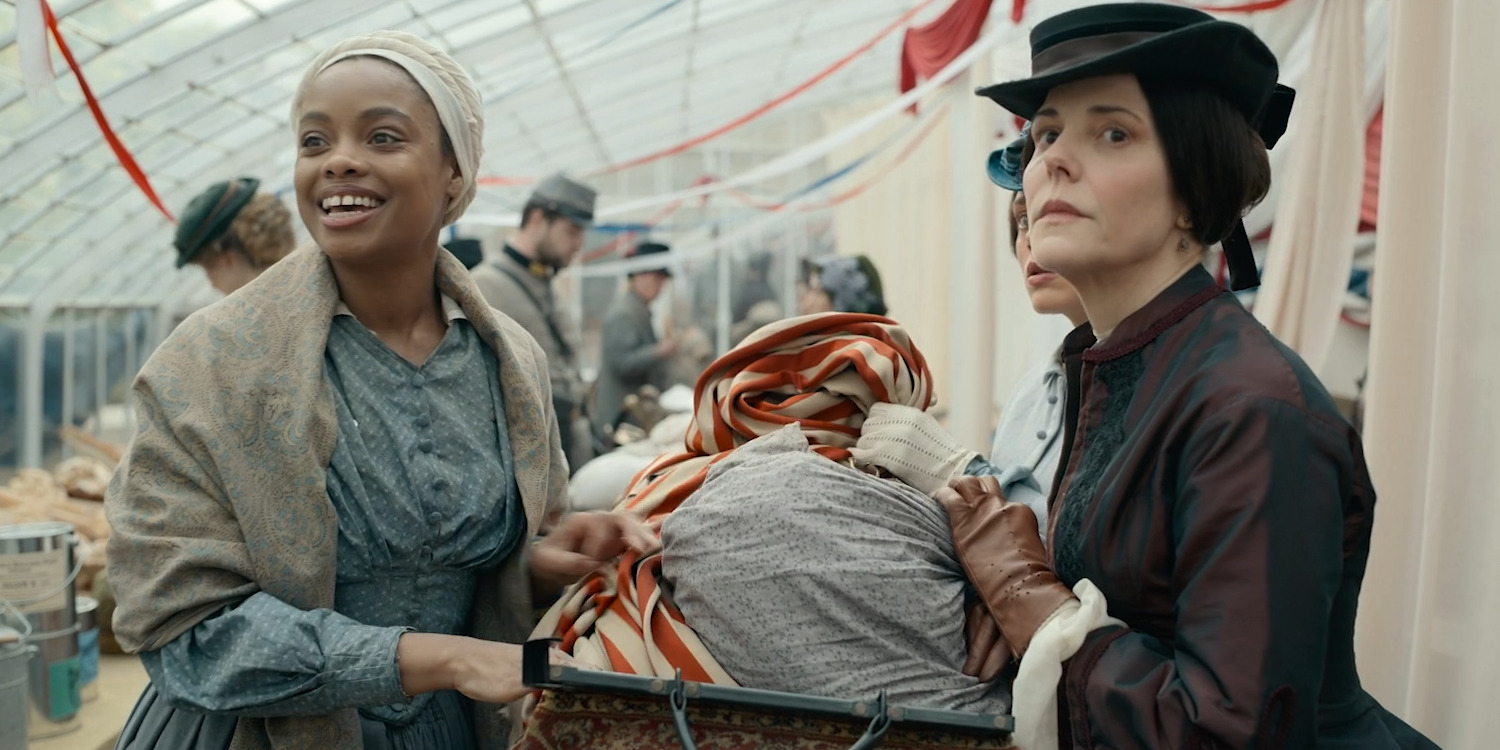
Briefly, a correspondence suggested that Richards’ travel plans for the West Indies were with her husband. Nonetheless, no further follow-up proves the fruition of either of these claims. Unfortunately, the trail about the historical life of the Union spy-turned-teacher ends shortly thereafter, with her last known correspondence from 1870. She wrote to Elizabeth Van Lew, signing her own name as M. J. Denman. The letter spoke about Richards’ attempts to make a living for herself in New York as a teacher and a seamstress. At the time of writing, no conclusive answer has been found about the rest of Richards’ life, or its eventual end.
Read More: Is Captain William Lounsbury Based on a Real Unionist Captain?