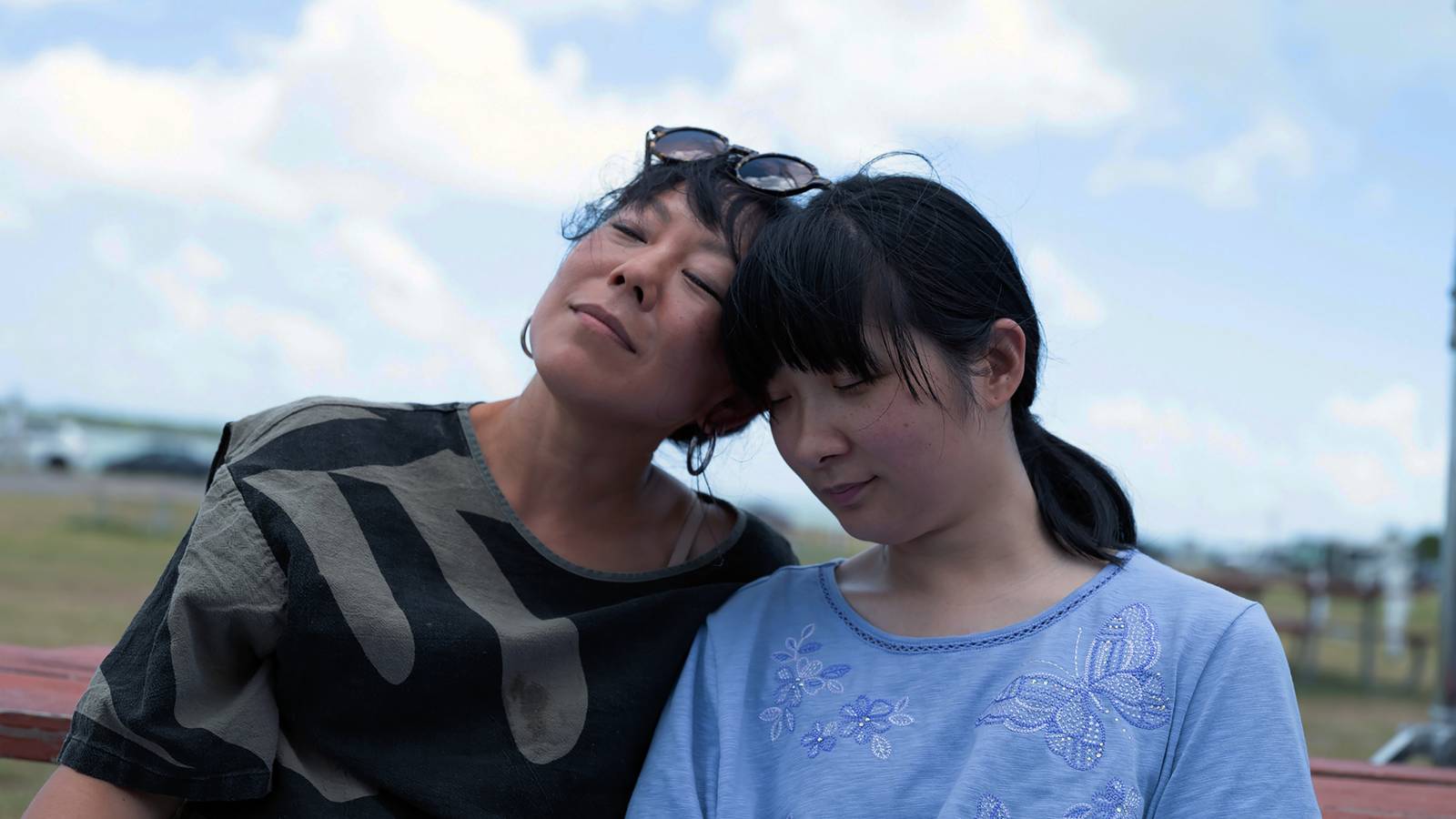

Writer-director Liz Sargent and sister Anna have lived very niche lived experiences. As Korean-American adoptees of a working-class family, they’ve experienced a specific kind of racial othering many other immigrants don’t know. Anna is also cognitively disabled, and has acted as a caretaker for their elderly parents, and knows all too well the arcane bureaucracy of the troubled healthcare system. Take Me Home, which is based off Liz’s 2023 short film of the same which also premiered at Sundance, is built on intimate knowledge of these uniquely American valleys, and, ultimately, the film’s warmth and its heartbreak are reflections of her perspective alone. But its approach is so diffuse that its uncertain and purposefuly ambiguous ending is misguided at best, morally dubious at worst.
Take Me Home‘s endemic verisimilitude is admirable and well drawn. Anna, who leads the film and improvised her way through much of the dialogue, is extraordinary. There’s a distinct quality to the work which could only arise from people with profound trust in each other, and though the film is heavily fictionalized from Liz and Anna’s real life (for one thing, the two are of a set of 11 children, not just the two depicted), everything, from the particular dilapidation of an overcrowded elderly person’s home to the manner in which the family goes grocery shopping, is imbued with their own lives. It’s a beautiful, vulnerable film.
But the relationship between Anna and her older sister, Emily (Ali Ahn) and that of her father and mother (Victor Slezak and Marceline Hugot, respectively) seems less like the story here than what the director’s own anxieties are about her sister’s ability to exist in a world that is fundamentally built to cast people like her aside. “It’s designed to be complicated,” a care-worker says about American healthcare, and she’s right. Insurance companies exist more as money-making machines rather than safeguards for long life.
Despite the Film’s Authentic Voice, the Characters are Reduced to Proxies
It doesn’t help that Anna’s home life doesn’t seem ideal. Her mother is tender with her, but her father is gruff and distant. The home they share is packed with trinkets and stacks of papers and unpaid bills; the dust practically crawls off the screen. Their fridge is overflowing with expired goods. Anna is fairly low-functioning. While she can dress and feed herself (to a degree), she’s resistant to basic hygiene and doesn’t seem to get out much except to shop.
She is also prone to rage-filled outbursts that her parents are ill-equipped to pacify, or else they have just become so accustomed to her chaos that they end up enabling her worst tendencies. For Emily’s part, she has clearly tried to extricate herself as best she can from the noise, decamping to Brooklyn where she has built a life of her own with a comfortable job and a boyfriend. She has not been home in two years, and, out of self-protection, frequently ignores her parents’ and her sister’s calls.
But when a sudden tragedy occurs, Emily is forced to return home to re-take up the mantle of caregiver, and must learn to re-engage with her sister, who has grown bitter at her persistent absence. Perhaps because she is so wrapped up in the multitude of life’s pressures, Emily misses the very clear early signs of her father’s dementia. What’s consistently novel and brazen about the film is that there is an unspoken tension: what will happen to Anna when her father’s brain deteriorates to the point where he can no longer care for her?
For the most part, Take Me Home stays in the lane of a fly-on-the-wall observational drama, whereby we are put in the especially intimate space of a very particular existence. But it is also frequently exhausting watching Anna get upset over and over again due to her inability to understand that she needs the help she’s being given. Emily and Anna’s relationship is special but fraught, and while Liz Sargent does well to clue us into the difficulties of this family’s life, she isn’t always so keen to show us the joy or the connections.
It is in the film’s haze that the most disturbing of conclusions can be drawn.
The biggest problem with the film is its audacious final minutes, a distinctly hard left turn, which recontextualize much of what has preceded it in ways that raise some serious ethical questions. If a person of Anna’s specific circumstances cannot get the help they need, Liz asks, then what can you do to at least get them some relief? That’s a fair, provocative question, but the manner in which she depicts that relief comes across as clunky and naive. Because it is an ending open to interpretation, it allows room for troubling implications that, in certain light, can come across as eugenicist.
It’s clear that Sargent’s key target with Take Me Home is her understandable frustration with, and anxiety about, a healthcare system that has been pre-designed without someone like her sister in mind. But, because the film is overloaded with trouble — the mother’s health, the father’s dementia, the sister’s absence, the family’s financial woes — everything feels unfocused. It is in the film’s haze that the most disturbing of conclusions can be drawn.
Take Me Home screened at the 2026 Sundance Film Festival.

Take Me Home

5/10
- Release Date
-
January 26, 2026
- Runtime
-
91 minutes
- Director
-
Liz Sargent
- Writers
-
Liz Sargent
- Producers
-
Minos Papas, Apoorva Guru Charan, Liz Sargent
Cast