
War movies age well when the tension still feels physical and the moral questions still feel sharp decades later. You can watch them today and the fear still reads on faces, the decisions still feel impossible, and the aftermath still follows you out of the room. The films I’ve reviewed below are the ones people don’t bring up enough anymore, usually because they aren’t loud greatest hits titles yet they play like they were made yesterday.
Every entry here earns its place through specifics: a courtroom that turns your stomach, a trench that feels like a trap, a tank crew making the wrong turn into hell, a friendship you already know is going to hurt, a mission that turns into survival-by-minute. These aren’t background watches. They pull you in and keep you there.
‘Breaker Morant’ (1980)

Breaker Morant throws you into a war story where the bullets barely matter compared to the words. Harry “Breaker” Morant (Edward Woodward) sits in a courtroom facing execution, and the movie makes you feel the pressure of men being judged by rules that shift depending on who needs protecting. Major J.F. Thomas (Jack Thompson) walks in as the defense and you can see him realizing, piece by piece, what kind of trial this really is. It’s tense in the way great legal thrillers are tense. Every objection, every witness, every line of testimony tightening the rope.
The hook stays emotional. Morant doesn’t play like a clean martyr. He plays like a soldier who did brutal things in a brutal situation and then got left holding the bag. You keep watching to see whether truth matters at all when politics has already decided the ending. The film makes you stick to the screen to this day. It makes you stare at the ugliest part of war: the paperwork and the scapegoats after the blood is spilled.
‘Cross of Iron’ (1977)

Cross of Iron drops you on the Eastern Front and refuses to romanticize a single inch of it. Rolf Steiner (James Coburn) leads exhausted infantrymen who look like they’ve been living in mud for years, and the film makes you feel how survival becomes the only belief system left. Then Stransky (Maximilian Schell) shows up with rank, ambition, and obsession with medals, and the conflict turns personal fast. It becomes about soldiers who want to live versus a man who wants a story told about him.
The movie captures contempt inside the same uniform. Steiner isn’t trying to be noble; he’s trying to get his men through another day with their bodies intact. You end up caring about tiny battlefield choices, where someone crouches, when someone moves, who covers who, because the movie makes those choices feel like the difference between breathing and not breathing. It’s nasty, direct, and still shocking in how honest it is.
‘The Beast’ (1988)

The Beast follows Daskal (Jason Patric) as part of a Soviet tank crew that gets lost in Afghanistan. The movie turns that mistake into a slow, grinding panic. The crew is filmed trying to navigate terrain that wants to eat them while people who know the land start hunting them. The movie makes war feel like a wrong turn you can’t undo. Taj (Steven Bauer) gives the story its moral heat and the local fighter watching these men with rage that comes from lived harm.
The tank becomes a moving prison. You feel the claustrophobia, the paranoia inside the crew, the way fear makes men crueler to each other. The film earns its power by keeping the violence close: a village encounter that stains the crew, a pursuit that never feels far away, a code of revenge that feels inevitable once the first wrong act happens. It’s one of those war movies that makes you sit there afterward thinking about how fast human beings justify what they’re doing.
‘Gallipoli’ (1981)

Gallipoli wins your heart before it breaks it. Archy Hamilton (Mark Lee) and Frank Dunne (Mel Gibson) start as young men with speed in their legs and confidence in their voices, and the early sections make their friendship feel simple and real — rivalry, jokes, pride, that belief that life is wide open. Then the war starts shaping every decision, and you can feel the boys becoming soldiers while still trying to stay boys.
The second half sits in your chest because the film makes the waiting unbearable. Orders move slowly. Messages get lost. The distance between command and the men who pay the price becomes obvious in every scene. You end up clinging to the friendship because it’s the one thing that still feels human in a place designed to grind humanity down.
‘Hamburger Hill’ (1987)

Hamburger Hill feels like being dropped into a fight that refuses to end. Sgt. Frantz (Dylan McDermott) leads men up Hill 937 again and again, and the movie makes repetition feel like torture. There’s mud, rain, screaming, bodies falling, then the order to climb again. The soldiers are trying to get through the next push without losing someone they just shared a cigarette with.
The film stays strong because it keeps the focus on the squad’s emotional weather. Fear shows up differently in each man: anger, jokes, silence, reckless bravado, numbness. The racial tension and class tension aren’t tossed in for flavor; they live in the way men speak to each other under stress, then fight beside each other anyway because the hill doesn’t care who you are. It leaves you with exhaustion, the same kind you see on their faces.
‘The Train’ (1964)

The Train is older than the rest of this list and still feels viciously watchable because it turns a mission into stubborn, sweaty problem-solving. Paul Labiche (Burt Lancaster) is resistance, rail man, and pragmatist, and you feel how hard he has to work to keep people alive while delaying a train loaded with stolen art. Colonel von Waldheim (Paul Scofield) plays another brutal type — the kind of man who treats human lives as acceptable losses for his cause.
The suspense in The Train comes from practical obstacles: switches, engines, schedules, sabotage that needs timing, the risk of a single mistake turning into a firing squad. You watch Labiche make choices that cost people he cares about, and the film never lets you pretend those costs are clean. It’s the kind of war movie that makes you respect competence while also forcing you to feel what competence costs in war.
‘A Bridge Too Far’ (1977)

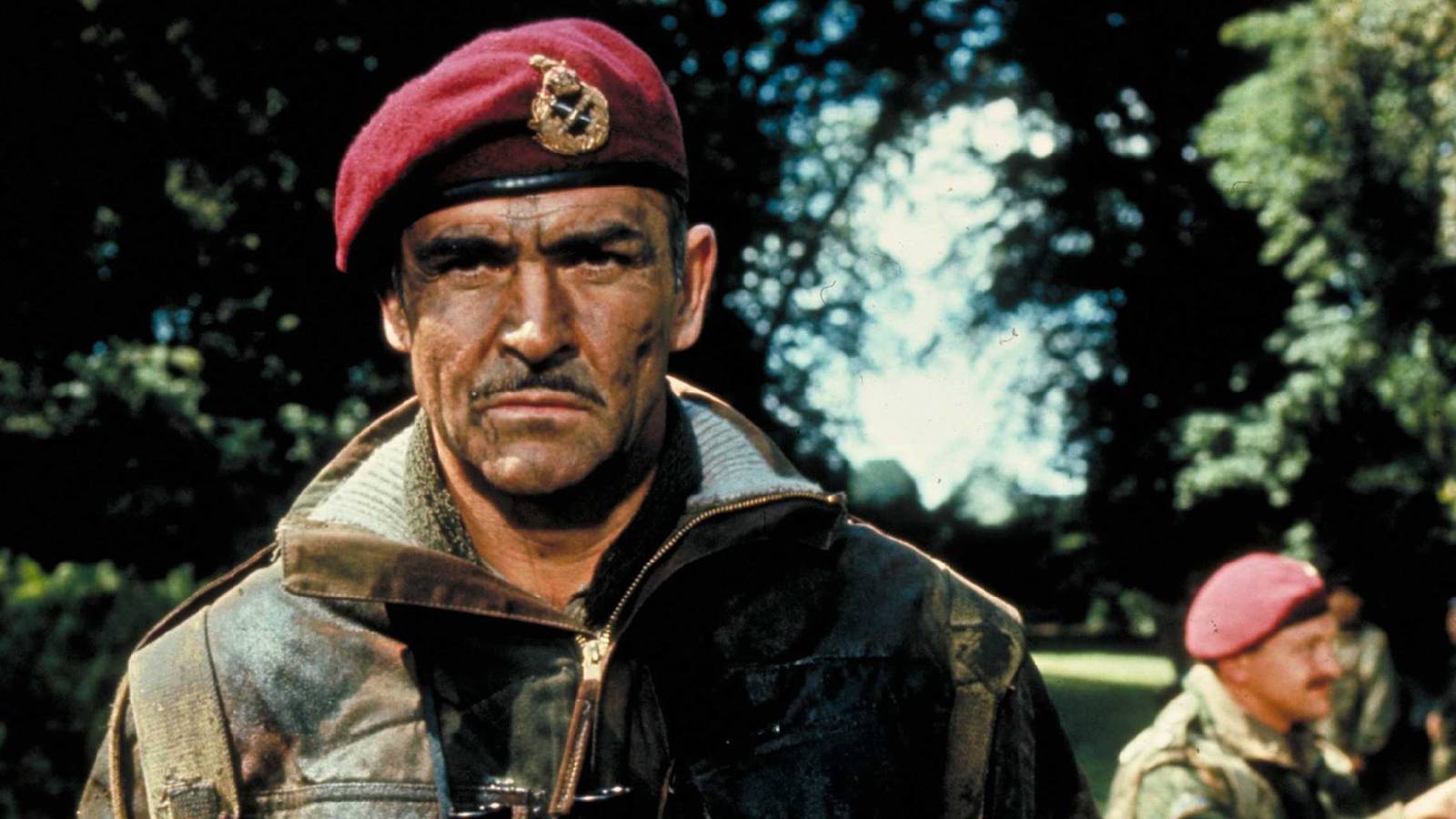
A Bridge Too Far earns its place on this list purely because of its scale and heartbreak. Not to mention that it feels extremely personal. The film follows Maj. Gen. Roy Urquhart (Sean Connery) who lands with his men and immediately feels the plan’s cracks widening — distance, radio failure, time slipping. Then there’s the main man, Lt. Col. John Frost (Anthony Hopkins) who holds the Arnhem bridge with a kind of calm resolve that makes every scene with him tighten your throat. The movie makes you understand the goal, then makes you watch how many things have to go right for that goal to happen.
You keep watching with a growing sense of dread because the film never hides the friction between ambition and reality. Soldiers fight like hell, messengers run, commanders argue, and the road keeps choking everything. It feels like watching hope get outpaced by logistics and luck. All those faces and small decisions that couldn’t save them stay in your memory.
‘Come and See’ (1985)

There are war films that show destruction, and then there is Come and See, which feels like watching innocence be erased in front of you. The movie begins and Flyora (Aleksei Kravchenko) begins as a boy drawn toward war by the kind of excitement only a child could still believe in, and the cruelty of the film lies in how completely it tears that belief apart. By the time the nightmare has fully closed around him, his face carries the kind of exhaustion that should never belong to someone so young. Glasha (Olga Mironova) matters so deeply to the story because every moment beside her feels like a fading connection to warmth, fear, and human tenderness before all of it is swallowed by horror.
What makes the film overwhelming is the way it presents atrocity without distance. Burned villages, collaborators, humiliation, murder — none of it is framed to thrill or impress. Everything lands with a sickening plainness, as if the world itself has accepted the unbearable. That is why the film feels so punishing. It traps you inside endurance, inside witness, inside a reality where survival itself stops feeling like mercy. And with time, Come and See has only grown to feel harsher, clearer, and more essential, because it refuses every lie that cinema so often tells about war.
‘The Long Good Friday’ (1980)

The Long Good Friday belongs on a list like this because it understands war as something that can move through a city in tailored suits, exploding cars, broken deals, and silent panic. It follows Harold Shand (Bob Hoskins). He begins the film with the swagger of a man who believes power is already his, and what follows is the slow terror of watching that certainty collapse from one blow to the next. Every explosion, every failed arrangement, every new threat tightens the pressure around him until the performance of control starts to look almost desperate. There’s also Victoria (Helen Mirren) who gives the film an added sharpness because her composure makes it clear she sees the shape of the danger long before Harold is willing to face it.
The brilliance of the film, though, is in its escalation. Harold keeps answering chaos with force, intimidation, and brutality, as if sheer will can drag the world back into place, but every move only reveals how little command he really has. Bob Hoskins makes that unraveling unforgettable because he never lets Harold become small; the panic lives inside the character’s personality, inside the fury, inside the dawning realization that the old rules no longer protect him. By the final car sequence, the film reaches something close to pure cinema: a man cornered inside his own understanding, with nowhere left to run and no illusion left to hide behind.
‘Paths of Glory’ (1957)

Paths of Glory takes the top spot because almost no film has ever expressed moral fury with such precision and control and yet nobody remembers it. The courtroom scenes are where the film cuts deepest. The film follows, Col. Dax (Kirk Douglas) who tries to defend men who have already been condemned by leaders more interested in preserving authority than confronting truth. He moves through the story with conviction, intelligence, and decency. There are also Gen. Mireau (George Macready) and Gen. Broulard (Adolphe Menjou), who is super chilling.
The film never needs to exaggerate them; their comfort, vanity, and polished certainty make everything around them feel even more rotten. Against the mud, terror, and broken bodies of the battlefield, their world feels not just detached, but obscene. The injustice, therefore, feels organized and procedural in Path of Glory. It is delivered with the confidence of men who know the system was built to protect them. That is what makes it so infuriating. The movie is devastating precisely because it reminds you what war tries to crush in the first place.