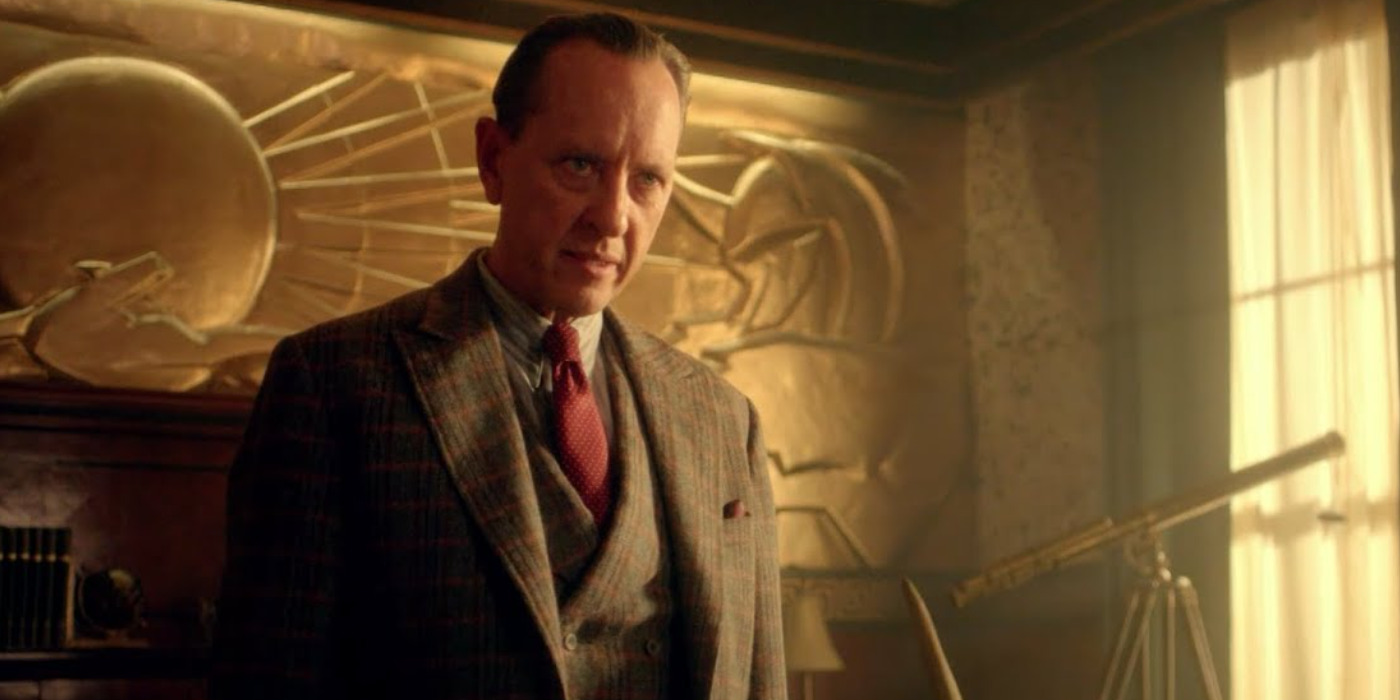

The villains in ‘Jekyll and Hyde’ come in many different forms and are not always clear-cut in their morality. Sir Roger Bulstrode, a government official who stands to gain much from both the death or collaboration of Dr. Robert Jekyll, fits into the same category. The agent is the head of the British Intelligence’s top secret division, the MIO, aka Military Intelligence Other. The department is responsible for taking care of supernatural threats, which include everything from vampires, werewolves, and ghosts to underground organizations trying to revive their old monster gods. The latter becomes a particular concern for the department once Robert resurfaces and promptly becomes a person of interest for Tenebrae, the secretive supernatural society. As a result, Busltrode and his MIO agents set out to make an enemy of both the Tenebrae and Robert, as well as his alter-ego known as Hyde. The inclusion of these elements in the story adds to the series’ worldbuilding while also creating structure in the chaotic world of mystique.
MIO is a Fictional Supernatural-Centric Government Agency
‘Jekyll and Hyde’ is a fantasy adventure show that transports the audience to an expansive supernatural world. As a result, most of the elements in the story that are connected to the supernatural world remain confined within the fictional world’s borders of the series. The same is true for MIO, a mystical on-screen counterpart for a government agency that specializes in monster hunting. In the show, the agency is shown to be comparable to MI6, the actual real-life British Intelligence Agency that deals with covert overseas matters. However, the show specifies that the MIO is even more secretive than the other agency, given the highly covert nature of the underground supernatural world.

Over the years, multiple movies and TV shows have created similar agencies or organizations as a world-building tool for narratives revolving around supernatural themes. For instance, in the franchise ‘Men in Black’ there’s an epynomous agency, MIB, that deals with extraterrestrial threats. Similarly, there are organizations like the Men of Letters from ‘Supernatural,’ the Talamasca in the shows from the Anne Rice Universe, and A. J. Lockwood & Co. Investigators from ‘Lockwood & Co.’ All these fictional organizations/agencies serve a kindred purpose of bringing coordinated policing or defence for the general public from hidden supernatural forces. The MIO serves an identical purpose in ‘Jekyll and Hyde,’ maintaining genre conventions and contributing to the show’s fictional worldbuilding.
Sir Roger Bulstrode Adds a Sense of Moral Ambiguity to the Story
Similar to the department that he heads, Sir Roger Bulstrode is also a work of fiction, created in the service of the narrative. He’s an original character from ‘Jekyll and Hyde’ credited to the imagination of creator Charlie Higson and his creative team. Thus, the character holds no roots or inspirations in reality. Even so, the character may feel familiar to many viewers, especially fans of the young adult adventure genre. Bulstrode’s character enters Robert’s story with the express purpose of being a foil to another antagonist, Captain Dance. Where the latter is a representative of the Tenebrae, an underground organization for supernatural beings, Bulstrode is the head of the MIO, a monster-hunting agency.
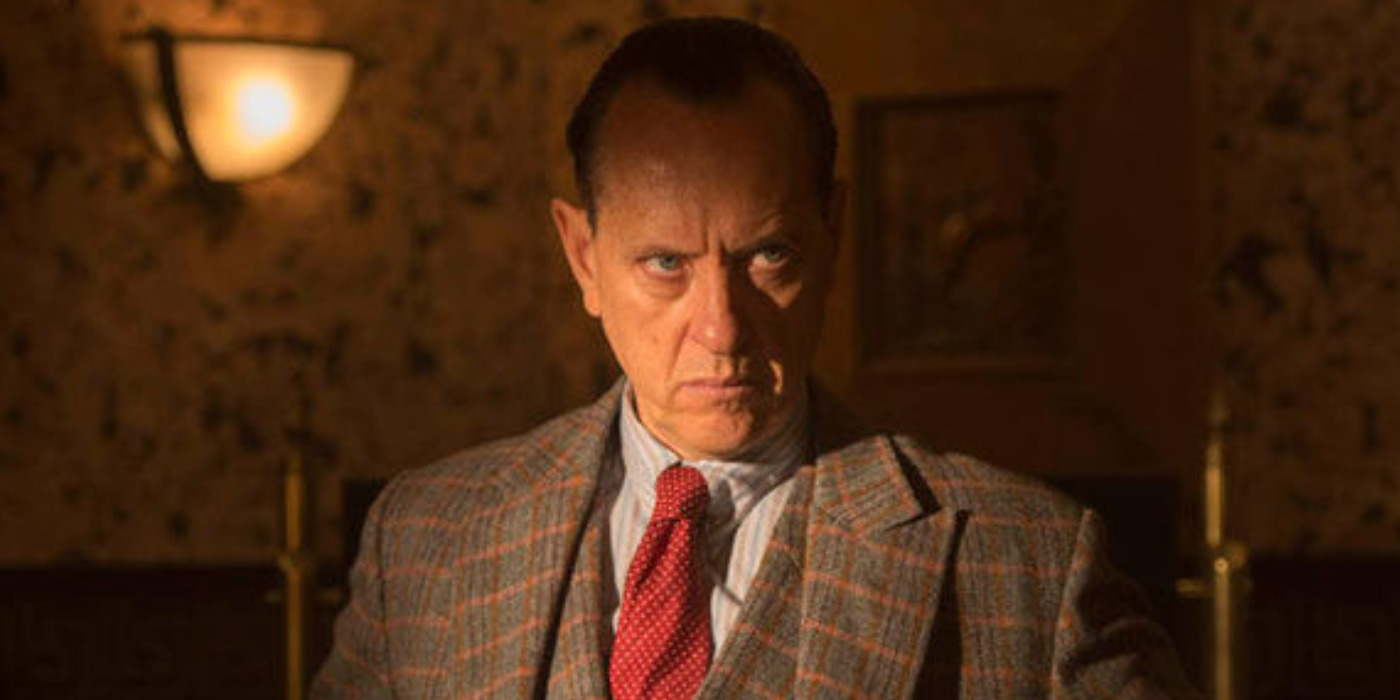
Nevertheless, despite being polar opposites in terms of ideology, Bulstrode and Dance present similar inclinations toward moral ambiguity. Throughout the series, we see the intelligence agent employ dubious strategies and schemes to achieve his true goal. In fact, for a long time, he uses Robert as bait in order to pin his true enemies, the Tenebrae. However, his dubious morals inform a big part of the story’s overarching thematic identity. The narrative explores the necessity of a middle ground in dichotomies as Robert struggles with the same in his split personality as Jekyll and Hyde. Bulstrode’s character, especially in opposition ot Dance, taps into the same themes on a bigger scale. Yet, ultimately, the character remains a fictional element.
Read More: Under Paris: Are Sophia and Mika Based on Real Climate Activists? Is SOS a Real Organization?