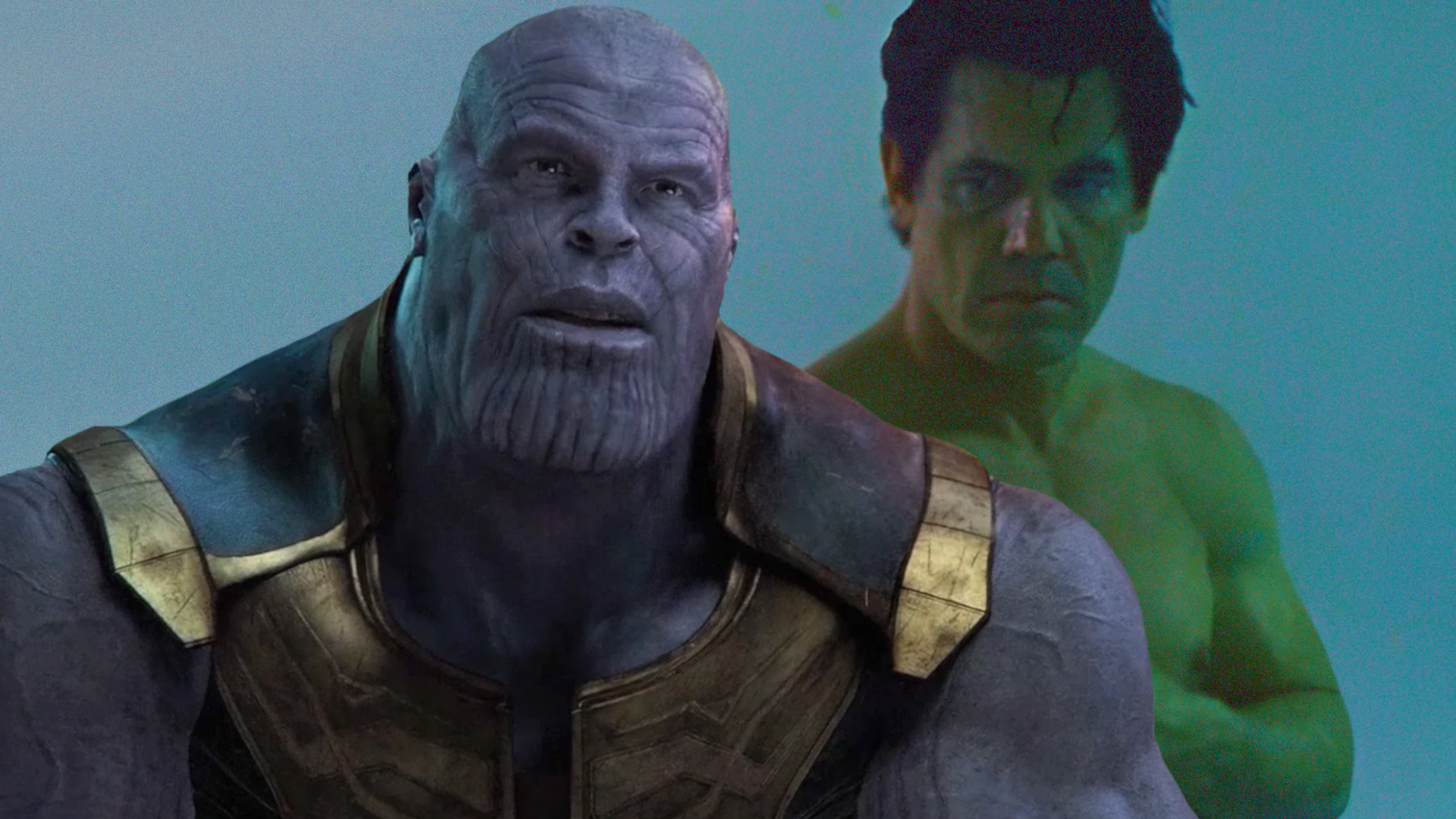
Josh Brolin is a prominent, well-established actor with an impressive resume, working in genre films, Oscar-winning icons, and even becoming the MCU’s most iconic villain. Despite these achievements, Brolin, much like any hardworking Hollywood actor, is bound to take on some truly regrettable films. Such is the case in 2013’s soulless remake of Park Chan-wook’s masterpiece, Oldboy.
The transgressive, transformative film from 2003 loosely adapts Garon Tsuchiya’s 1996 manga Old Boy, while injecting nuance into its morally-gray characters, even culminating in a legendary film-original plot twist. 2013’s Oldboy, however, is a cheap facsimile of the adaptation. While Brolin’s is hardly the worst performance as its lead, this box office bomb was a low point.
2013’s Oldboy Is an Embarrassment for Everyone Involved
Featuring an American spin on Korea’s own localized take, 2013’s Oldboy begins in 1993, where Brolin portrays Joe Doucett, an ad executive and overall unlikable human being. Much of his misfortune in this time was self-inflicted, but the worst components are largely owed to some bizarrely ham acting from Brolin, especially when shooting scenes featuring Joe in isolation.
Joe’s portrayal is riddled with inauthenticity, up to and including Brolin having to pretend he’s not in great shape even at the start. Over the course of its first half, Joe gets himself into a variety of trouble before being mysteriously confined in a prison-like hotel room for 20 years. During this time, his ex-wife is assaulted and murdered.
Uneven portrayals aside, it’s here that the film’s weaker components begin to show. Granted, it’s incredibly difficult to act in the non-verbal feedback loop of apparent silence, pretending to be watched but with nobody answering. Even then, everything, from the visual storytelling, to the dialog choices, show insistent, overt cues instead of organically charting a path for audiences.
The result is a laughable mess at multiple points. Brolin as Joe churns out the opposite of a tour de force, wailing at his dead adopted rat family. Timing is off, such as the immediate creation of a pillow girlfriend like a Cast Away-at-home Wilson, bloody face included, right after he learns of his ex-wife’s death.
Even as a Revenge Flick, 2013’s Oldboy Stumbles
With the film still heavily borrowing from Oldboy’s narration, much of the rest of the plot features Joe’s quest for vengeance after spending 20 years in that hotel room. Having nothing to do but train and grow his Cast Away beard on the odd occasion, Joe suddenly becomes a generic, brutal action protagonist.
While there’s nothing wrong with enjoying a generic revenge film, even this execution is rough at times. It features the haphazard delivery of the passage of time, told insistently through spelling out what year it is inorganically through dialog. Yet, it does this while occasionally retaining the original movie’s use of key historical events shown on television, to its credit.
The movie’s visual storytelling is awkward and feels like it missed the point while trying to adapt the 2003 original, instead of being transformative itself. Oldboy sometimes unintentionally dates itself, such as when characters are unironically using Google+, a telling signal given the platform’s limited window of relevance.
Oldboy sometimes unintentionally dates itself, such as when characters are unironically using Google+, a telling signal given the platform’s limited window of relevance.
Yet, giving a movie points for resembling the film it remakes begs the question: why bother watching it when the original is still superior? This is best illustrated by the iconic Oldboy hallway fight scene, utterly butchered in the remake where Brolin is a killing machine in a far more open space, with the fracas having an accidentally comedic execution.
But special marks should be made for Sharlto Copley’s godawful villain rendition, with his past being strangely way more tragic than the original, yet still irrationally placing blame on Joe. It loses the all-consuming vengeance of 2003’s Lee Woo-jin, whose desire for protagonist Oh Dae-su to similarly feel the scorn and shame of forbidden love.
Oldboy’s Failure Was Not Entirely Its Director or Cast’s Fault
Spike Lee is a talented filmmaker with a library of excellent titles under his name. Lee even discussed with Screen Rant how the film still took inspiration from the original manga. Despite this, heavy producer interference cut Lee’s original version from 140 minutes to approximately 105, creating a box office bomb that lives on in infamy.
While traces of Lee’s style exist in the final release, including glimpses of a double-dolly shot after Joe’s escape, the movie doesn’t seem to bear his usual stamp of approval. This is perhaps most notably present in the title sequence, whereas any other work would usually call it “a Spike Lee Joint”, Oldboy is tepidly declared “a Spike Lee film”.
The film feels odd and out-of-place for everyone involved. It features a pretty stellar cast, including current and fellow future MCU stars Pom Klementieff, Elizabeth Olsen, and Samuel L. Jackson. It even features exceptional talent like Michael Imperioli, the versatile, late character actor Lance Reddick, and future Oscar-winner Rami Malek in a surprisingly tiny part.
Despite everything it had going for itself, 2013’s Oldboy was a financial disappointment, grossing $5.2 million worldwide against a $30 million budget. Its most infamous elements, such as the one-shot hammer scene, are the product of studio interference failing to understand the impact of the original’s version. It’s not impossible, either; Daredevil frequently nails it, for instance.
The 2013 Remake Is a Lesson and Thankfully Not a Destructive One

Oldboy did not thankfully destroy the careers of those who remade it. Spike Lee, for instance, has made consistently excellent movies like BlacKkKlansman, Da 5 Bloods, and Highest 2 Lowest over the past decade. Brolin has starred in Denis Villeneuve’s films like Sicario and Dune, and is an MCU icon now too. Oldboy is, apparently, merely the exception.
Hollywood has hardly given up on remakes of foreign properties (particularly manga/anime) since then. 2017’s Ghost in the Shell is one classic example, while more overt cases like The Lake House proved American remakes can still turn a profit. HBO’s upcoming Parasite miniseries is a potentially positive example, but these are the odd exceptions to duds like 2021’s Cowboy Bebop.
Audiences should be aware and not uncritically accept a movie seen even by its creators as unsatisfying. In many cases, this translates to spending money on allowing one’s precious hours to be wasted on a movie they will forget. 2013’s Oldboy merely serves as an exhibit of all of these aspects.
While reductive to say it should never have been made, 2013’s Oldboy deserved better than the final cut it received.