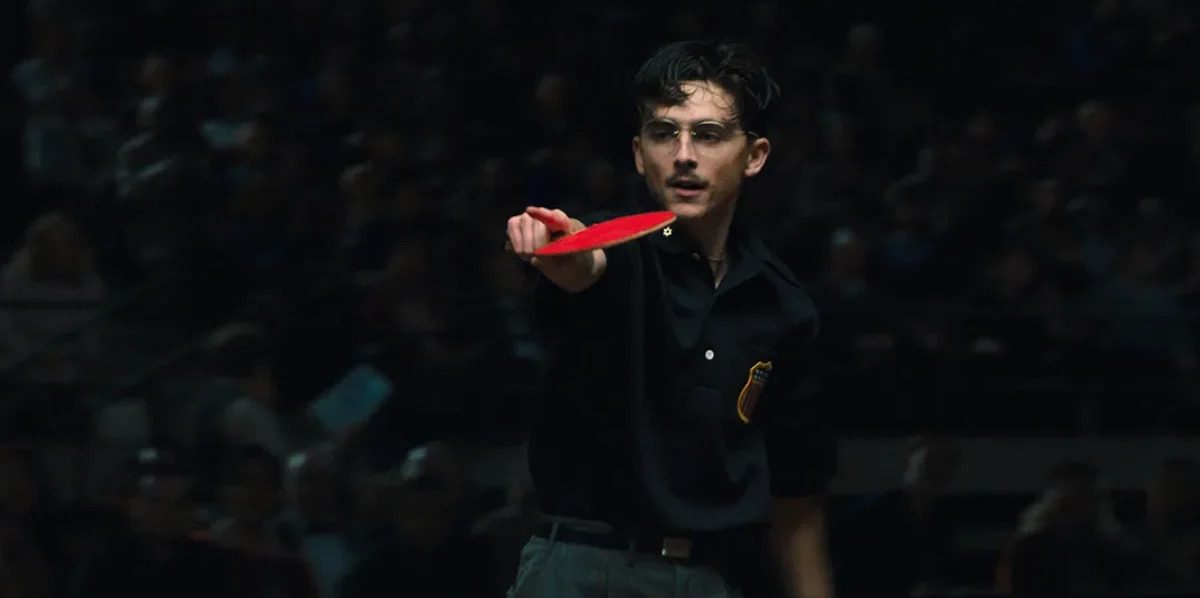

Set against the backdrop of the 1950s ping-pong hustling scene, Marty Supreme follows the erratic rise of Marty (Timothée Chalamet), a charismatic but deeply flawed table tennis wizard. The film chronicles his journey from underground basement bets to the bright lights of professional tournaments, all while he dodges loan sharks, rivals, and his own self-destructive tendencies. It is a portrait of a man addicted to the spin, both on the ball and in his life. Despite the high-energy premise and Chalamet’s star power, Marty Supreme ultimately feels like a one-trick pony. The movie has an unrelenting pace; however, it gets exhausting after a while. It operates at a volume and velocity that eventually numbs you rather than engages you.
A significant problem lies in the narrative structure. Some of the setups, like the scene at a run-down hotel, while funny, are completely unnecessary to the plot. It felt like that sequence was added only to reinforce the chaotic absurdity of the movie. Unfortunately, there are other scenes that fit this mold—vignettes that exist for style rather than substance. While all these scenes are funny on their own, they also prevent the story from ever becoming believable. Consequently, the film stays outlandish—and sometimes caricaturish—throughout its runtime. You never quite buy into Marty as a real person because the film treats him more like a cartoon character in a fever dream.
The other major issue I have with the movie is its ending. The final scene of Marty breaking down in tears upon meeting his newborn son is unearned. Given the cynicism and pace of the previous ninety minutes, the film does not do the necessary emotional work to justify such a heavy beat. Clearly, it was added to give Marty a redemption arc and Timothée Chalamet a shot at the Oscar win. It feels like a calculated move by the filmmakers rather than a natural conclusion to the story they were telling.
The film isn’t all a miss, however. The good portions are truly the table tennis scenes, which have been shot well. They are dynamic, tense, and visually inventive. Kudos to Timothée for making them feel realistic; his physical commitment to the sport sells the idea that he is a master of the table, even if the script fails to master the human element.
If you are looking for pure visual style and great sports choreography, there is something here for you. But as a cohesive narrative, Marty Supreme spins out of control long before the final match.