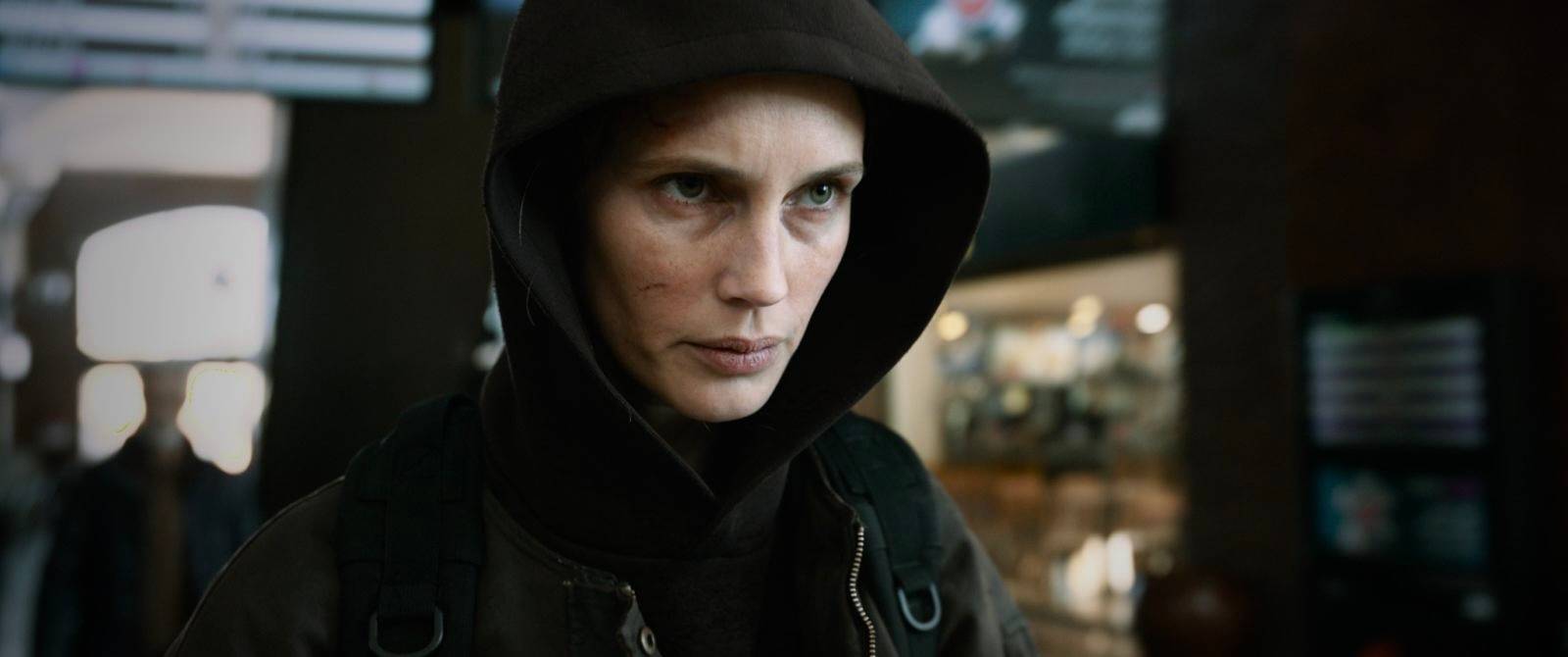

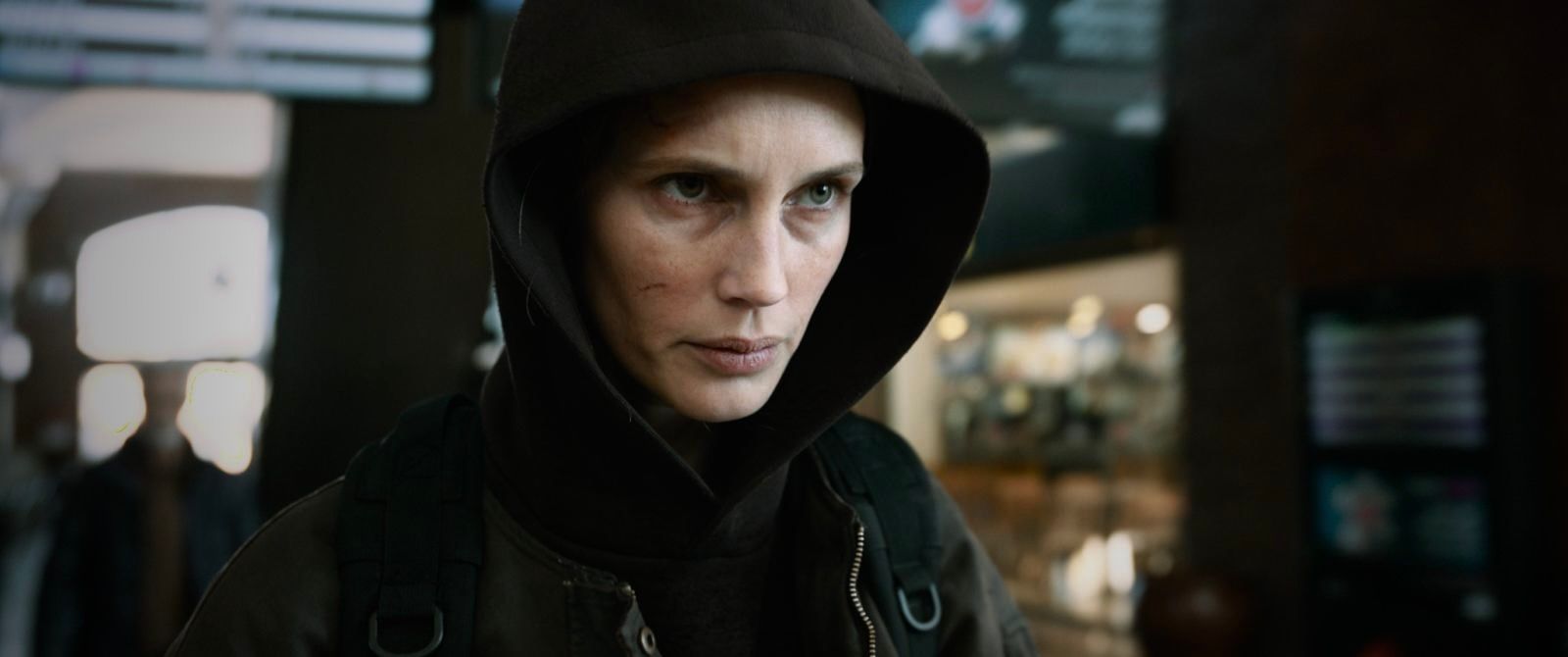
Guillaume de Fontenay’s Agent Zero is so pared down it hardly passes as a genuine film. A Temu version of The Bourne Identity, its short runtime provides enough space for halfway decent action sequences, but whatever it does to genuflect towards state-sponsored terror or modern colonialism is too weak. There are a few moments of genuine electricity here, but most of the film never registers as anything more lasting than a video game cut scene.
Agent Zero’s Intrigue Lies on the Margins of Its Lackluster Narrative
Much of that blame lies at the feet of de Fontenay, who also wrote the script, which is completely devoid of characterization and dependent on simplistic narrative turns. An opening salvo tells us that, in 1985, the DGSE set up an elite unit, generically called “Alpha,” which was established to eliminate “enemies of France.” Badh (Marine Vacth) was one such agent, but after a nearly fatal mission in Raqqa, she absconded to the small city of Essaouira, Morocco, where she surfs and lives a quiet life married to local police officer Illias (Salim Kéchiouche).
Agent Zero is set up so unimaginatively, that there isn’t any mystery about where its headed after its initial set up. You know that some way, somehow, Badh’s past will come back to haunt her and that Illias will get caught in the fray. Which is more or less what happens. Two gunmen shoot at Illias while the couple is sitting at an outdoor café, putting him in a coma, and her back in the field.
Partly motivated by vengeance, and partly motivated by ingrained paranoia, Badh hunts down the people that shot at her husband, only to find that the perpetrators are hired guns of Monsour Khoury (Slimane Dazi), a Moroccan arms dealer to ISIS. Even more alarming is that Khoury is in direct cahoots with the DGSE via Badh’s former boss, Joanna (Emmanuelle Bercot).
Through these sticky ties, de Fontenay introduces juicier questions about European hegemony and the zombie-like continuation of colonialism in ways that are, admittedly, surprising and refreshing for a genre that is typically more fetishist towards militarism. The film suggests in no uncertain terms that Western governments are in the regular practice of propping up one form of terrorism in order to make an example of another, in an entropic, morally dubious carousel.
Vacth sells the fights as well as she can, but they are blandly choreographed and staged.
But the film doesn’t push forward these ideas in any way that’s all that convincing, since it simultaneously propagates old, problematic depictions of the so-called dangers of the global south (ISIS feels like a particularly dated choice in this regard). None of this would matter all that much if the film was tense or kinetically charged, but there’s just nothing there, either. Vacth sells the fights as well as she can, but they are so blandly choreographed and staged that the assumed contact high of experiencing a highly skilled mercenary take down a bunch of evil guys is practically nil.
In the films which Agent Zero apes, the protagonist usually goes on a tear because they have gone through some kind of internal transformation. Guillaume de Fontenay sets the stage for Badh to act on principle — after all, her country is actively aiding and abetting a system of global terror — but she is mostly unaware of these facts. Instead, she pushes forward out of an unconvincing desire for revenge. It makes for a particularly bland film when your main character is a mostly inactive participant in their own story. Perhaps the title is inadvertently accurate, then. She is nothing but a proxy in an empty fight.