Black Mirror wasn’t just a success story for Netflix, it was an achievement that reshaped what sci-fi anthology shows could be in the modern age. Anthologies once felt niche and dusty. Suddenly, thanks to Black Mirror, they were urgent, stylish, and culturally dominant. However, for all its innovation, Love, Death & Robots outclasses it where it matters most: limitless storytelling range.
Love, Death & Robots is a four-volume sci-fi anthology comprised of bite-size episodes each crafted by different creative teams. Unlike Black Mirror, which tends to stick to technoparanoia and speculative futurism, LD+R embraces endless variety, tonal whiplash, and radical stylistic shifts in animation. Episodes jump between horror, comedy, fantasy, philosophy, and spectacle without needing a shared mood or message.
From the moment it made its season 1 debut in 2019, Love, Death & Robots has stretched the very idea of what an anthology can be much further than Black Mirror ever has or will. Black Mirror offers a treasure chest of cautionary tales, but its focus is still relatively narrow. Love, Death & Robots treats the sci-fi genre like a playground. When it comes to pure narrative flexibility, it beats its predecessor at its own game.
Love, Death & Robots Has Total Thematic Freedom
No Central Message Means Unlimited Story Possibilities

Most anthology sci-fi thrives on variety, but usually within a defined lane. Shows will have episodes that feature different plots, different characters, different settings, but a shared thesis binds everything together. That connective tissue gives identity, but it also creates limits. Themes become guardrails that episodes rarely cross.
For example, Black Mirror almost always circles the same core anxiety: technology’s dark edge and the human cost of progress. Story details and specific settings change, but the thematic core remains familiar. Viewers arrive expecting a story revolving somehow around discomfort rooted in digital life, surveillance, artificial intelligence, or social systems pushed to extremes.
Other sci-fi anthology shows follow similar patterns. Amazon Prime’s Secret Level, as another example, is unapologetically video-game focused, with every story tied to interactive worlds and gaming culture. Even the genre-defining classic The Twilight Zone spent most of its time distilling existential unease into morality plays where reality twists and perception fractures. Each show has a signature lens.
Love, Death & Robots, on the other hand, refuses that structure entirely. There’s no ideological glue, no central theme underpinning the LD+R brand, and no single creative mission statement. One episode can be bleak military horror, the next absurdist comedy, the next quiet cosmic reflection. Tone, genre, and intent reset every time.
Even the title plays tricks. Not every story features love. Death isn’t guaranteed. Robots are optional. The title signals themes, then the show itself happily ignores them. That misdirection defines what makes Love, Death & Robots so great: expectations and preconceptions are pointless.
This lack of thematic obligation is liberating. The various writers and directors of Love, Death & Robots’ episodes aren’t steering toward a shared thesis; they’re chasing the strongest idea, however strange or intimate. That freedom keeps the format from feeling repetitive and ensures no creative well runs dry.
For a single-episode anthology, that’s invaluable. Without a thesis to exhaust, LD+R can explore literally any concept. Sci-fi becomes a launchpad rather than a boundary, giving the series unusual longevity and a constantly refreshing identity.
There’s Nothing Too Weird For Love, Death & Robots
If An Idea Sounds Impossible, The Show Makes It Work

Sci-fi anthology shows often flirt with strange concepts, but many still operate within mainstream comfort zones. Especially with flagship streaming titles like Black Mirror, chasing a prestige tone and broad appeal can quietly limit the potential for truly innovative storytelling.
Love, Death & Robots goes the opposite way. If an idea sounds unfilmable or ridiculous, that’s usually a green light. Take the episode “When the Yogurt Took Over,” where sentient dairy products outmaneuver humanity and run global governance. The premise sounds like parody, yet the execution turns it into razor-sharp satire with genuine sci-fi bite.
Then there’s “Zima Blue,” which follows a pool-cleaning robot that evolves into the world’s most celebrated artist, chasing existential meaning through color and memory. It’s meditative, philosophical, and emotionally precise. Few shows would risk something so minimal and introspective, yet it becomes unforgettable.
Another notable example of just how weird LD+R can get is “Ice Age,” which shrinks civilization into a couple’s fridge freezer, letting eons pass in minutes as tiny societies rise and collapse. Domestic normality frames cosmic scale. It’s playful high-concept storytelling that treats the impossible as both plausible and, somehow, relatable.
That creative fearlessness defines Love, Death & Robots. Horror can mutate into slapstick. Epic space opera can pivot into tragic character study. Grotesque violence can coexist with quiet tenderness. Nothing is dismissed for being too niche, too strange, or tonally incompatible.
Crucially, the weirdness of LD+R isn’t just randomness for novelty’s sake. Each episode commits fully to its premise, grounding the outlandish in emotional logic or thematic clarity. The result is not randomness, but controlled unpredictability that keeps viewers constantly off-balance.
Where many sci-fi anthologies test boundaries, Love, Death & Robots erases them. The range of ideas across its four seasons expands so far that “normal” stops being relevant. That willingness to embrace the bizarre is a massive advantage in a format built on delivering episode-by-episode variety.
Animation Shakes Up The Variety Of LD+R Even Further
Radical Visual Styles Turn Every Episode Into A New Experience

Image via Netflix
If Love, Death & Robots were entirely live-action, its storytelling range would still be exceptional. The sheer range and creativity of the concepts within each season outshines almost every other sci-fi anthology. However, animation supercharges that diversity, removing physical production limits and letting imagination dictate scope, scale, and visual language.
Every episode of Love, Death & Robots can look radically different. Hyper-realistic CGI sits beside painterly dreamscapes, comic-book stylization, motion-capture performance, or minimalist design. Visual identity resets as often as narrative tone, making each installment feel like a premiere rather than a continuation.
That stylistic elasticity stands out even among animated anthologies. For example, Amazon’s Secret Level offers impressive variety, but much of it lives within a familiar CGI spectrum. Love, Death & Robots treats the medium of animation as a storytelling tool, not just an aesthetic wrapper.
Animation also unlocks the ability for LD+R to explore true tonal extremes. Grotesque creature horror, operatic space battles or surreal metaphysical imagery can be explored without the constraints live-action shows face. The unreal becomes seamless, immersive, and often more convincing than live action.
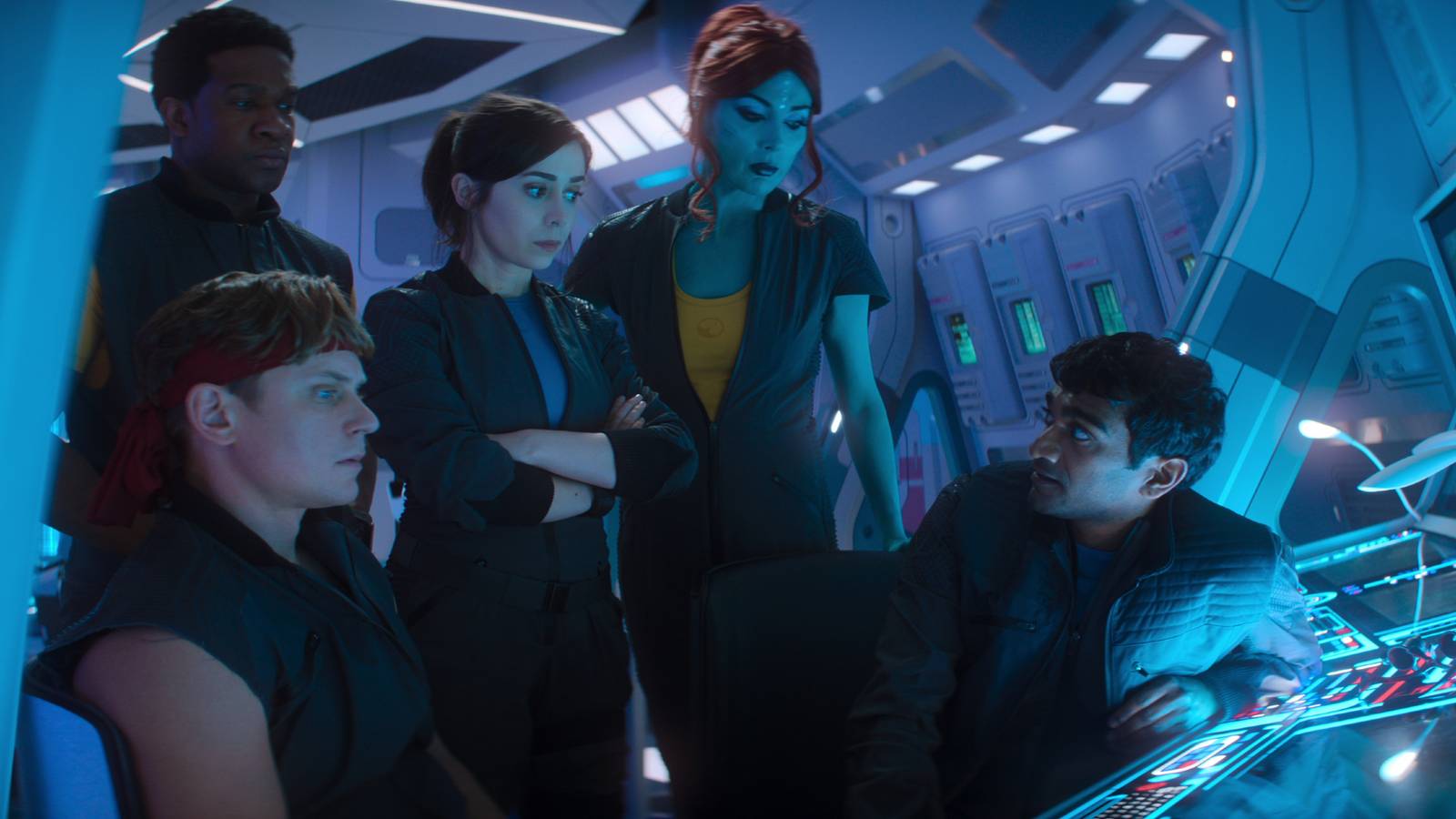
However, even when it comes to being an “animated” show, Love, Death & Robots bends expectations again. Some episodes are fully live-action, slipping into the lineup without ceremony. The result is that LD+R technically can’t even be classified as an “animated series”.
This constant reinvention reinforces the core promise: anything can happen here. Not just narratively, but visually and structurally. Viewers aren’t just watching different stories; they’re experiencing different artistic worlds crafted with distinct creative philosophies. That layered variety makes the anthology feel inexhaustible. While others refine a formula, Love, Death & Robots throws the very concepts of blueprints out the window.

![Jensen Ackles Says He Got “The Job Done” With Jared Padalecki in ‘The Boys’ Season 5 [Exclusive]](https://citigist.com/wp-content/uploads/2025/06/Jensen-Ackles-Says-He-Got-The-Job-Done-With-Jared-380x200.jpg)