
It’s a little strange, honestly, how easy Bosch is to overlook. Not because it’s small — seven seasons isn’t small, and neither is spinning off into two (now three) additional series — but because it never really behaves like the kind of show that demands attention. No massive twists engineered for social media, no constant reinvention, it just keeps going, and, somewhere along the way, it got better than most of the shows that made a lot more noise.
What started on Prime Video as a fairly traditional adaptation of Michael Connelly’s novels has quietly grown into a full-blown franchise — Bosch, Bosch: Legacy, and Ballard—that feels less like a collection of shows and more like one long, continuous story that just refuses to end.
What Is the ‘Bosch’ Franchise About on Prime Video?

At a glance, it’s familiar territory: a homicide detective in Los Angeles has a string of cases that never quite stay contained. You’ve seen versions of this before, but Bosch — anchored by Titus Welliver — leans into something a little less flashy and a lot more patient. Cases don’t wrap up neatly, personal baggage doesn’t conveniently disappear, and connections will lead to other connections, or sometimes to something from long ago that is more chaotic. This show asks the viewer to sit with it, which, to be honest, isn’t the standard (or typical) of a working-class investigation show.
The earlier, slower pace had potential viewers confused at times. The first season got tagged as solid but conventional — well-acted, well-constructed, maybe a bit too comfortable. And yeah, at the time, that wasn’t entirely wrong. It did feel like it was playing within the lines. But here’s the thing — those lines start to blur the longer you stick with it.
By the later seasons, the show isn’t trying to impress you anymore, and it just settles in. As the writing gets tighter, and the characters get more complex, Los Angeles starts taking over the whole room, being dirty, large, uncontrollable, and by far the most influential character. The change in how you think about the city is usually a gradual change and stays below your radar.
How ‘Bosch: Legacy’ and ‘Ballard’ Expand the Prime Video Universe

This is usually where things fall apart: spinoffs have a habit of stretching a good idea until it snaps. You can almost feel when a franchise is running on fumes, but that’s not what’s happening here. Bosch: Legacy doesn’t reinvent anything; it just moves the camera. Bosch himself steps into a different phase of his life, while Maddie (Madison Lintz) takes on a bigger role, and suddenly the world feels wider without losing its center. It’s still recognizably Bosch. Same tone, same pacing, same refusal to rush.
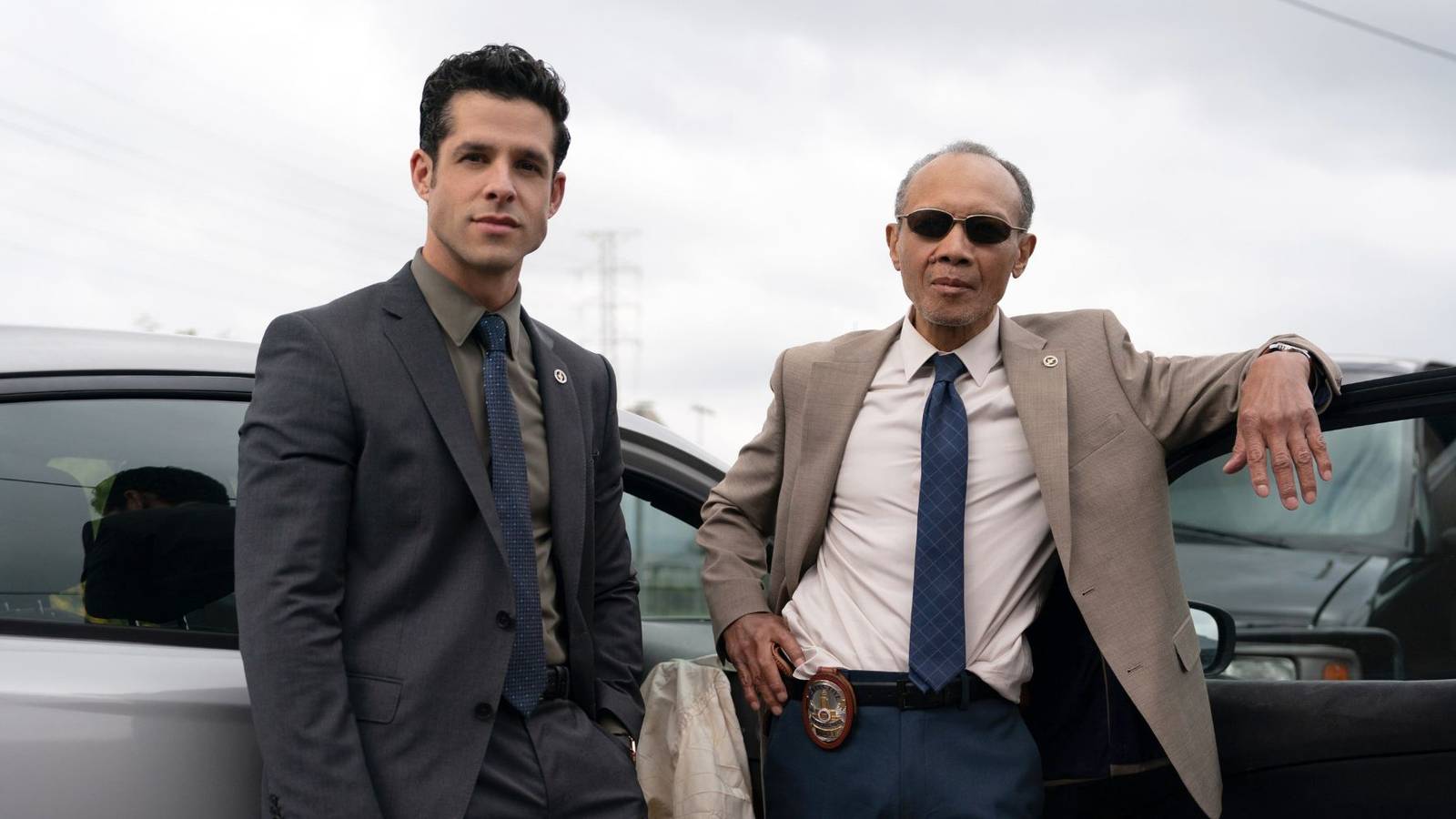
Then Ballard comes in — led by Maggie Q — and, on paper, it shouldn’t feel as seamless as it does with its new lead, new perspective, and slightly different energy, but it works — surprisingly well, actually. The connective tissue is still there, even when Bosch himself is barely in the frame, and that’s probably the smartest thing the franchise has done: it lets other characters carry weight without pretending the original didn’t matter.
Most shows burn bright early and spend the rest of their run trying to get back to that peak; Bosch kind of does the opposite. It improves in ways that aren’t immediately obvious. The pacing gets more confident — slower, but more intentional, the dialogue relaxes a bit, feels like people actually talking (with all the messiness that comes with that). Even the cases themselves start to carry more weight because they linger rather than become bigger.
Will the Bosch Franchise Continue After ‘Ballard’? What’s Next

At this point, it doesn’t feel like it’s slowing down; if anything, it’s doing the opposite. There’s a prequel series on the way (Bosch: Start of Watch), which — if we’re being honest — could go either way. Prequels are tricky because you already know where the character ends up, so the tension has to come from somewhere else. Still, given how carefully this franchise has handled everything so far, it’s hard to write it off completely.
And even as the focus shifts, Bosch himself hasn’t really gone anywhere. He’s still around, still popping in, still acting as the thread tying everything together. Not the center anymore, but not gone, either. Because of all the expansion, new faces, and shifting perspectives, the franchise hasn’t lost track of what made it work in the first place. It has gotten more comfortable sitting in its own lane and doing it better than most.

- Release Date
-
2015 – 2021-00-00
- Network
-
Prime Video
- Showrunner
-
Eric Ellis Overmyer