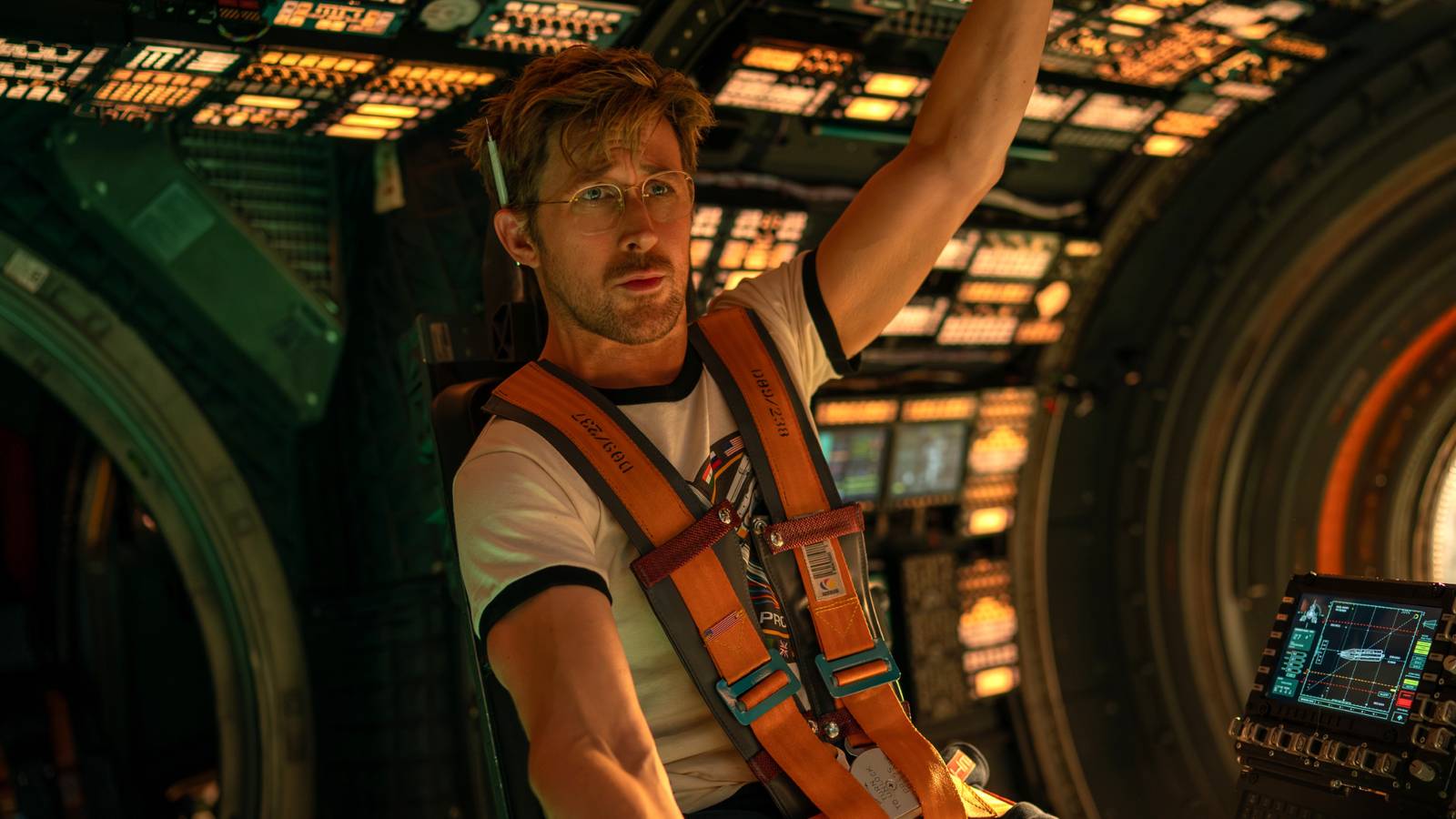

The story of 2026’s Project Hail Mary is special for a lot of reasons, but perhaps the best is how the film breaks one of sci-fi’s worst movie tropes in spectacular and fascinating fashion throughout its story. News that 2026 would see Ryan Reynolds star in the main role of another big-budget adaptation of an Andy Weir novel was a reveal that immediately excited audiences, particularly given the prior reception to Ridley Scott’s adaptation of Weir’s book The Martian in 2015.
The release of Project Hail Mary has proven the previous hype about the film was well-founded, as the sci-fi story manages to adapt its source material admirably, and provide a stunning blend of action, drama and comedy throughout its runtime, meaning there’s a little something in the story for every kind of movie fan. Part of why Project Hail Mary feels so special is undeniably in the way it forges its own path, and ensures it isn’t beholden to one of the most fraught narrative conventions that tends to crop up in sci-fi stories.
Project Hail Mary Perfectly Flips The “Chosen Savior” Sci-Fi Trope On Its Head

Despite Project Hail Mary hinging around one lone scientist being the sole person who can save the world – and eventually two worlds – from certain doom, the sci-fi movie’s story avoids falling into one of the most common pitfalls of the genre: namely, the concept of its protagonist being a special prodigy or chosen one who is smarter or more talented than every alien they come into contact with.
While this approach to sci-fi stories can be explored in truly interesting fashion – as both Dune and Star Wars repeatedly prove – this story avenue can all too often be used without any nuance, and instead be simply evoked to give the plot an excuse to exist. The issues with that latter kind of approach are twofold, with it creating stilted narratives and contriving excuses for the lead character to be important.
Comparatively, Project Hail Mary takes almost every opportunity it can to underline how Ryan Reynolds’ Grace was not the only person for this job, and is somewhat out of his depth for most of its story, despite his immense intelligence.
Grace is only considered for the Hail Mary mission after the science officer he is training dies in an accident, and even then, he has to be effectively kidnapped to go, as Grace initially refuses the call to save the world. Even then, Grace is supposed to be part of a three-person team, only to become the sole survivor because the process the crew undergoes to go into a coma is experimental.
This all said, Project Hail Mary‘s perhaps most important subversion of the tropes around chosen ones and their often inexplicable depiction as smarter or better than all alien races comes in the way that Grace and Rocky are both depicted as very advanced, but in different senses. With the film highlighting the pros and cons of both characters’ outlooks and talents, Project Hail Mary creates a truly interesting story by taking care to flip every possible moment that could have made Grace look more of a cliché protagonist on its head.
Project Hail Mary’s Best Moments All Come From Flipping The Story Trend For Its Plot

Much of the impact of Project Hail Mary comes from the slow reveal that Grace is in many ways not at all suited for the mission he is forced to go on – having no initial heroic desire to sacrifice himself for others, being stranded on a space station with his fellow crew now dead, and with his survival and success in his mission being in no small part because he happened to meet a friendly sentient slab of stone at the right time and place.
Fittingly, all of these factors make us empathize with and root for Grace all the more, and be all the more greatful for his blossoming freindship with the also loveable Rocky. We know Grace has been forced into horror-esque territory from the first moment we meet him, and his capacity to form an immense bond with an entity who is entirely unlike any being on Earth is all the more endearing as a result of Grace being depicted as a flawed character who grows as he connects with his unlikely ally.
Similarly, Project Hail Mary‘s ending – and Grace’s decision to sacrifice himself to save Rocky and his friend’s homeworld – is as potent as it is because we know Grace isn’t a hardened grizzled hero, but a regular human who wanted nothing more than to avoid this kind of sacrifice for most of the story, which also makes his survival all the more of a relief, and the film all the more of a glowing success narratively.