
Summary
- Collider’s Steve Weintraub talks with director S.S. Rajamouli for Varanasi.
- The filmmaker discusses James Cameron’s comments on RRR, how he’s leveling up since the success of that 2022 adventure film, and what fans can expect from the story and runtime.
- Rajamouli also discusses filming for IMAX, selecting his slow-motion shots, his unique way of filming, and how the music of Varanasi compares to RRR.
There isn’t a lot known, plot-wise, about S.S. Rajamouli‘s upcoming epic Varanasi. What we do know is that it’s going to be epic in scale with the filmmaker’s signature slow-motion beats, specific scenes filmed for IMAX, and Rajamouli’s dedication to building on the success of his globally revered period adventure, 2022’s RRR.
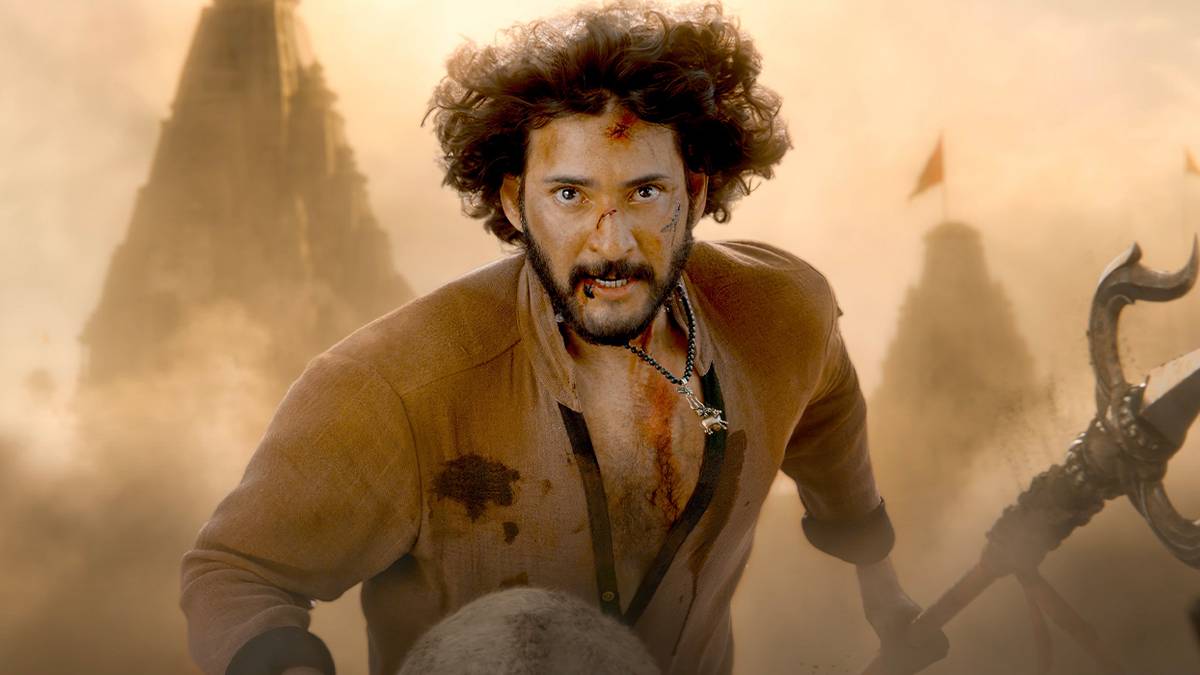
Starring Mahesh Babu (Pokiri), Priyanka Chopra-Jonas (Citadel), and Prithviraj Sukumaran (The Goat Life), Varanasi follows a Shiva devotee (Babu), who embarks on a mysterious mission to retrieve an ancient cosmic artifact. To do so, he must travel through history, using clues to aid him on his journey. But along the way, our hero discovers that the one who sent him on this quest is an evil mastermind looking to control the world. According to Rajamouli, “It’s about the experience. It’s the experience that will transport you through unimaginably big, gigantic worlds, not just in terms of scale, but in terms of emotions as well.”
At the end of last year, Collider’s Steve Weintraub had the pleasure of sitting down with the cast (which you can check out here) and the director in India, after the first-ever look at Varanasi. During their conversation, Rajamouli shares his vision for the final picture, what it’s like working with Telugu Cinema, how he selects his impactful slow-motion shots, and choosing which sequences will be filmed for IMAX. The filmmaker also discusses what to expect as far as Varanasi‘s runtime, shares the comments from James Cameron on RRR, and how he’s leveling up after that film’s success.
S.S. Rajamouli Shares James Cameron’s Response to ‘RRR’
“I was pinching myself to believe it.”

COLLIDER: I have a lot of questions about the movie, but I like throwing in a few fun questions at the beginning of all my interviews. What is your favorite Indian food, and what is in it?
S.S. RAJAMOULI: It’s called pothichoru. It’s basically a liquid form of lentils and rice. That’s home-cooked food, and I love it.
Is there something that you cook yourself?
RAJAMOULI: I never cook. I hate cooking. I only like eating.
We’re very similar. I’m wearing an Arnold Schwarzenegger T-shirt. I know you’re a movie fan. Do you have a favorite Arnold movie?
RAJAMOULI: Who doesn’t? [Laughs] T2, Terminator 2, and I like True Lies a lot. A completely different kind of film from him. I love True Lies.
What’s funny is that both are James Cameron.
RAJAMOULI: Yeah.
I’m assuming James Cameron must have seen RRR.
RAJAMOULI: Yes.
I’m assuming you spoke to him?
RAJAMOULI: Yes.
I know that you got to meet a lot of Hollywood filmmakers when you were promoting. As such a fan of James Cameron and Spielberg, and all these people, what has it been like to be embraced by Hollywood and have these filmmakers that you look up to talk so highly of you?
RAJAMOULI: It was unreal for me. First of all, meeting him is unreal. Then, him talking about my film is something else. And then him talking about the details of the film, the characters of the film, the movements of the film, and how he and his wife watched the film, and he recommended my movie to his wife, and both of them are watching the film again, he watched it a second time? All that was like, “Is this true?” I was pinching myself to believe it. It was one of the happiest moments in my career.
Pinpointing ‘Varanasi’s “Peak” Emotional Beats
“This will be one of the greatest cinematic moments. We have to do this.”

After RRR, you’ve been able to do what you want to do for the last few movies, but did you feel any additional pressure or indecision about what you wanted to do after RRR, knowing that so many people around the world are very interested in what you’re going to do?
RAJAMOULI: No. The success of RRR definitely has no pressure on me. My pressure is that, at the beginning of the film, we always have two or three ideas, which are interesting. So, if I start focusing on one idea, I feel that I’m missing out on those two. If I go for the other idea, I will feel that I’m missing out on this. That’s the pressure I go through at the beginning of the film. The success of the previous film, whether it’s Baahubali or any other film, has never affected me.
How did you decide on this film being, “Yes, this is what I want to make?”
RAJAMOULI: It is very difficult to pinpoint and say, “Yes, this is the time,” or “This is the moment in story development that I felt like this is the work.” It’s a kind of process that goes back and forth, back and forth. Also, it took a long time because at the same time, I was also in L.A. promoting RRR. So, I was doing that job there, coming back to India, dabbling a little bit with the story discussions, and again, going back. I don’t know exactly at which point I thought, “Yes, this is the film,” but I remember this definitely is one of the moments when we had the emotional sequence leading up to the moment where Rudhra, the character played by Mahesh [Babu], comes on the bull with the dust flying around. We thought, “This will be one of the greatest cinematic moments. We have to do this.”
I know this is very early; you’re in the middle of filming right now. The film’s not out for a long time, and I hate asking the generic question, but what do you want to tell people about the movie and what it’s about?
RAJAMOULI: It’s about the experience. It’s the experience that will transport you through unimaginably big, gigantic worlds, not just in terms of scale, but in terms of emotions as well.
One of the things that I love about your work is the way that you use slow motion in your action set pieces to help tell the story. How do you figure out which shots you want to do in slow motion, and are you figuring it out on set, or are you figuring it out in the editing room after, or is it a combination of both?
RAJAMOULI: Much, much before. Much before the shooting or editing on the writing table itself, I’ll be figuring out which shots are going to be slow motion. Those moments are the peak moments of emotion, so I can’t decide that on the set. It has to be much before.
S.S. Rajamouli Breaks Down His IMAX Strategy
“Why would I want to hide it?”
I love IMAX. It is my favorite format, and you are going to be releasing this in IMAX, and you’re filming it for IMAX. Can you talk about the decision as to why? Because James Cameron and films like Oppenheimer, all in IMAX, the full screen. Are you doing that, or are you doing select scenes in full-screen IMAX?
RAJAMOULI: Select screens. I would like to do the entire film in full IMAX, but our timelines and the way we work, we are not studio-backed. We are production company-based. So, that would be impossible for us to do the entire film in IMAX. That being said, I also love the moments where a normal scene opens into that gigantic world, you know? I really love that feel.
When we were having the conversations with the IMAX technicians and IMAX people in L.A., they were saying it can cut between the platforms and between the aspect ratios, and people will not notice it. You can hide those cuts. They were suggesting different ways to hide the cuts. I said, “Why would I want to hide it?” I want to blatantly tell the people, show the people that you are going to witness something extraordinary as they open the screen to the larger screen. It gives me elation. Why should I hide it? I would rather flaunt it rather than hide it. When we played this teaser for the audience at the event, you must have noticed when I opened Varanasi from the cinemascope to the full IMAX, there was a roar. So, I want to use it, capture it, and not hide it.
Oh yeah, when it does that, I’m like, “It’s on.” With the footage that you showed, can you talk about why you picked the scenes that you showed for the trailer over other scenes?
RAJAMOULI: It was in last October, I guess, when my artist started putting the pencil on the paper and started drawing the images. We know the story, and I told him that I wanted the audience to experience it. “I don’t want words, I want visuals. I want visuals, and people should get a sense of what this film is going to be, what scale, what scope this is going to be. So, there are no words. There are no words. I just want visuals.” And he started doing the job, and we picked some.
The picking of those visuals is mainly based on, “Am I feeling it or not?” I didn’t want words to describe it. “Am I feeling it or not? Yes, I am feeling it here. I am feeling it here. Yes, go through it, go through it, go through that scale.” We made the basic, simple black and white pencil-lined drawing of what this is going to be, and from last October until now, we started developing it, developing, and developing it. Studios worked on it day and night, day and night, until the last moment, where we are releasing. Some of the artists were working 24 hours, like, literally 24 hours, no sleep. They are working until they deliver this.
S.S. Rajamouli Aims for Another Epic Runtime
“It is always whatever is best for the story.”
I’m waiting for this thing to pop up behind us. What can you say about the antagonist of the film and this wheelchair with the Dr. Octopus-type arms?
RAJAMOULI: Definitely not sci-fi. It’s not sci-fi. It feels like it’s a sci-fi film. It’s not. It’s a more fantasy, mythological-based film. And the antagonist, Kumbha, I’m always known for presenting my antagonist better than my protagonist. I love working with antagonists. I just love his character, his intensity, and Prithviraj [Sukumaran], the way he brought that out with his performance, is really incredible. He just had his face, nothing else. No arms, no legs, no body movement. Nothing. His menace, he had to bring to his face, and he did it with great aplomb.
I’m curious about the runtime of the movie. I love long movies, especially when they’re deserving of a long runtime. RRR is a little over three hours, but you’ve made previous films that are 3.5 hours. Are you already thinking that this could be three hours, 3.5 hours?
RAJAMOULI: Usually, I aim my films based on the script that we have. Usually, my stories feel like they will be a two-hour and 40-minute to a three-hour kind of thing. That is how most of my recent movies have been like that. I think Varanasi will be, also, on those lines. I am at this point. I’m assuming it will be a little bit less than three hours.
In America, not a lot of people are as crazy about a three-hour movie. They like a two-hour movie. Personally, again, if the movie warrants it, it could be any length, but do you get the pressure to make it shorter, or do you get the creative freedom to do whatever’s best for the story?
RAJAMOULI: It is always whatever is best for the story. I seriously believe that if the content is not interesting, whether it is, three hours, two hours, 1.5 hours, or even three minutes, people wouldn’t care for it. They just get bored, and they just switch it off, or they walk out of the theater. They’re not interested. If you’re able to pull the audience into the world, into the emotions of the characters, and resonate with the emotions of the characters, I think runtime doesn’t matter.
‘Varanasi’s Songs “Won’t Be Anything Like” ‘RRR’
“We should concentrate on how to make that high higher or bigger.”

One of the things about RRR in America was the music and the songs. It exploded around the world. Can you talk a little bit about the music and the songs of your new film?
RAJAMOULI: Each film is different, Steve. It’s a big trap that many filmmakers tend to fall into, trying to see what are the elements in the previous film or the successful film, and because the audiences will be expecting it, how do we recreate that? Each film is different. Each film has different, unique points, with different emotions, different highs. I feel we should concentrate on how to make that high higher or bigger, rather than trying to recreate from the previous success. Of course, we feel great about RRR and how we performed worldwide.
I look at Varanasi as, “How can I get those kind of high moments,” but I do not try to recreate that music into Varanasi. We will have music, which will be great. Will have songs which are great, but they won’t be anything like RRR.
Which shot or sequence of this film thus far has been the most challenging to pull off, or is it still in front of you?
RAJAMOULI: The sequence that I am shooting now, in the middle of the shoot, I think that is one of the more technically challenging moments. We had to combine many known technologies to achieve what we needed to achieve. And the sequence I know, which will be really difficult, really tough to pull off, is a sequence that we have already shot. It’s the Ramayana episode. So, we completed the shoot, and we know the VFX for that is going to be a really, really tough job for all of us.
Right now, it’s November 2025. When do you actually finish filming? What’s still in front of you?
RAJAMOULI: We have completed about 50% of the shoot, and the 50% is behind us. We are thinking we can finish our shoot by next June. Something like that.
One of the things that I learned from Priyanka was that you will shoot the rehearsals and everyone is in street clothing, whatever they’re wearing, and then you’ll edit that and show it to them with their just normal clothes, and then that’s what you will actually shoot. Can you talk about your process? Because that’s unusual.
RAJAMOULI: Because I work with actors from different industries, and I am working with technologies which are not regularly used in filmmaking, it is very important for the cast and crew to understand, even for me to understand, the process of how we are going through filming it. So, I figured out the best way to do it is do a test shoot. So get the actors, give them the lines, get my DP, get the people who are involved in it, the production designer, whoever is involved in it, with the cameras, and let the actors do their acting. It’s a little bit like an extension of the actors reading the scripts. They invest. They do the reading. So I am taking it a little bit forward. I am doing the test shooting as they are reading the lines, making them act, and asking, “How do you like to do it? Would you like to walk as you are saying that? Would you like to sit? Would you lean onto something? Would you want something in your hand to explore?”

So, that gives us a lot of freedom. And I see them as they are going through their lines and motions. I will be able to see, my DP will be able to see in which pose or which movement, or which still moment, they are more comfortable with delivering their emotions. So, we will be having multiple cameras, and we will be capturing all of that, and we will do the edit on that and see how it is flowing through, and that will be our basis for shooting the actual shoot.
Varanasi is slated for global release on April 7, 2027.

- Release Date
-
April 7, 2027
- Director
-
S. S. Rajamouli
- Writers
-
Vijayendra Prasad, S.S. Rajamouli