Editor’s Note: The following contains spoilers for The Fall of the House of Usher.
The Big Picture
- The poem “The City in the Sea” recited in The Fall of the House of Usher by Verna is adapted and shorter, but still powerful.
- The various versions of the poem throughout the years suggest that Poe reworked it to emphasize both death and sinners.
- The poem serves as an allegory for the story of the Usher family, with Death represented by Roderick and Madeline and Hell represented by Verna.
One of the most beautiful and haunting moments of The Fall of the House of Usher takes place in Episode 7, “The Pit and the Pendulum” when Madeline Usher (Mary McDonnell) confronts Verna (Carla Gugino) in the old Usher house. Verna recites a poem that speaks about death and the rise and fall of an eerie city, and, while indeed beautiful, does leave us scratching our heads at first. “I thought you were offering clarity,” says Madeline herself, almost in tears, a feeling that most of us were having ourselves. “The City in the Sea” is another poem by Edgar Allan Poe, of course, one of the many references to his work in the new Mike Flanagan series. This one, though, seems tailor-made to portray the story of the Ushers.
What Is the Poem “The City in the Sea” About?
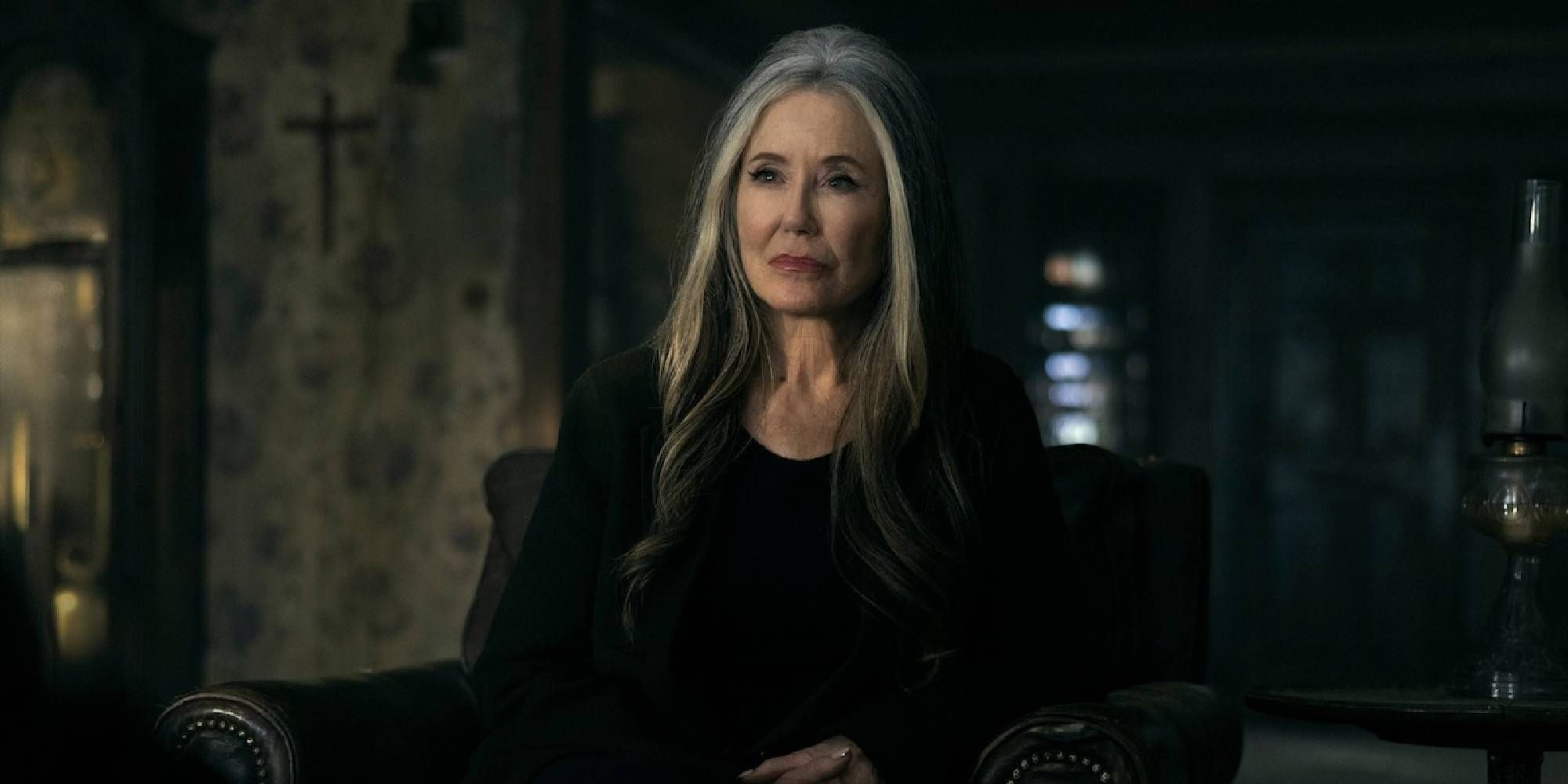
The version of “The City in the Sea” that Verna recites to Madeline is shorter than Poe’s final version, cutting some verses that would otherwise not keep up with the point she is trying to make. Nothing major, mostly descriptive lines that may contribute to our visual image of the city depicted in the verses, but that is not essential in the context of that moment in The Fall of the House of Usher. Still, this shorter, edited version that Mike Flanagan has adapted is still eerily powerful.
There were multiple versions of “The City in the Sea” throughout the years, the original one coming out in 1831 with the name “The Doomed City”, and being renamed “The City of Sin” in 1936 before getting its final title in 1849. The previous titles are possibly references to the biblical locations of Sodom and Gomorrah, cities that were destroyed by God due to their sins and morals that were contrary to those of the ancient Israelites. They were destroyed by a rain of fire and sulfur, which immediately makes us think of Prospero Usher’s (Sauriyan Sapkota) death. It seems that, through the years, Poe reworked the poem to make it as much about death as it is about the sinners.
The verses speak of a remote city in the West – where the Sun sets, meaning the literal “end of days” – that Death itself has built, where souls go upon their deaths. There is no distinction of morals or social status to those who live in this city, they are all equal in their eternal rest. The only entity that is above all is Death itself, looking “gigantically down” on everyone and everything “from a proud tower in the town.” This realm is described as lavish and luxurious, “Babylon-like,” but dark and sad, as “No rays from the holy heaven come down on the long nighttime of that town.”
Read Related Also: Guillermo del Toro Discusses Canceled Star Wars Movie
In the final verses come the actual end of days, when “Hell, rising from a thousand thrones” comes to take everything down into the sea, while paying reverence to Death. The end comes slowly at first, but then the whole city is dragged down among waves that “have now a redder glow” (blood, most likely) and “amid no earthly moans.” These last verses are especially interesting because they establish Death as being something worse than Hell itself, as the latter pays homage to the first. While it’s not specified why, a possible interpretation is how Death has managed to amass so many damned souls living under it after building such an impressive and sumptuous domain for itself – which is very Usher-like.
Why Is “The City in the Sea” Important in the Context of the Series?

Although it’s recited in Episode 7, it’s in the series finale, “The Raven”, that the poem “The City in the Sea” is almost visually portrayed. After the death of his granddaughter Lenore (Kyliegh Curran), Roderick Usher (Bruce Greenwood) goes to the Fortunato Pharmaceutical headquarters, where he continues to be haunted by the ghosts of all his dead children and is confronted by Verna. As the rain pours heavily outside on a dark night, he looks at the city from above as he has done a thousand times before. This time, though, he’s actually grief-struck by the death of Lenore, the only descendant of his that he seemed to value more than his own empire.
The visual callback this scene makes to “The City in the Sea” is already striking, but Verna makes it even more so when she confronts Roderick. At first, it may seem like she has come for him this time, but she’s actually there to explain to him why she killed all his children and is bringing down his empire, going back to the deal she struck with him and Madeline in 1979 on New Year’s Eve. The Usher siblings have used the certainty of success she gave them to take hold of Fortunato and build a pharmaceutical empire based on Ligodone, a miracle drug that Roderick claims is non-addictive, but that has led to an opioid epidemic all around the world, killing one person every five minutes just in the USA. To represent this, she turns the raindrops outside into the bodies Ligodone has killed, turning the whole city into a truly frightening representation of death. The Fortunato Tower is the place from which the Ushers look “gigantically down” on their city. Through Ligodone, they are who the people turn to in their hour of pain, with the promise of curing everything they might be feeling that they don’t want to, ultimately leading them to their graves. The Usher empire is where “the good and the bad and the worst and the best have gone to their eternal rest.”
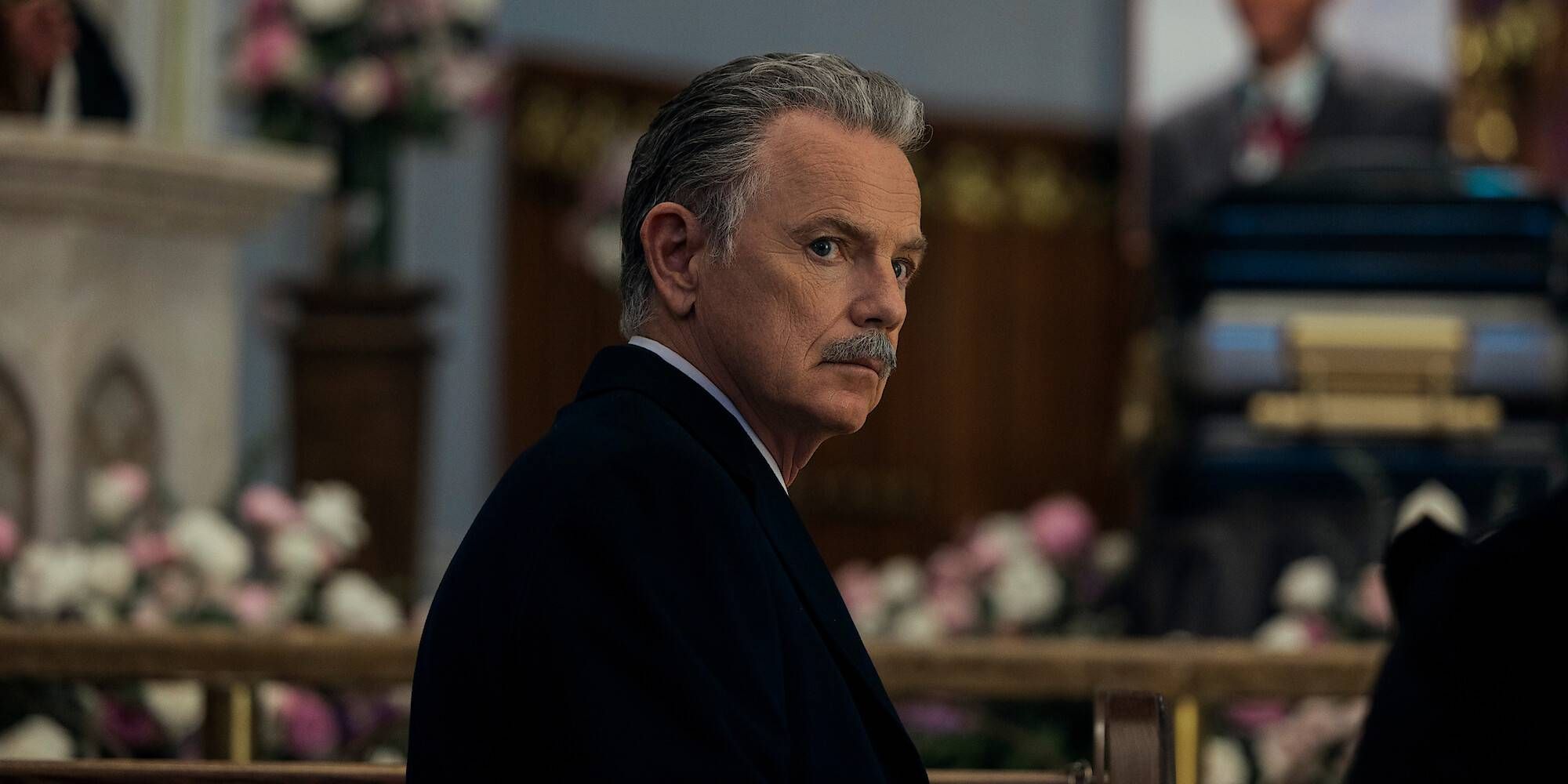
With this visual parallel established, “The City in the Sea” works as the perfect allegory for the story of the Usher family and how they built their own empire. Roderick and Madeline take the role of Death, as they are extremely proud of what they built and not at all ashamed about the countless lives they have taken thanks to Ligodone. The obscene wealth they grew from these deaths makes them feel like gods, which is represented by their adoration for Ancient Egypt and its iconography – which, in turn, is always tied to the idea of death, making Roderick and Madeline basically deities of death. Verna is supposed to be a vessel of Death in the series, but takes the role of Hell in the allegory built by the poem, taking over this macabre city from the Ushers while holding them in reverence, in a way – it’s thanks to them that she has done her job and multiplied the lives she’s taken thousand-fold. She even refers to the bodies outside as Roderick’s “monument”, his eternal legacy.
When she recites this poem to Madeline, Verna is basically telling her that the Ushers’ time is up and that “she will take it from here.” Madeline and Roderick struck a deal with Verna decades earlier, and they used her assurance of success to become Death themselves, using the allegory of the poem. She’s also confessing to being Death herself (her own name being an anagram of “raven”, a metaphor for death in Poe’s work), despite taking the role of Hell in this allegory, too. This becomes clear when she tells Madeline the poem came to her “when you adorable little things started building cities.” So “The City in the Sea” may seem confusing at first, but it actually explains the whole series.