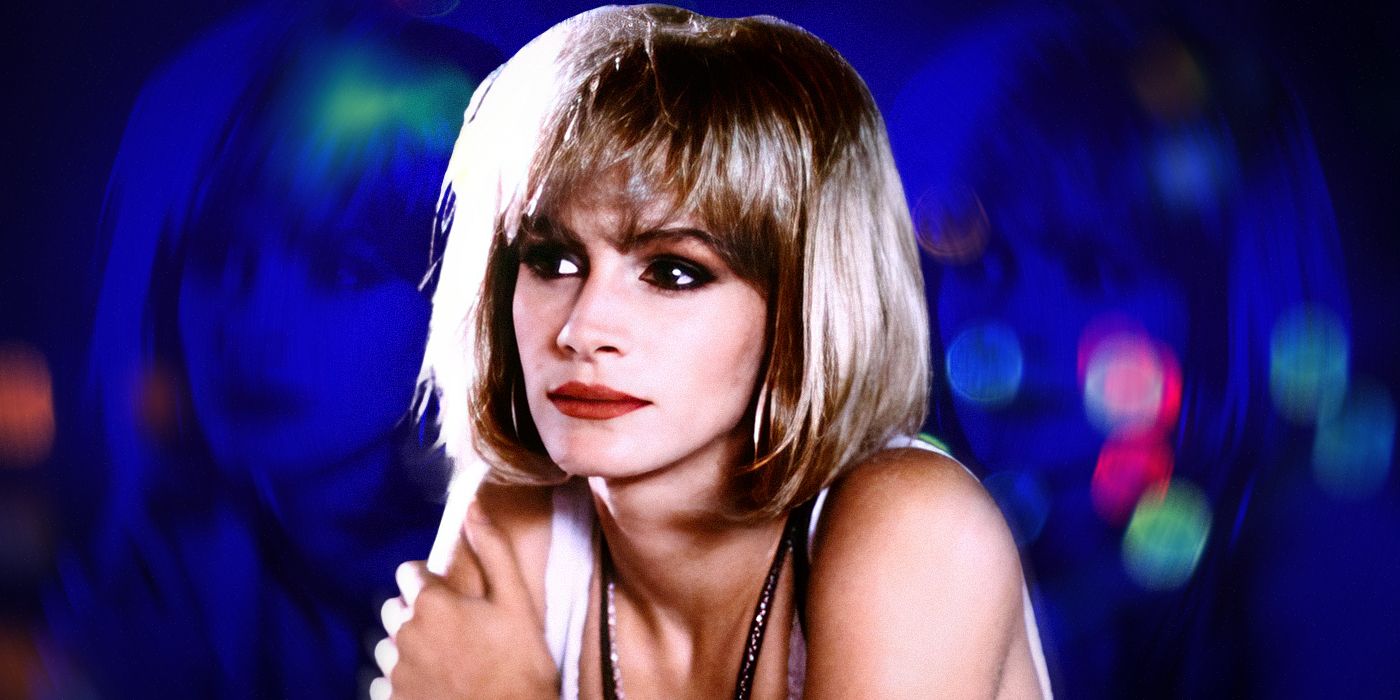

The Big Picture
- The original script of Pretty Woman was much darker and portrayed the characters as a drug addict and a borderline sociopath.
- Actress Julia Roberts initially felt uncomfortable with her role, but was glad when the script was changed and the film became a hit.
- Pretty Woman broke boundaries by challenging traditional gender roles and exploring themes of commodification and power dynamics in relationships.
The “hooker with a heart of gold” trope has found its way to the screen in a myriad of forms, but hands down one of the most memorable iterations is Garry Marshall’s Pretty Woman. Over three decades after it was released, the film still causes quite a stir, dividing audiences into sappy romantics and die-hard realists. Nevertheless, Richard Gere and Julia Roberts brought to life a story that was a few paces ahead of its time. Rather than offering up the usual “boy meets girl, boy saves girl” narrative, Pretty Woman also had the girl “rescue him right back.”
In a nutshell, the story focuses on corporate raider Edward Lewis (played by Gere) who picks up street-savvy escort Vivian Ward (Roberts) for what was supposed to be a night of non-consequential “fun.” However, a night turns into a week, and eventually, the pair discover a connection that defies stereotypes. Altogether, it’s a narrative that proves that love can blossom even in the most unlikely places. Needless to say, the rom-com was far from flowery. However, an earlier revision of the script had the story going in a whole other direction — we’re talking darker, grittier, and a lot less cathartic.

Pretty Woman
A man in a legal but hurtful business needs an escort for some social events, and hires a beautiful prostitute he meets… only to fall in love.
- Release Date
- March 23, 1990
- Writers
- J.F. Lawton
- Studio
- Touchstone Pictures
- Runtime
- 119
The Original Script of ‘Pretty Woman’ Was Much Darker
It goes without saying that for most people, imagining the Pretty Woman narrative going any other way is a tall order. But, as mentioned earlier, the movie was supposed to be the polar opposite of the production that most people have come to know and love. More information on this was dished out in Variety’s Actors on Actors interview that paired Roberts with Patricia Arquette (who also auditioned for the role of Vivian). Among the topics they breached was the fact that the original Pretty Woman was far from the lighthearted, fairytale-esque rom-com that hit the screens in 1990. Arquette had auditioned for the lead role back when the screenplay was titled 3000, and in her opinion, back then it was more along the lines of a “dark gritty art movie.” The film itself portrayed Vivian as a hardcore drug addict and Edward as a borderline sociopath who considered her nothing more than a plaything.

Related
The Brutal Julia Roberts Crime Drama That’ll Rip Your Heart Out
This star-studded mystery drama will shatter your emotional defenses.
It’s safe to say that the role ultimately went to Roberts; however, she admitted that she was way out of her comfort zone. She recalled the alternate ending where Edward tossed her character out of his car along with the money he owed her before driving away. Riffing off that, she admitted that the role made her uncomfortable. But in a twist of events, the project was shut down a mere three days after she landed this role, which was quite uncharacteristic for her. Clearly, she was more than glad when the redeveloped script emerged and she retained the part. According to the actress, “… it really became more something that’s in my wheelhouse than what it originally was.” Seeing as the numbers don’t lie, the change in direction was not a bad choice at all. Pretty Woman remains one of the highest-grossing rom-coms of all time, pulling in a total of $178.4 million at the U.S. box office. What can we say? People love a good fairytale — regardless of how it’s dressed up.
Would the Alternate Ending of ‘Pretty Woman’ Have Changed Its Cultural Impact?
Love it or hate it, Pretty Woman broke boundaries and was several strides ahead of its time. Sure, it is a far cry from 3000 and leans into tamer themes, but it does open up some pretty uncomfortable discussions. In its own way, it challenges what were considered “traditional” male and female roles at the time, even reversing the power dynamics between the pair as the film progresses. It also explores the issues of the commodification of relationships, materialism, and the power of money as a whole. The scene that introduces the popular phrase “Big mistake. Huge!” is no doubt one of the most cathartic in the hour and 52 minutes of the film. However, it mirrors a very real issue as far as class and social judgment are concerned.
Altogether, the lighter take on these deep-rooted issues bode well for the movie money-wise, since it made a range of gritty subjects more palatable. But it could also be argued that the darker script could very well have been more critically appraised, seeing as it ditched the rose-colored glasses and filled in the blanks in the areas Pretty Woman failed. The rom-com came under fire for its somewhat idealized take on the relationship between a wealthy man and a sex worker. It ultimately ended up downplaying the complexities and challenges associated with class dynamics as a whole. Even more, it leaned into the narrative that money is the main key to happiness if you consider all the personal growth and all-around change Roberts’ character undergoes during her time on Easy Street. Talking about whether the movie aged well is a whole other issue — definitely some of its elements simply didn’t make the cut. With that in mind, there is no doubt that 3000 would have offered something more tangible for audiences who would have liked to see a more realistic cause-and-effect relationship play out on screen.
However, the significance of Pretty Woman cannot be ignored. Let’s just say, the film provided a genre-altering moment, leaving behind the status quo and ushering in an era where rom-com characters could undergo wholesome character development. The pair are not simply intoxicated by their love at the end of the day, they are ultimately more self-aware too.
Pretty Woman also went out of its way to usher in an era of strong female characters within the genre — they aren’t just damsels in distress waiting to be swooped off their feet. Vivian is multifaceted as she demonstrates the ability to be assertive, witty, and capable of shaping her own destiny. It also made room for the male lead to simply be human — flaws, struggles, and all. So, while 3000 definitely had its merits, there is a lot to say about the impact of Pretty Woman on the future of the genre and the movie landscape as a whole.
Pretty Woman is available to rent on Prime Video in the U.S.
Rent on Prime Video