The science fiction genre is full of fantastical tales of space travel, alien worlds, and horrifying conspiracies that could make your skin crawl. But perhaps the most memorable moments in all sci-fi are those wild plot twists that we don’t see coming. You know the ones: when we discover that everything we thought was true was actually a lie, and that there’s more to the story than we could’ve imagined.
While there are far more out there than we could list here, we’ve put together a list of some of the greatest twits that sci-fi has produced for the big screen. So if you’re a fan of science fiction looking to revisit some of the most masterful moments we can think of, then look no further than these great on-screen twists. Oh, and spoiler alert if you haven’t seen all of these movies… We warned you.
Cooper Was His Daughter’s Ghost – ‘Interstellar’ (2014)

When Christopher Nolan found success by observing the mind with Inception, he turned to the stars to put our mental limits to the test with Interstellar. Or, rather, the mental limits of a test pilot-turned-farmer-turned-astronaut, Joseph Cooper (Matthew McConaughey), who finds himself on a voyage into the cosmos in order to save their planet. But after falling into a black hole, Coop finds himself in a tesseract that’s made up of his young daughter’s bedroom from back before he left Earth all those years ago. It’s at this moment that he discovers that he was her “ghost” telling his younger self to stay on Earth, though his warnings fell on deaf ears.
Not only does Interstellar push Coop to the edge of what he can handle as a man, but it also pushes him even further to what he can handle as a father. While he is unable to stop himself from abandoning his children, he manipulates time enough to give his daughter, Murph (Jessica Chastain), the answer to a problem that will help her save the Earth after all. In the end, he’s able to see his daughter one last time, fulfilling his lifelong promise to her, only to go back to the stars in search of his lost companion.
Soylent Green Is Really People – ‘Soylent Green’ (1973)

Set in the dystopian future of the post-2022 world, Soylent Green exists in a space where pollution, overpopulation, climate change, and a series of other factors have plummeted the Earth into an eco-disaster. Still, Charlton Heston‘s Detective Robert Thorn finds himself on a case that exposes the truth about the corporations that lord over humanity, ultimately discovering the horrific truth that the titular food that’s said to be made from plankton is actually made from human beings. “Soylent Green is people!” he exclaims.
This famous twist has been referenced in countless sci-fi projects ever since hitting theaters in 1973, including the cult classic Chris Carter series Millennium. In fact, even if you had no idea what Soylent Green was about, you’ve probably heard that it’s “people” before, even if you didn’t fully know what that meant. But is there a more horrific twist in all science fiction? You be the judge.
The Flashbacks Are Actually a Glimpse Forward – ‘Arrival’ (2016)
Director Denis Villeneuve‘s take on the sci-fi genre, Arrival is a story about first contact with alien life and the implications of such beings. As Louise Banks (Amy Adams) deciphers the language of these heptapods, she begins experiencing intense flashbacks to her life with a young daughter. But as the film continues, we soon learn that these flashbacks are not flashbacks at all, but actually flashforwards to Banks’ life at some unspecified point in the future. It’s here that she learns of her daughter’s fate and discovers that Ian Donnelly (Jeremy Renner) will leave her as a result of knowing this beforehand.
The time reversal here is quite a shock, not just to Banks but to the viewer as well. With this precognitive information, Banks has the ability to rewrite her future, and yet she commits to the same path she knew she would always walk. It’s with this twist that Arrival — which also reveals that the alien language is a weapon — elevates itself beyond most contemporary sci-fi outings, and solidifies one of the best twists in the genre.
Our Hero Is Actually One of Many Clones – ‘Moon’ (2009) and ‘Oblivion’ (2013)

Whether you know this twist from 2009’s Moon or 2013’s Oblivion, the “the main character was actually one of multiple clones the whole time” schtick is an eventful twist that works masterfully in both films. Really, it’s just a matter of which you prefer: Sam Rockwell‘s character-driven feature or Tom Cruise‘s action-adventure. In both cases, the hero eventually discovers that he is not the only one wearing his face, and that the entities that put them there did so with nefarious intent.
The comparisons between both Moon and Oblivion are fairly obvious, but each of these films plays with the idea of clones a bit differently. In both cases, we can see how the main character (Rockwell’s Sam Bell and Cruise’s Jack Harper) has been changed by his experiences, and uses the time he has left to make things right for those he leaves behind. It’s a great twist that flips the script on what the audience has come to expect, pushing the leading man to greater levels of action as a result.
Everyone Is a Pod Person – ‘Invasion of the Body Snatchers’ (1978)

While Invasion of the Body Snatchers had been previously adapted in the ’50s, we’re talking specifically about the 1978 version with Donald Sutherland here. If you’ve seen the film, then you know all about how it ends. Although we hope that Sutherland’s Matthew Bennell escapes the duplicates’ search for him at the docks, the truth is not revealed until the closing moments of the picture, when Nancy (Veronica Cartwright) calls out to him, believing that he’s still, well, himself. Instead, the pod-person duplicate screams.
The acknowledgment that humanity has lost is tough to swallow, and the fact that the film’s end credits feature no music is a harrowing reminder that mankind has been replaced by high-pitched automitons. The faux Matthew’s scream doesn’t just put the audience on high-alert, but it outs Nancy (who had been able to fool the alien replacements) as being human after all. It’s a horrible conclusion that flips the script at the eleventh hour, making this Invasion of the Body Snatchers remake an instant classic.
Kyle Reese Is John Connor’s Father – ‘The Terminator’ (1984)

While there are a few twists in the Terminator franchise of note — killing John Connor in Dark Fate, the end of the world in Rise of the Machines, and, of course, Arnold Schwarzenegger being the hero in Judgment Day — the best will always come from the end of The Terminator. Before Sarah Connor (Linda Hamilton) and Kyle Reese (Michael Biehn) face off against Schwarzenegger’s T-800 one final time, the two consummate their fast love. But it’s not until Kyle’s death and the film’s final moments with a pregnant Sarah that we realize that the future Resistance fighter was John Connor’s father all along.
Although there is some debate about whether this means that Kyle was always John’s father or if this somehow changes the timeline, the point is that the man who sent back the warrior to protect his mother was responsible for his own existence. It makes us wonder if humanity’s fate post-Judgment Day is inevitable, and if there’s truly anything Sarah or anyone else can do to stop it. James Cameron‘s stellar sequel attempts to answer this question, but its follow-ups all have different ideas of their own.
The Entire End – ‘The Prestige’ (2006)

The second Christopher Nolan film on this list, The Prestige is not your traditional sci-fi thriller, but it certainly qualifies as “science fiction” given some of the equipment used in Robert Angier’s (Hugh Jackman) “The Transported Man” trick. As we learn at the end of the film, the machine that Nikola Tesla (David Bowie) gave Angier for the trick creates a clone of the magician each time it’s used, a clone that Angier drowns and frames Alfred Borden (Christian Bale) for his murder. But if you’ve seen The Prestige, then you know that this isn’t the whole story.
Just as mind-boggling as the clone twist is the twist that Borden never needed to rely on technological advancements for his own “Transporting Man.” In his case, Borden was always one of two, living a double life with his twin brother (who posed as Bernard Fallon). While one Borden was sentenced to hang for Angier’s murder, the other lived, reuniting with his daughter at the very end. Just like Nolan to wrap one twist in another.
Everyone Could Have Been Saved – ‘The Mist’ (2007)

If you’ve read Stephen King‘s The Mist and then watched the Frank Darabont adaptation, then you know that there is a stark difference between the two. In fact, there’s such a difference in the ending that King prefers Darabont’s more depressing ending, one that audiences would’ve never seen coming, even if they’d first read the short story. So, what happens? After David Drayton (Thomas Jane) and his small band of survivors realize that they may never get out of the Mist alive, he mercy-kills them, planning to have the monsters come and claim his life as well. The problem? The Mist subsides, and the military arrives to save the day.
The Mist ends on this horrifically depressing note, where Drayton realizes that if he had only waited another few minutes, his son would still be alive. It’s disturbing beyond all measure, and it makes us wonder why King prefers this to his slightly more hopeful conclusion. Even still, it’s one of the more memorable endings in any sci-fi movie that twists the intent of the source material into something far more sinister.
Darth Vader Is Luke’s Father – ‘The Empire Strikes Back’ (1980)

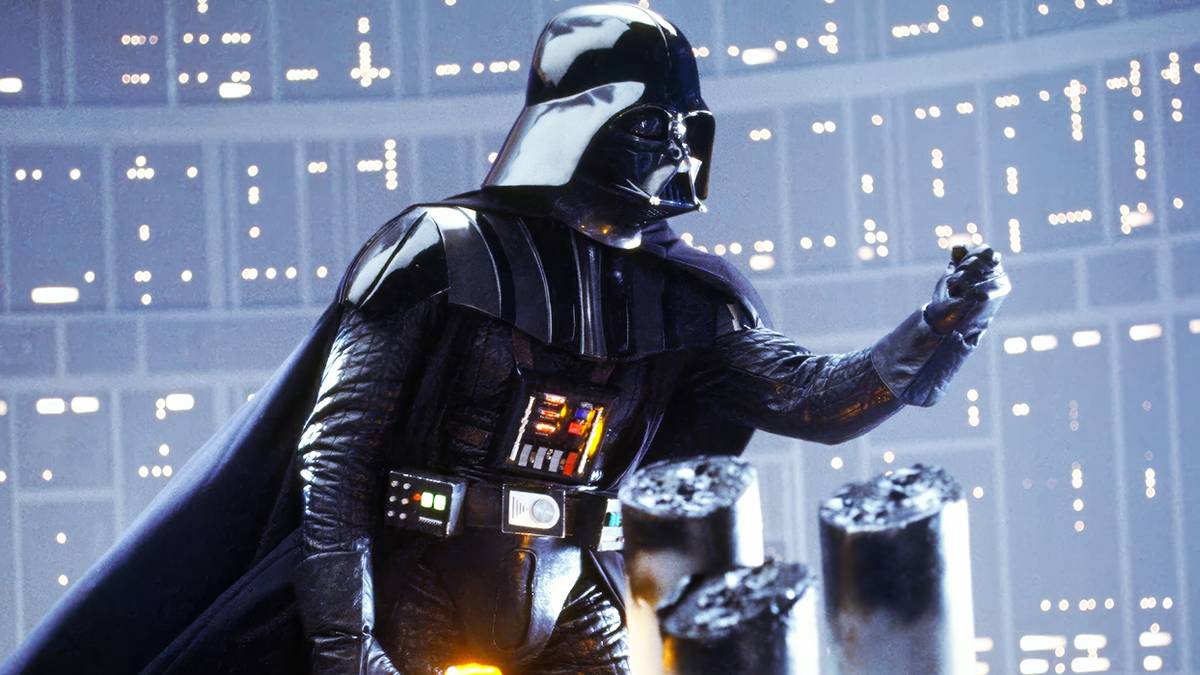
You’ve no doubt been waiting for this one. Any self-respecting sci-fi fan knows that one of the best twists in all of cinema comes from the sequel to George Lucas‘ original Star Wars: The Empire Strikes Back. As Luke Skywalker (Mark Hamill) duels the villainous Darth Vader (James Earl Jones, David Prowse), the Dark Lord reveals an unbelievable truth to the young Jedi: he didn’t kill Luke’s father, Anakin Skywalker; he is Anakin. Ever since, we’ve been unable to shake the ramifications of this space opera reveal.
Anyone who loves Star Wars knows that it’s important to watch the original trilogy long before any other installment, but The Empire Strikes Back is the reason why. Before Lucas would expand on Vader’s backstory with the prequel trilogy, he shook us to the core by claiming that the galaxy’s greatest hero was actually the son of its most iconic villain. In the end, Luke persuades his father to return to the Light Side of the Force, just in time for Vader to redeem himself in the finale of Return of the Jedi.
The Statue of Liberty at the End – ‘Planet of the Apes’ (1968)

Arguably the greatest twist in all science fiction comes from the original Planet of the Apes. Another Charlton Heston picture, this time he plays astronaut George Taylor as he finds himself on a strange alien planet where apes rule instead of human beings (who are basically slaves in this world). Escaping from the mutant apes, Taylor wanders all the way to the East Coast, where he realizes that he is not on an alien world at all. Rather, he is on Earth at some unspecified point in the future. The Statue of Liberty confirms it.
As one of the most iconic twists in all film history, Planet of the Apes made itself legendary with this tragic conclusion. While future sequels would explain how exactly the apes came to be the rulers of our world (and a prequel series of films explored that further), this first twist is the crowning jewel of the franchise. It certainly leaves much up to the imagination.