
Ah, the ’80s. Big hair, acid-wash jeans, and economic policies that the poorest Americans are still paying for — it was quite the decade. In terms of cinema, the ’80s had a tremendous impact on pop culture, with dozens, if not hundreds, of releases that continue to influence film and television today. Not all of them were critical hits at the time, and even now, many wouldn’t be mistaken as classics despite having devoted cult followings. Then there are the definitive masterpieces of cinema that remain highly regarded today.
Whether beloved then or now, these are the masterpieces of the ’80s, and time hasn’t dulled their shine. They’re masterworks by acclaimed filmmakers, iconic classics and imminently entertaining. Many of these inspired countless imitators or started massive franchises, but none have replicated the one-of-a-kind thrills, chills, tears and laughter that these original films elicit. These are the definitive masterpieces of the ’80s, in order of their release.
10
‘The Shining’ (1980)

The ’80s were a mecca for horror fans. The confluence of talented filmmakers with advanced practical makeup and animatronic effects brought with it so many amazing films. Everyone likely has their favorite horror film from the decade, but when it comes to the definitive masterpiece, there really are only two options, and they have a lot in common: an isolated horror film set in a snowy location where paranoia and madness take hold of the characters, which was released to a highly negative response, only to later be regarded as one of the greatest films of the genre. That set-up perfectly describes both John Carpenter‘s The Thing and Stanley Kubrick‘s The Shining.
Either one of those masterpieces by master craftsmen is scary good times, but for the sake of simplicity, the spot here goes to Kubrick’s dread-inducing adaptation of the Stephen King novel. King famously despised Kubrick’s film for changing key elements of his book and the very nature of the primary character of Jack. History certainly hasn’t been on King’s side in this debate, as the slow-burn suspense and surreal imagery of Kubrick’s film have had a long-lasting impact. It’s a different beast from the novel, but in ways that make it a better movie. If you need any proof, just watch the King-written 1997 miniseries to see how bad things could have been.
9
‘Raging Bull’ (1980)

With the exception of maybe Steven Spielberg, none of the New Hollywood directors had a better or more interesting decade than Martin Scorsese. He tried his hand at a number of different genres, delivering new masterpieces like the brilliant and darkly comic The King of Comedy and After Hours, as well as the highly personal The Last Temptation of Christ. Even the more impersonal legacy sequel, The Color of Money, is incredibly entertaining, but there’s nothing quite like the film he started the decade with, Raging Bull.
A gritty, no-holds-barred biopic of the infamous boxer Jake LaMotta, Scorsese’s film doesn’t pull any punches either in or out of the ring as it bears the ugly soul of its subject. Robert De Niro gives an Oscar-winning performance, charting LaMotta’s course from bloody bruiser to bloated nightclub owner, and it’s all so extremely gutwrenching. The supporting cast, including Joe Pesci and Cathy Moriarty as LaMotta’s brother and young wife, respectively, is equally good, and few sports films hit quite as hard as this masterpiece.
8
‘Raiders of the Lost Ark’ (1981)

Steven Spielberg absolutely dominated the ’80s, as both a producer and a director. It’s hard to find an indelible childhood classic from the era that doesn’t have the filmmaker’s fingerprints on it in some way. For those films where Spielberg himself was in the director’s chair, the most definitive masterpieces were his heartfelt sci-fi family film E.T. the Extra-terrestrial and the action-adventure apex Raiders of the Lost Ark. All due respect to the wrinkly alien with a glowing finger, but nobody beats Indiana Jones.
As a follow-up to the colossal bomb that was 1941, the filmmaker was determined to make a film that was delivered on schedule and within its budget. As such, he adopted a down-and-dirty shooting style, much like the serials that his adventure film was paying homage to. It’s possibly why Raiders feels so light on its feet, where many of its imitators are labored. From iconic setpiece to iconic setpiece, this movie flies, and Harrison Ford carries us right along with it, giving one of the most effortless action hero performances of all time.
7
‘Blade Runner’ (1982)

Indiana Jones wasn’t the only iconic role of Harrison Ford’s to grace screens in the ’80s, as he delivered the antihero antithesis to his charismatic archaeologist in Ridley Scott‘s landmark sci-fi noir Blade Runner. Famously derided upon release, but since re-edited and reclaimed, this visually stunning adaptation of Philip K. Dick‘s novel Do Androids Dream of Electric Sheep? is a breathtaking display of visual effects, production design and cinematography.
The rain-soaked, neon-lit vision of the future has influenced the visuals of countless films in science fiction and beyond. Beyond the visuals, the film tells a mind-bending story of identity and humanity lost and found in a cold, cruel world as Ford’s jaded hero hunts down rogue replicants one by one until his final fight with Rutger Hauer‘s Roy Batty on a rooftop. Blade Runner may be known for its cerebral nature, but there’s a beating heart beneath all its mechanical beauty.
6
‘Once Upon a Time in America’ (1984)

Blade Runner isn’t the only film that got a second chance at glory thanks to a subsequent director’s cut, as Sergio Leone‘s massive gangster epic Once Upon a Time in America was butchered beyond belief for its original American release. More than 100 minutes were cut from the film by its distributor, and scenes were completely re-ordered without Leone’s input, only to be savaged by critics. The original cut of the film was eventually restored years later, allowing audiences to see the full scope of Leone’s vision.
A grandiose crime saga that chronicles the lives of two Jewish youths who rise to power in New York City, Once Upon a Time in America is an operatic drama of blood and brotherhood. Robert De Niro and James Woods make for an incredibly dynamic duo, and the grand visual style that Leone had applied to his Spaghetti Westerns translates beautifully to 20th-century America. The ’80s were lousy with Hollywood epics, most of them bloated bores, but Leone’s final masterpiece still stands tall above them all.
5
‘Blue Velvet’ (1986)

David Lynch was an anomalous filmmaker. His most idiosyncratic films defied easy classification and were, more often than not, simply defined as “Lynchian.” The director started the decade with one of his most “accessible” efforts, the period drama The Elephant Man, and followed that with his first and only flirtation with a blockbuster franchise, the derided Dune. It was from the ashes of that debacle that Lynch rose with his masterpiece of the ’80s, Blue Velvet.
A yuppie nightmare neo-noir, the film stars Kyle MacLachlan, who met Lynch on Dune and would continue to collaborate with him on Twin Peaks, as a milquetoast college student whose discovery of a severed ear leads him down a dark path. He enters into a criminal underworld where he meets an enigmatic singer, played by Isabella Rossellini, and the violent gangster who controls her, played by a truly terrifying Dennis Hopper. Blue Velvet is the perfect Lynch film for the uninitiated who want to plunge themselves into the surreal depths of his world.
4
‘The Princess Bride’ (1987)

Before anyone suggests that the word masterpiece doesn’t mean what I think it means, I defy them to suggest an ’80s comedy more quotable, funny and heartfelt than the late, great Rob Reiner‘s fantastic fantasy The Princess Bride. Nostalgia be damned, because this witty, swashbuckling romantic comedy continues to convert fans with its pitch-perfect performances, script and above all, Reiner’s innate comedic sensibilities as a director.
Adapted by William Goldman from his novel of the same name, the film relates a fictional fable of two star-crossed lovers whose romance is beset by all manner of evildoers and deceivers. It’s a tale as old as time but told with Reiner’s distinct, irreverent sense of humor that is played to perfection by an incredible cast that includes Cary Elwes, Robin Wright, Mandy Patinkin, Andre the Giant, Christopher Guest, Chris Sarandon, Wallace Shawn, Carol Kane and Billy Crystal. The Princess Bride is a timeless masterpiece that only gets better with age.
3
‘Who Framed Roger Rabbit’ (1988)
Much like his mentor, Steven Spielberg, Robert Zemeckis had an incredible run in the ’80s, delivering classic after classic, from the underrated Used Cars to the perfectly written comedy Back to the Future. It’s tempting to list his time travel classic here, but there’s something so incredible about his follow-up, Who Framed Roger Rabbit, that it must be acknowledged. Between the technical wizardry on display and the combination of classic animated characters sharing screentime together, it’s a film that simply can never be replicated, truly one of a kind.
On the technical side, the film had the unhinged genius of animation director Richard Williams behind it, who collaborated with Industrial Light & Magic to seamlessly blend the cartoon characters into the live-action footage. Those cartoon characters came courtesy of Disney and Warner Bros., which made an unprecedented deal to allow the inclusion of their Looney Tunes. Even in this current film economy, where conglomerates continue to gobble up every studio available, the prospect of ever seeing Bugs Bunny and Mickey Mouse share the same space seems unlikely. Even then, it would feel more like crass commercial pandering than the movie magic that was accomplished in this Zemeckis masterpiece.
2
‘Die Hard’ (1988)

Most action movies of the ’80s were defined by their explosive excess. Gone were the tortured or wearied action heroes of the ’70s, replaced by bulky, bulging steroid supermen who could take on whole countries with a knife and machine gun — Rambo went from being a traumatized veteran to re-winning the Vietnam War for Reagan’s America! Then along came writers and directors like Shane Black and John McTiernan, who began to deconstruct the overblown genre. Black found humor and humanity in the buddy-cop formula with Lethal Weapon, while McTiernan made heroes mortal again, first with the genre-mashing Predator, and then with the action masterpiece Die Hard.
Bruce Willis‘ John McClane is the furthest thing from a Rambo or John Matrix: he’s a human hero with a half dozen character flaws who still finds a way to save the day in spite of himself. Audiences were pinned to their seats by the hair-raising thrills of McTiernan’s perfectly paced and staged action film that made them feel every punch and broken bit of glass that stuck in McClane’s feet. Die Hard completely altered the public perception of what an action movie should be, and a large part of the ’90s was spent trying to replicate its success, but nothing could ever come close to this action masterpiece.
1
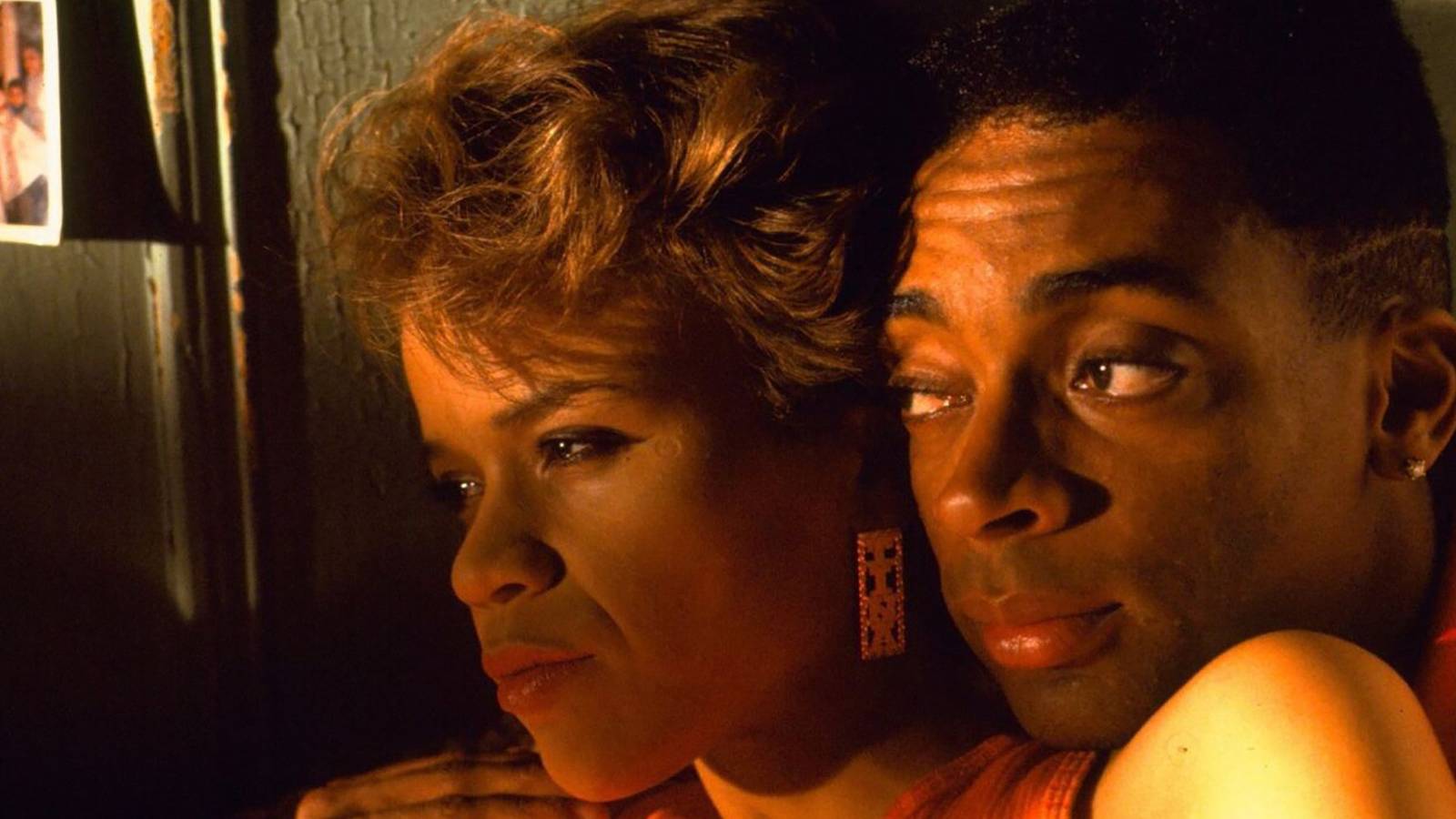
‘Do the Right Thing’ (1989)

It is both a testament to the talents of writer-director Spike Lee and a sad commentary on race relations in America that his magnum opus, Do the Right Thing, remains so relevant more than three decades after its original release. Chronicling one hot summer’s day in Brooklyn as racial tensions simmer beneath the surface of everyday life until they eventually bubble over in an incendiary climax, Do the Right Thing is a microcosm of the divisions that can form in our society and the violent fractures that result.
It is also a vibrant, colorful celebration of a place and its people, a love letter from Lee to the neighborhoods of New York City he grew up in. Lee has always been a proper chronicler of injustice in America as well as one of its most provocative filmmakers, and his ability to push boundaries while providing vivid entertainment has never been more perfectly realized than here. Do the Right Thing captured a vital moment in America, one that has unfortunately continued to recur. However, it also gave ’80s moviegoers one last brilliant masterpiece to end the decade.