
The Big Picture
-
Sherlock Jr.
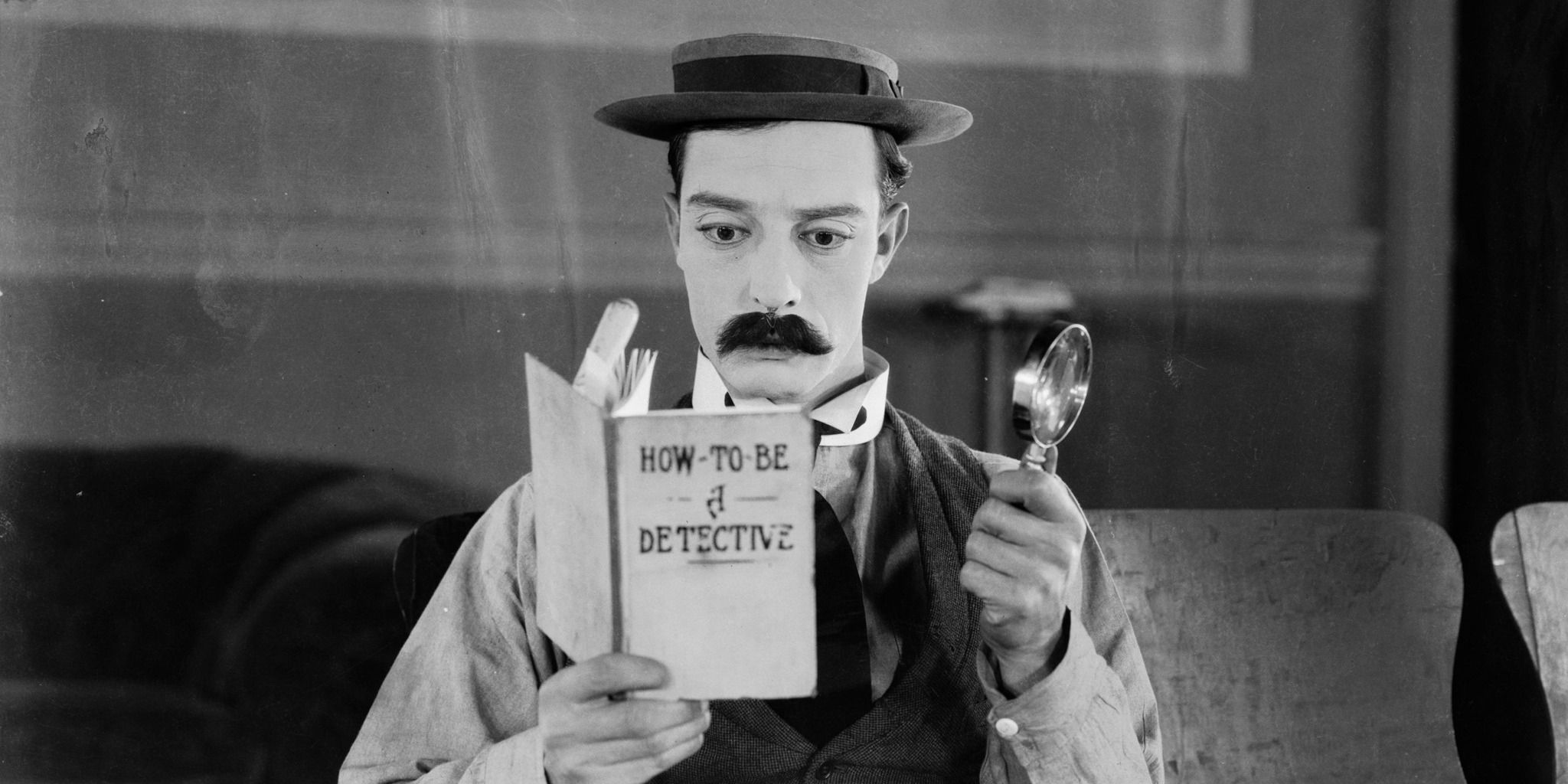
at 100 years is a cinematic masterpiece celebrated for its thrilling stunts and meta gags on filmmaking itself. - Buster Keaton’s character dreams his way through film reality, showcasing the magic and absurdity that makes movies special.
- Keaton’s dedication to death-defying stunts and endearing romance in
Sherlock Jr.
still influences modern cinema today.
It’s not often that one of the great cinematic masterworks turns 100 years old. But on April 21, we get to celebrate the centenary of Buster Keaton‘s Sherlock Jr. A century later, the film has remained one of the most beloved and acclaimed silent movies in history, and sits among the greatest comedies ever made. Thanks to the thrilling stunts performed by Keaton, and a comedic premise that involves a meta-textual streak of gags based around the art of filmmaking itself, Sherlock Jr. is a breezy, silly, and incredibly well-made movie that would work as a fantastic introduction to silent films. Keaton’s movie is packed with heart and craft, and even after 100 years, there’s not a blemish on this near-perfect 45-minute movie experience.
In Sherlock Jr., Keaton portrays a projectionist at a movie theater who has aspirations to be a detective. The projectionist also has an unspoken crush on a local woman and spends his time trying to find money in the trash left over by theater patrons to buy her a nice box of chocolates. After a run-in with a larger, more conventionally handsome foil who wants to date the same woman, Keaton’s projectionist is framed for his crime of pocket-watch thievery and sets out to solve the case in order to clear his name and win his love.

Sherlock Jr.
A film projectionist longs to be a detective, and puts his meagre skills to work when he is framed by a rival for stealing his girlfriend’s father’s pocketwatch.
- Release Date
- May 11, 1924
- Director
- Buster Keaton
- Cast
- Buster Keaton , Kathryn McGuire , Joe Keaton , Erwin Connelly , Ward Crane , Jane Connelly , George Davis , Doris Deane
- Runtime
- 45 Minutes
- Writers
- Jean C. Havez , Joseph A. Mitchell , Clyde Bruckman
‘Sherlock Jr.’ Understands Why We Love and Relate To the Movies
His plan goes awry when he falls asleep at his theater job, and in a dream-sequence that extends through most of the runtime, enters the world of the fictional movie playing at his work. The film replaces characters with people from his real life, and he struggles, to great comedic effect, to adjust to the rules of film reality. Time and space can be shifted and completely transformed with a single cut. One second, Keaton is cautiously walking on a sunny cliff-side, and the next he is face down in a pile of snow. He turns onto a busy street and is immediately transported into the wilderness. But he is on the case, and he eventually gets the hang of how the movie world works so he can fulfill the role of the hero.
Sherlock Jr., through this excellent, cleverly staged dream sequence, acts as an unabashed celebration of why the movies are so special. Keaton illustrates all of the strengths of what film can do that real life cannot manage, while also showing how movies do reflect our real experiences, and that we take a lot away from them. The finale sees Keaton waking up to find it was all a dream, and that the woman he’s been pining over has solved the mystery entirely on her own. Taking his cues from the film playing at the theater, Keaton watches the handsome leading man engage in romantic behavior with his love interest. He copies these moves successfully, up until the point where the film cuts to the couple with two young children. Keaton scratches his head at this image, ending Sherlock Jr. on a moment that can be read as a humorous nod to his naivety regarding how to make babies or a joke about the ability of a movie to progress through the timely act of starting a family with a single cut between frames.
Movies matter to this character because they matter to Keaton. The fact that, 100 years later, this film is still so beloved proves his assertion right that they are a meaningful, universal way of connecting and sharing stories. So early in the history of cinema as an art form, Keaton already had mined out exactly what was so special about the medium of film.
Buster Keaton’s Death-Defying Stunts, Comedic Chops, and Hopeless Romanticism Make ‘Sherlock Jr.’ a Classic
On top of the sharp comedy Keaton delivers in Sherlock Jr., it is one of the best showcases of his prowess as a stunt performer. The film includes a thrilling motorcycle chase and a sequence on top of a train that Keaton almost died doing. As Keaton runs off the top of a moving train during the dream chase sequence, he grabs onto a large water spigot, which swings down and opens, drenching Keaton in a particularly forceful fashion. This was not the intended effect, as the water came out all at once unintentionally, and the force of the blast broke his neck. Keaton walked it off, on screen, and did not find out until receiving an x-ray 30 years later.

Related
Martin Scorsese’s ‘Raging Bull’ Found Inspiration in a Buster Keaton Comedy
1926’s silent comedy couldn’t feel more different than Scorsese’s brutal and unrelenting Jake LaMotta biopic.
Keaton’s dedication to pulling off amazing, death-defying feats on screen is rivaled by none. He’s also a great comedic actor, with impeccable timing. Sherlock Jr.‘s driving romance is an endearing one, with Kathryn McGuire (who also plays Keaton’s love interest in The Navigator), perfectly suited to be his other half, a thoughtful woman who is smarter and more capable than the naive Keaton, but able to see his kind heart. The final scene between the two evokes an experience many people can probably relate to, the awkward tension that arises with trying to play it cool during your first kiss. Keaton takes his notes from the movies in the sweet final minute which makes the romance as compelling as all of the action and comedy that precedes it.
In the silent world, Charlie Chaplin was often thought of as the more sentimental of the two titans, while Keaton’s films were more spectacle-driven. But Keaton’s dry, awkward persona lent itself to charming, understated romances in his films. He often finds himself in competition with a larger, stronger, more suitable man whom he must defeat either physically or strategically, only to find that the girl never even liked the other guy to begin with. Keaton also often found himself accidentally thrust into heroic positions, but his “great stone face” often made it appear as though he meant for these extraordinary circumstances to play out this way. Beneath the wild stunt falls and pitch-perfect physical comedy, Keaton was a subtle and powerful actor.
Sherlock Jr. is one of the best showcases of his talent, as he is able to essentially play two different archetypes, through the shy projectionist and the dream-state detective. This film emphasizes his skill at playing a quiet, lovesick type, while also revealing his incredible athleticism, sharp wit, and confidence during the more action-oriented sequences. The blend of genres and tones, especially with how they play around with the language and parameters of filmmaking itself, makes Sherlock Jr. an innovative film. Even today, there are many sequences that will have you asking “How did they do that?”
‘Sherlock Jr.’ is the Introduction to Silent Film That You Need Right Now
Modern audiences apply many limitations to what they are willing or interested in watching. Black and white films are a no-go for some. If your movie isn’t in English, you are immediately losing a portion of the viewing audience who refuse to watch anything subtitled. Older films, especially silent ones, have a reputation as being long and boring. Sherlock Jr. is anything but that. At only 45 minutes in length, and packed from start to finish with charming gags, death-defying stunts, and visionary special effects, Keaton’s film is a perfect place to start if you have any curiosity about the early masterworks of the cinematic form.
Without Keaton, we would not have John Wick or Mission: Impossible. The early stuntwork on display in this film, and many of Keaton’s other iconic movies, such as Steamboat Bill Jr., has influenced action and comedy cinema for decades. There’s a good reason so many filmmakers still revere Keaton’s work today, and that this film specifically is still upheld as one of the best. It gives you everything you ever could have wanted to see in a movie in 1924; and in 2024, it is still undeniably inventive and entertaining. What Sherlock Jr. might do for those who turn up their noses at silent cinema is break down a wall that is keeping them from engaging in an exciting, deeply influential period of cinematic history that deserves more attention outside of film lectures.
Buster Keaton was born the same year that a motion picture was first publicly exhibited, the year cinema was born: 1895. Scholars estimate that most silent films have been lost to time, even Keaton’s The Cameraman was almost destroyed after a fire at MGM Studios. This makes it even more special and significant that we still have so many of his movies readily available for our viewing pleasure in 2024. Keaton grew up in the infancy of this art form, and yet by 1924, he had already figured out everything that made the movies special. He refined all of that into 45 minutes of pure creative vision that has persisted over a century, and will forever be known as one of the greatest movies in history.
Sherlock Jr. is available to stream on Tubi in the U.S.
Watch on Tubi



![Nicholas Stoller Opens Up About His Next Will Ferrell Team-Up 'Judgment Day' [Exclusive]](https://citigist.com/wp-content/uploads/2025/02/Nicholas-Stoller-Opens-Up-About-His-Next-Will-Ferrell-Team-Up-380x200.jpg)