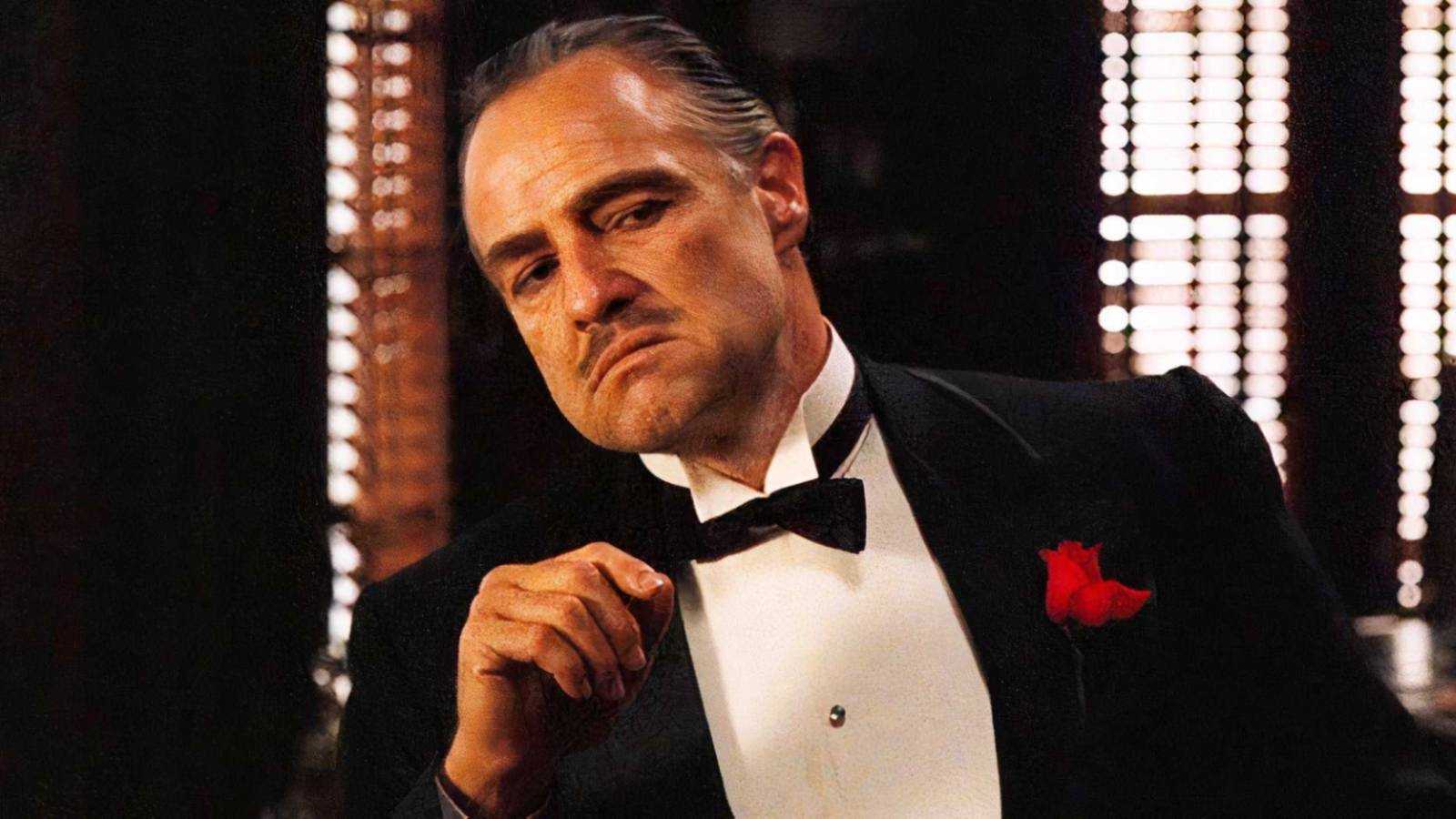

The Godfather is widely considered the finest achievement in the history of motion pictures. Perfection, close to an unattainable level of artistic quality, manifests delicately. One minor misstep, and you no longer have a masterpiece. Whether a film is a future masterpiece or an all-around failure, a film’s verdict is ultimately decided in the editing room. Most directors with a vast scope, like Francis Ford Coppola, shoot plenty of material — too much to cram into one feature film. Cutting scenes that you worked hard on is an inevitable process when editing. It only figures that a film like The Godfather features deleted scenes that would be most films’ signature scenes. While most of Coppola’s cuts were justified, one scene involving Sonny Corleone (James Caan) and his sobering response to an unfortunate family tragedy could have elevated the operatic magnitude of the film.
During the palace intrigue that was the production of The Godfather, Coppola fought with Paramount and its top executive, Robert Evans, over every creative detail: the setting, the casting, and, of course, the runtime. As Coppola explained in the DVD commentary, Evans warned the director that if he sent a cut of the film that ran over 2 hours and 15 minutes, the studio would intervene with the final cut. Incapable of telling this crime epic in that condensed time frame, Coppola sent in a cut that was roughly 2 hours and 20 minutes. This version of the film was strictly germane to the plot — cutting out the character moments that gave it flavor, but according to Coppola, Evans was displeased by him removing all the nuanced characterization. Ultimately, Coppola realized that no matter what the length of the cut was, this was all just a way for Evans to centralize post-production in Los Angeles, as Coppola was editing in San Francisco.
It’s suffice to say that Coppola and the editing team behind The Godfather did a tune-up job. A film considered perfect needs equally perfect parts that make up an immaculate sum. Coppola’s vision for The Godfather was realized through minor vignettes of character-building. Think of the scene when Clemenza (Richard S. Castellano) teaches Michael (Al Pacino) how to cook tomato sauce, or when Michael and Vito (Marlon Brando) sit in the garden and discuss the former’s fleeting hope as a U.S. Senator. Studios are prone to delete these types of scenes, deeming them irrelevant. The Godfather brushes on lofty ideas about the American Dream, family, and capitalism, but its greatness is most evident during these minimalist exchanges between characters.
Francis Ford Coppola Made the Right Decisions When Editing ‘The Godfather’
Historically a thorough filmmaker who pours his heart and soul into every picture, Coppola shot plenty of footage for The Godfather. There are roughly 25 minutes worth of deleted scenes from Coppola’s 1972 masterpiece. For the most part, Coppola’s cuts were astute decisions. Most scenes were extraneous sequences and exchanges that reiterated a plot development or character dynamic. The masterful opening sequence in The Godfather economically characterizes each member of the Corleone family, particularly Vito, who is displayed as a sweet and gentle patriarch who receives undying respect from everyone around him —stemming from fear.
The deleted scene where Vito visits an ailing consigliere in the hospital redundantly illustrates the Don’s influence. Early on, we see the seeds planted of Sonny’s animosity towards Carlo (Gianni Russo) because of his volatile treatment towards the Corleone sister, Connie (Talia Shire). Sonny is about to intervene, but Vito insists that a man must never meddle in another man’s marriage. In the final cut, this conflict is drawn up more patiently, with the Corleone matriarch, Carmela (Morgana King), reminding Sonny of the virtue of neutrality involving another relationship at the dinner table. In other instances, the deleted scenes are out-of-place due to the performances not being properly calibrated, which is especially true of Marlon Brando, who is still configuring his unique voice for Vito.
Sonny Learning About Vito’s Shooting Should’ve Been in ‘The Godfather’s Final Cut
However, there is one existing deleted scene that doesn’t advance the plot or disclose any information, but it carries operatic weight through minor touches — a defining trait of Coppola’s direction. This extended sequence deals with the immediate fallout of Vito’s near-fatal shooting. After receiving the heartbreaking news on the phone, Sonny arrives at his father’s house to inform his mother. “Pop’s been hurt. I don’t know how bad,” he mutters. Unclear of his health status and the identity of the perpetrators, Carmela is provided no resolution. In the face of such tragic news, she remains unflappable. The scene is free of any melodramatic set piece that often arises in an exchange involving possible death. We only see the back of her head, as Coppola refrains from shooting a close-up of her face to exhibit the somber tone. “I’m going to go change, in case we can see him,” Carmela announces, as she walks out of the kitchen. The beauty, or perhaps dread of this scene, is that Carmela’s tranquil reaction is not born out of cold menace. Rather, her response evokes the sense that she has been through this many times. She knows that her husband facing a violent demise is inevitable. At the very least, she hopes that she can see his face before he passes.
After snacking on a piece of bread, Sonny moves to Don Corleone’s office. Gordon Willis‘ cinematography is the unsung hero of The Godfather, with his dark imagery precisely capturing the spirit of the Corleone family’s criminal enterprise lurking in the shadows. In one breathtaking wide shot, Sonny takes a seat on the corner of his father’s desk. The empty throne that is Vito’s chair is engulfed in shadow. As he assumes power as acting Don with Vito incapacitated, this shot of Sonny, the eldest of Vito’s children, resuming the family business during crisis mode expresses two sobering realities.

For all the Corleone sons, rising to power is a natural predisposition. Sonny, notorious for his hot temper, must be poised in this state of flux. The scene also indicates that Sonny’s dignified behavior and leadership are hardly an ascension to power. Vito’s seismic influence still weighs upon Sonny’s shoulders. It may seem tempting for him to sit in that empty chair on the other side of the screen, but from Sonny’s psychological perspective, his father is there watching him in spirit. As we eventually see with his bloody demise at a tollbooth, not everyone has the acumen to lead a mafia family. It was Sonny’s college graduate and army veteran younger brother, Michael, who once disavowed his family’s business, who had the makings of a Don.
Beyond its textual richness, this deleted scene in The Godfather is an acting showcase for James Caan. While his Oscar-nominated and career breakthrough performance is indelible in every means, rarely was Caan allowed to be as three-dimensional in the final cut as he is in this deleted scene. His performance in this scene suppresses Sonny’s hostility and wise-cracking tendencies. Sonny’s timidity as he arranges for protection on the phone is a genuine portrayal of shock and loss. Furthermore, including this deleted scene could have served as a nuanced thesis on the realities of violence in organized crime. Both Sonny and Carmela Corleone are understated, conveying a resigned understanding of the violent nature of the mafia. Throughout The Godfather, characters bow down in reverence to Vito Corleone, but this scene demonstrates his overwhelming respect by having his empty throne serve as an omnipresent character as his son attempts to follow in his legacy.