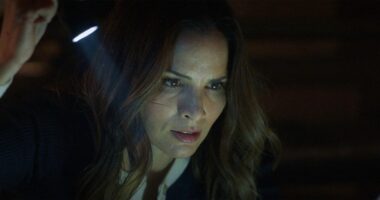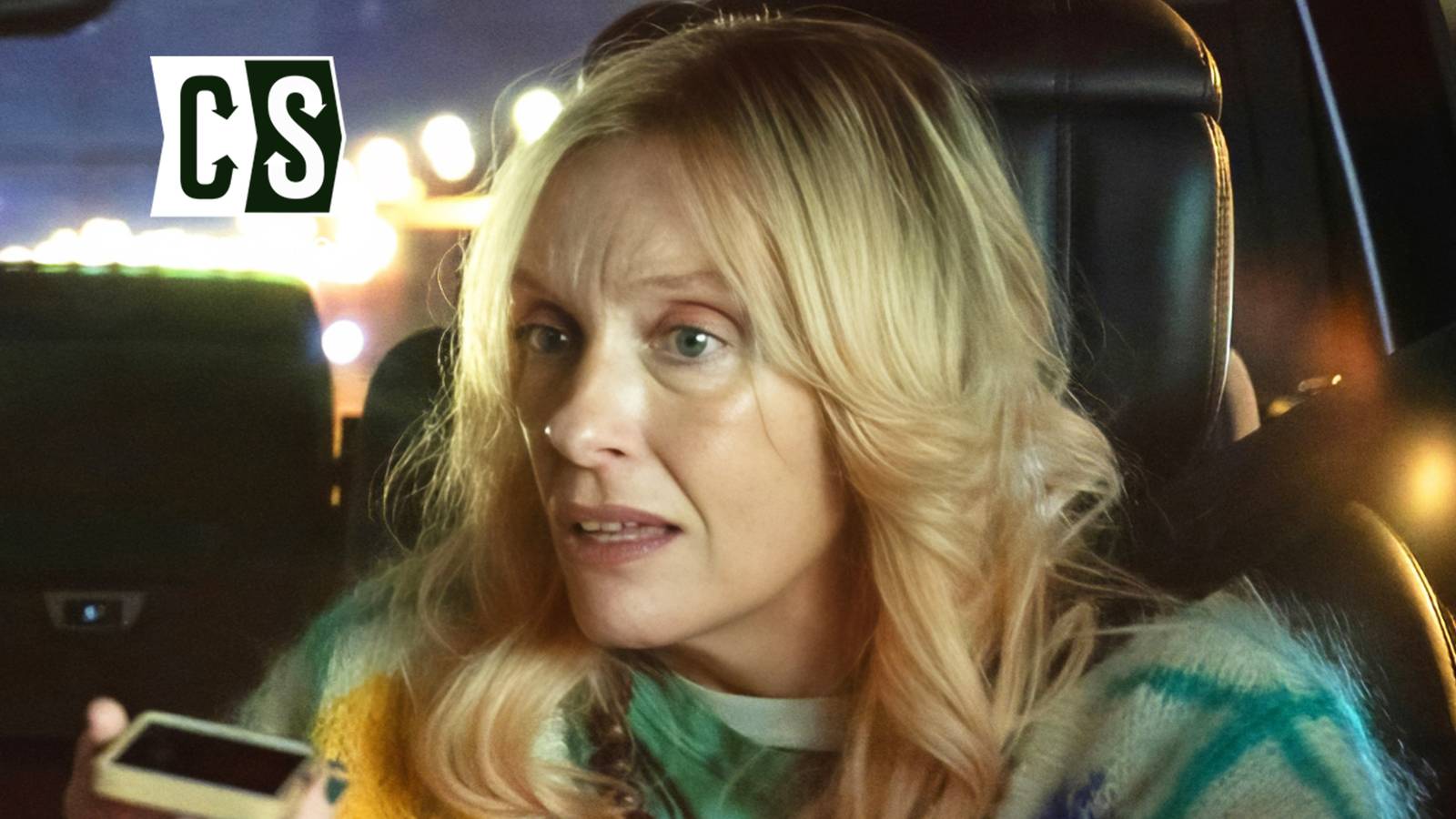

From classic dramedies like Muriel’s Wedding and Little Miss Sunshine to horror masterpieces like Hereditary and The Sixth Sense, Toni Collette is a versatile actress who can truly do it all. Nominated for an Oscar, a Tony, and a whopping five Emmys (of which she won one), she is a master at her craft, but she also brings vulnerability and authenticity to every role. Those qualities have never been more important than in her latest project, Goodbye June, a drama that will break and warm your heart in equal measure.
Serving as Kate Winslet’s directorial debut from a script her son, Joe Anders, wrote when he was just 19, the film centers on four siblings — eccentric Helen (Collette), uptight Julia (Winslet), guarded Molly (Andrea Riseborough), and sensitive Connor (Johnny Flynn) — who are brought together when their mother June’s (Helen Mirren) health takes a turn for the worse over Christmas. In lesser hands, Helen could turn into a wacky caricature, but Collette plays her with beautiful depth and aching sincerity. She’s the comic relief, but she’s also a fully formed human being with flaws, fears, and desires of her own.
Collider got the chance to speak with Collette about the film. During the conversation, Collette discussed which characters she resonated with most deeply, the way the film tackles the theme of motherhood, and why being on Winslet’s set was such a magical experience. She also reflected on the way her Hereditary performance changed the horror game and shared the role she “fantasizes” about getting to play again.
Toni Collette Has a Deep Connection With More Than One ‘Goodbye June’ Character
“I sleep with crystals in a sports bra at night, cleanse them under the moonlight, take them down to the ocean.”

COLLIDER: I’m so glad I have another Toni Collette Christmas movie to add right next to Krampus.
COLLETTE: Oh, you’re so funny.
I want to start by asking, what is your ideal Christmas movie double feature?
COLLETTE: Double feature. Oh, I’m a sucker for The Holiday — I can’t help it. Also, one that my son and I particularly love is The Polar Express. I think it’s incredible. It really captures something about Christmas that’s very special. And it’s kind of creepy because it’s almost real but just slightly off. There’s something slightly sinister about it, but ultimately, it’s good-hearted.
I totally agree with that. There’s a little bit of that creepy vibe for sure. I feel like between this and Knives Out and Wayward, you’re kind of in your kooky wellness woman era. Are you into crystals, and incense, and things like that in real life?
COLLETTE: [Laughs] There is one simple answer for this, and that is: yes. It’s true. When Kate hired me to do Goodbye June, she had no idea how similar I am to the character. I’m not as woo-woo in an overtly kooky way, but I absolutely partake in a lot of those areas. And I’m not just dabbling — I’m dedicated. I have a fairly strong, active spiritual life, yeah. I sleep with crystals in a sports bra at night, cleanse them under the moonlight, take them down to the ocean.
I feel like Helen also has a very specific sense of style, so I assume that the costuming informed the character quite a bit. How did the clothes help you find who she was?
COLLETTE: Oh man, they really, really helped. Grace, our costume designer — it was her first job as a costume designer; Kate is so wonderful at really acknowledging that everyone has to start somewhere — did the most incredible job. I was so sad when I stopped wearing Helen’s clothing because wearing all that color and chaos really does something to you.
And the pregnancy, having that motherly kind of aspect on everyday, brought back so many memories and imbued the character with yet another idea of what motherhood is like. And also facing those responsibilities and roles in light of what they’re all facing, ultimately, with the impending passing of the matriarch of our family — our mum’s on her way out. Having that awareness of the cycle of life and what it is to be human and what existence means, it brings up so many things when you’re losing someone. Everyone handles grief really differently, but I think, you know, when you’re pregnant, your emotions are really high — your hormones are really rocking — and so knowing how great her mum was and then looking at, “How the hell am I going to do this without my mum?” Thinking that she was going to have that support when she finally got around to having a baby is just heartbreaking, actually.
I love the theme of motherhood throughout generations, and obviously, Helen has a very unconventional path to get there. I was wondering if you could dive into that aspect, because I thought that was so wild and perfect for her character.
COLLETTE: I really admire people who have the guts to be themselves, and this woman is just living her life as she wants. I think it was probably something to escape. I think, being the eldest child, she would have felt a little bit jilted. As parents, you have to take care of the younger children as they pop out, and as the eldest child, you kind of feel a little bit left behind and potentially used as a bit of a third adult or a second mother to help with the younger kids, so there’s the idea of both abandonment and enmeshment. I think Helen had a lot that she needed to escape from to really feel like she could fly, and be herself, and be whole, and feel any sense of lack, and feel that sovereign sense of self. She’s just a woman who’s journeying, and healing, and I think she has, sadly, an idea of feeling like she has to constantly fix something in herself. But she really feels connected to the entire cosmos, and there’s something so beautiful about her vision of what it is to exist and that we’re all connected. And when she gets brought back into the fold of her family, all of that is completely confronted, and they’re giggling at her and shocked by her decisions, which are unconventional, but I really admire them.
I feel like this movie captures siblinghood really well, too. I know you are a sibling yourself, so I’m curious, which of these sibling roles do you feel like you take on in your own family? Are you the organizer? The comic relief?
COLLETTE: I’m Julia. The one who is really responsible — feels like they need to take care of everybody and does. Really focused on career and trying to balance motherhood, whilst trying to take care of everybody. It’s a balance that you never feel you entirely strike, and you just have to let go of each moment and keep trying, and sometimes you fail, and sometimes you succeed, and that’s okay. Yeah, I really, really related to that character.
Kate Winslet Inspires Toni Collette “In Every Way” (Including for Her Own Directorial Debut)
“There’s such transparency in her work.”

I read in the production notes that [director] Kate Winslet tried to make everything feel really intimate without using a lot of boom mics or having a lot of crew members around. How did that approach, combined with the fact that it really is in one location for the majority of the film, impact this experience?
COLLETTE: Yeah, the majority of it is in Helen’s ward in the hospital — not Helen the character, Helen Mirren, who plays June, who’s the character who’s passing. Look, Kate has had over 30 years experience of making movies — yes, as an actress, but you can’t help but absorb everything you’re surrounded by, so her knowledge was just endless. She knew, as an actor, what would work, what would fly, how to communicate, how to create an environment of safety, and collaboration, and trust, and freedom, and fun, and relaxation. I think when people are relaxed, they do their best work. But she also knew the technical side of things because she’s intelligent, and she is open, and curious, and learns as she goes.
One of the things she did, which really did help, was those boom operators, man, they have to stand there sometimes for so long that they start to shake. It’s heavy, and standing in that one position, I mean, you can’t do it in a yoga class — let alone on set when you can’t make a noise, you can’t move. As an actor, you’re constantly aware of it, and you’re constantly aware of the fluffy things [dead cats] that go over the mics. They’re big. She worked with the sound department and came up with this incredibly generous idea of, yes, we were all radio mic’d, but we got rid of the booms and placed kind of secret mics all around the set.
There was a scene between Helen Mirren and me when I go in and discover her sitting on the edge of the bath when she’s not feeling so well, where the camera was locked off, and there was not one crew member in there. The sense of intimacy and connection that you gain from that as an actor just upholds the world in a way that you can’t even imagine. It was just a very generous thing and a very insightful thing that Kate was able to do, and that’s just one example because, honestly, she was so ultra-prepared. And when someone’s so prepared and so structured in creating that environment for people to work and feel free, then you do. It becomes magical. It kind of takes on its own energy, and you feel like you can try anything, and you won’t be judged. You feel really supported.
I believe you’re preparing for your own directorial debut with Writers and Lovers, if I did my research correctly. Is there anything you learned from Kate that you feel like you definitely want to take to that experience?
COLLETTE: Oh, she was inspirational in every way and always has been, which is why, when every journalist asks me, “Who is it you want to work with? Who’s at the top of your list?” for decades, I’ve been saying Kate, because there’s such transparency in her work. There’s nothing worse than watching an actor and seeing the technical shit going down. Maybe they think it’s, I don’t know, cool or impressive, but you get taken out of the story, and that’s the point — you need to be so absorbed in the story that you’re not thinking about somebody’s work or anything. Nothing should poke out. It should be seamless, and you should just be drawn in.
Kate’s ability to do that and to kind of rally all the right people — she’s very, very decisive. There’s nothing worse than a director who doesn’t know that they are the director. You are at the helm of the ship — you’re the one who needs to make the decisions — and she did it in a way that was still completely collaborative. We’re very aware that it’s the most collaborative of art forms, and we’re all working as cogs in the machine, for want of a better analogy. Being intuitive enough to know who to invite into the experience to create the atmosphere that you want, who can contribute to the ideal version that you hold in your mind, and having the guts to listen to yourself, really. Maybe it comes down to that.
Toni Collette Talks Improv and Instruments on the ‘Goodbye June’ Set
“It became, like, perfectly ridiculous.”
This movie is obviously very sad, but there are some really hilarious moments, too. The line that Helen has about someone slipping on an IKEA catalog and falling down the stairs killed me. How much improv was involved, and then how much did you strictly follow the script? What was that balance?
COLLETTE: We weren’t held to sticking to the script, but we really did because it was so wonderful. It was just such a gift of a script, and Joe Anders, Kate’s son, was only 19 when he wrote it as a kind of homework project for a screenwriting course. It’s mind-blowing that he, at his age — and I shouldn’t be ageist — but his ability to understand humanity and the dynamics of a family like that, and to really observe with such honesty the cycle of life, it was a really incredible place to start.
There was a bunch of improv. I felt completely comfortable to do it, and sometimes, Kate would be like, “Okay, we need you to stand in that area — go and do what you want.” It was very loose and very relaxed, and people do their best work when they’re feeling trusted and relaxed. So we did have the script, and we pretty much stuck to it, but there was also the freedom to play around.
I really did cherish being the comic relief. I didn’t realize that’s what I was at the beginning, and then, as we moved through the shoot, I was like, “Oh, I understand my position here.” I realized I was the life raft for people. Because it’s an intense story, and it’s very emotional, and so I think, when people see Helen, you can kind of land there for a minute, get yourself together, take a breath before the story moves on, and I actually really felt quite honored to inhabit that character and that purpose in that character.
I especially love when she has her little recorder.
COLLETTE: To be honest, I felt really bad, because originally, it was a flute, right? And I wish I’d started the flute about two years before we started shooting, because unlike other instruments, when you’re playing the flute, you can’t look at your hands. Also, if you blow into the mouthpiece, there’s no guarantee you’ll make a sound — you have to hit it in a certain way, which I could practice, but when you’re playing piano or guitar, you can watch what you’re doing. You cannot watch what you’re doing. You have to, like, become one with the flute. So Johnny [Flynn]’s partner, Bea, had been in Mexico and brought back an ocarina — I think that’s what it’s called — and she very generously lent it to him to bring into work, and now, it actually sits by my bed at home, because I couldn’t part with it. But I figured out how to play certain songs on that, and it became, like, perfectly ridiculous.
But I actually also love that Helen, although you can take the piss out of her, she’s real. And I think that comes down to Joe’s writing and the balance of the tragedy, and the comedy, and the kind of film that it is. The aim is to be as real and honest. You don’t feel like you’re watching characters — you feel like you’re engaging, and observing, and feeling the feelings of real people in a moment in their lives, which is probably the most intense, the most sad, the most challenging.
This ‘Goodbye June’ Scene Still Makes Toni Collette Cry Every Time
“When you hear somebody talking about the hospital, I think I will pay much more attention in the future.”

Speaking of music in a different way, I love the moment when the husband sings “Georgia” at the karaoke bar.
COLLETTE: It’s heartbreaking, I know.
It had me sobbing. What song would someone sing to honor you at a karaoke bar, do you think?
COLLETTE: What? I don’t know! But can I talk about that moment for a minute?
Yes, please.
COLLETTE: Timothy Spall — I mean, every cast member, I pinch myself; it was a dream cast, and everybody was just so incredible — but him as Bernie is just so deflective. He doesn’t want to face what’s going on, the pain that he is holding in, and he doesn’t let it show. He’s always cracking jokes, and drinking beer, and avoiding everything that’s happening, which is basically losing his life partner — the most horrible thing he’ll ever have to go through. [Tears up] And he goes to a place in which, traditionally, especially in Britain, men go to connect, because historically, men aren’t encouraged to communicate in the same way that women naturally do. They go, and they drink, and they talk to each other in the pub that feels supportive. And he gets up, essentially in front of a bunch of strangers, and sings this song, which doesn’t have anything directly to do with what’s going on, until it does, and it is an absolute freaking killer. And when he mumbles, no one’s paying any attention. It’s so real. And he talks about, “My wife Junie, she’s in the hospital,” and it makes me think— [Voice cracks] Oh fuck, I’m gonna cry. When you hear somebody talking about the hospital, I think I will pay much more attention in the future. Everyone’s just holding on, aren’t they? Wow. Sorry, I didn’t expect that.
No, it’s okay — this is what this movie does! It’s real, and it brings this up!
COLLETTE: It really does. At the premiere in London, I was the last person to leave the cinema. I’d seen the movie, I was there during the making of the movie, I’m in the movie, and I was convulsing because I was trying to hold the tears back, but you can’t. It’s a powerful one — it really is. But it’ll also make you fucking laugh, which is the genius of it. It’s so warm and life-affirming.
Toni Collette Reflects on ‘Hereditary’ and ‘United States of Tara’
“I fantasize about it coming back.”

I also really want to ask about Hereditary because your performance in that, I think, sticks with everybody still all these years later.
COLLETTE: Again, it’s about family tragedy, grief — same themes, but a very different genre. [Laughs]
It is! But it’s very cool, speaking of that genre, because The Substance did so well last year, and Sinners and Weapons are getting a lot of hype this year. I genuinely believe that people sort of started to take that genre seriously in large part due to your performance in that movie.
COLLETTE: Wow.
How does it feel seeing more of these horror films start to break out in these awards conversations?
COLLETTE: People use the word genre specifically for horror, but I’m talking genre like comedy, drama, musical, anything — I don’t think of storytelling in genres. I don’t categorize life in that way or work in that way, so if a film is good, it should be recognized. I don’t care what box it fits into — I’m not into the boxes. I’m into good work, so it’s a great thing.
I could talk with you all day. I do have to wrap, but I also want to say thank you for United States of Tara.
COLLETTE: Aww, I miss it! I fantasize about it coming back. It was the greatest job. It was such a wonderful gift to me, honestly. I miss it. I still miss everyone who I made that show with, and I’m still so fond of that experience. I fantasize that somehow Spielberg’s gonna contact me and say, “Do you think we should… why don’t we look at it again? Why don’t we come up with a story for now?” Let’s throw that one out there. I believe in manifesting! We’ll do it collectively.
I love it so much. I had a friend who was diagnosed with Dissociative Identity Disorder, and that show was so key in helping me kind of understand what it was.
COLLETTE: I didn’t realize, actually, how common it was, which is incredibly tragic because it comes from real trauma and the need to splinter off from the self and create other personas within the body to protect the “host” — the original person is known. But the amount of people who have it who came up to me and were so grateful that the story was being told was really eye-opening and moving. Yeah, it was a very good one.
Goodbye June is now streaming on Netflix.
Watch on Netflix

- Release Date
-
December 12, 2025
- Director
-
Kate Winslet
- Writers
-
Joe Anders