
Although it was nearly 14 years ago, I remember the moment as if it was yesterday. It was a Sunday evening and I was in the bath when my wife Sue confronted me about having an affair.
She had found a hotel receipt in my jacket pocket. I wouldn’t have blamed her if she had drowned me.
Sadly, I’d strayed before – and, quite rightly, this time Sue gave me the red card. I had sent a wrecking ball through our marriage, destroying our family including the lives of our three boys, then aged between 17 and 20, and I had to leave.
Within a week I had packed my bags, and from that moment on I have felt the shattering consequences of my actions: not just emotionally, but financially, too.
When our divorce finally came through a few months ago and our assets split, I was left scratching my head wondering how I – the expert many Daily Mail readers turn to for financial advice and help – had ended up so out of pocket.
After leaving our £530,000 family home, I slept on friends’ floors for three weeks before I rented a one-bedroom flat in Limehouse, east London, where I stayed until just before Covid in early 2020. With a mortgage on the family home, I couldn’t afford to buy.
Looking back, I am not proud that I had an affair. I am ashamed and always will be. As for my boys – now in their 30s and all successful – I feel sickened at the pain I caused them.
Can I explain my behaviour? Not really.

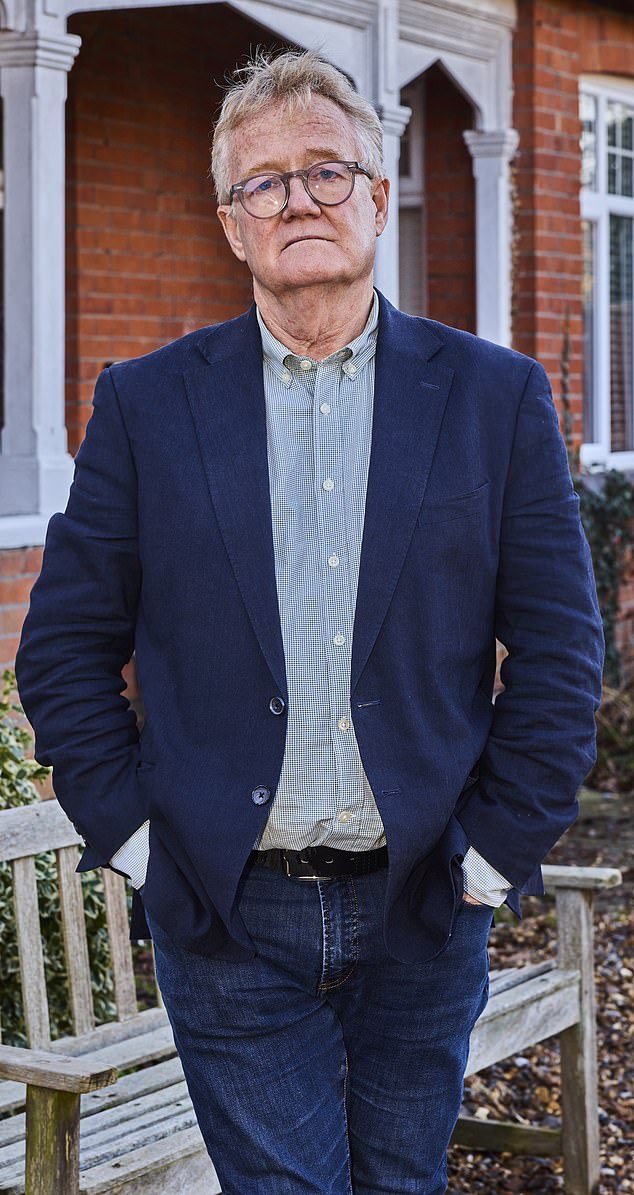
After Jeff Prestridge’s divorce and the assets had been split, he was left wondering how he had ended up so out of pocket
It could stem from an inferiority complex going back to my childhood in Birmingham when I was the oddball of four children: a scrawny ginger kid compared to a younger brother who had the brooding looks of Elvis Presley.
Mum and Dad never failed to remind me how good-looking my brother was. It ate away at my self-esteem.
Going to an all-boys’ school didn’t help: I never ‘discovered’ girls until I was 17. I was more comfortable with an oval ball tucked under my arm than a woman on my arm. I didn’t lose my virginity until I went to university.
When Sue came along in the early 1980s – beautiful, bubbly, and clever – I couldn’t fathom why she chose me. I’d known her while studying Economics at Loughborough University, but as a friend.
We met again by accident one morning in 1982 when walking to our respective workplaces in London – Sue to a firm of commodity brokers, me to a job as a property writer for a firm of international surveyors. We embarked on a whirlwind relationship.
When Sue agreed to take my hand in marriage, everybody was flabbergasted. Most friends thought she should have married the best man – a drop-dead gorgeous, fun-loving guy.
I suspect most men present at the wedding in Lepton, just outside Huddersfield, in September 1983, thought Sue should have chosen them.
Rather than revel in being the cat who got the cream, I never came to terms with it. While my career took off, first at a Financial Times business magazine, then The Sunday Telegraph and finally at the Daily Mail, I spent most of my 30s in self-loathing mode: drinking, ballooning in weight and railing against the world.
I often contemplated ending everything. I remember one night on a press trip in Frankfurt, fleetingly wondering whether it would be best for everybody if I jumped off the Iron Bridge spanning the city’s Main River.
My dad had occasional issues with his mental health, too. Although a brilliant salesman in the rag trade, and the life and soul of many a party, he once tried to throw himself out of his bedroom window. Fortunately, I rugby tackled him to the floor just as he was about to jump.
Dad spent time in a psychiatric hospital having the same kind of electric shock treatment that Jack Nicholson’s character McMurphy receives in the Oscar-winning 1970s film One Flew Over The Cuckoo’s Nest. Thankfully, Dad went on to resume his career – and return to his old jack-the-lad ways.
As for me, only an uncanny ability to remember conversations when dining to excess with key contacts ensured I kept my job: I broke money stories rival journalists failed to get.
It was only in my late 30s and closing in on 20 years of marriage, that I went on a health kick and turned my life around.
Ever the obsessive, I stopped drinking and starting running, racing every weekend. We had fantastic family holidays, and Sue and I would occasionally enjoy long weekends away – with my mum and dad looking after the boys, who were then at primary school.
Home was a three-floor, four-bedroom townhouse just outside Watford, Hertfordshire, with a wood at the back where I would walk our rescue dog Tara, while I also ran round the local fields in winter.
Everything was hunky dory until I turned 40 and the urge to stray began to creep up on me. Was it because of a new-found confidence from no longer looking like a balloon? I don’t know. Shameful.
Although my parents have now departed this world, they never forgave me for what I did.
‘God will strike you down,’ my mum said after I told her why I’d moved out of the family home. She wasn’t religious, but she was a one-man woman. She never wavered in her condemnation of my actions.
She refused to meet the younger woman I left Sue for and never once asked after her. When she met my current partner – no, the relationship that ended my marriage didn’t last – all she would talk about was Sue.
Dad wasn’t as angry, probably because his own dalliances at work gave him no right to take the moral high ground. Did I inherit a philandering gene from him? If I did, it bypassed my three siblings.
Yet Dad was disappointed in me. He liked Sue from the moment he met her at a French restaurant in West London. She was flirtatious, liked a drink and melted hearts. She ticked all of Dad’s boxes. And, worst of all, I was disappointed in me. Consumed by guilt, I let everything drift, especially when it came to separating our finances.
Sue loved living in the family home and had a network of local friends. So, I agreed to continue paying the mortgage (interest-only) and provided her with a monthly allowance. I also supported the boys through university.

My parents never forgave me for what I did, writes Jeff. ‘God will strike you down,’ my mum said after I told her why I’d moved out of the family home. She never wavered in her condemnation of my actions
Being the main earner – Sue worked as a financial administrator – it felt like the right thing to do. Yes, it was hard, but given my career and salary, I was able to cope.
Slowly, Sue and I became friends again, rejoicing at key family events: graduation ceremonies, the marriage of my middle boy and the arrival of delightful grandchildren.
Yet, with the deadline for the mortgage to be paid off, we knew we couldn’t park our divorce in the long grass for ever.
In January 2023, just short of 11 years after that fateful evening she found the damning receipt, we started divorce proceedings by appointing solicitors.
The original plan was for Sue to keep the family home, while I kept my pension. But it was a mismatch. For the sake of fairness, my sizeable pension had to be split. Although Sue was working and had a couple of pensions in her own right, my pot swamped them.
Disclosing finances to each other – and providing supporting documents – was time-consuming. As was digging out our bank statements so we could scrutinise each other’s transactions, looking for suspicious receipts and evidence of non-disclosed assets.
Our solicitors encouraged us to be combative, which reignited some of the resentment from the original split.
At times, especially when I was also dealing with the stress of sorting out my mum’s estate after she died in 2024, and coming to terms with a prostate cancer diagnosis, I again found myself considering whether my life was worth carrying on with. Love for my boys and life in general fortunately quelled such thoughts.
Eventually we agreed to sell the family home and Sue bought a home up north near her mother with the proceeds. I’m currently renting a flat in Berkshire, but hope to become a homeowner again soon.
Agreeing on selling the family home was painful, but dividing the pension assets was a far more torturous and expensive process, involving a £3,300 report from an actuary on how best to cut the cake.
When the calculations had been done, I was left with a defined benefit pension (from my early years at the Daily Mail), which will pay me a monthly income in retirement for the rest of my life – albeit an income reduced by Sue being awarded a chunk of the fund’s value. Sue also received the proceeds from my defined contribution plans. Absolutely fair.
When the court approved everything in the summer of this year and our divorce was granted, we were both relieved, but even then, it took five more months for the pension funds to be split.
Colleagues had warned me that the only people who come out of a divorce smiling are the lawyers. They were dead right.
Looking back, it has taken a heavy toll on me both financially and emotionally, but I’m not complaining. I deserved it.
- If you’re having a difficult time or are worried about someone else, you can call the Samaritans for free day or night 365 days of the year on 116123 or go to samaritans.org for help and advice.