Sir Jonathan Pryce has more insight than most into the cruel ravages of dementia. Not only did he witness the insidious decline of his beloved Aunt Mair, in recent years he has stepped inside the mind of someone in the grip of Alzheimer’s disease, captivating viewers with his well-observed portrayal of what it feels like when your memory slowly starts to unravel.
Having made his name in the West End and on Broadway and then in films such as the 1985 sci-fi hit Brazil, Evita (1996) and Tomorrow Never Dies (1997), his professional life has entered a more reflective mode of late.
Since 2022, he has played the role of David Cartwright, a retired senior MI5 officer, in the Apple TV+ series Slow Horses, based on the bestselling books by Mick Herron. Viewers have watched David – once one of the brightest minds and most feared agents in the service, nicknamed ‘the Old B*****d’ – experience the gradual disintegration of his intellect and the loss of his independence.
By series five, the most recent, he is living in a residential home and relying increasingly on his grandson, River (played by Jack Lowden), who cannot bear to see the changes in the man he once idolised, now living from day to day with little memory of the past.
‘You see a lot of it through the grandson River’s eyes – how he starts looking at his grandfather, whom he loves dearly, in a different way,’ Sir Jonathan explains.
‘Will Smith, who wrote most of the screenplay, was really committed to exploring the condition and the impact it has, in a very positive and meaningful way.’
This wasn’t the first time Sir Jonathan has played a character experiencing dementia, however. Earlier this year, viewers saw him on the big screen as Stephen Best, the husband of Elizabeth (played by Helen Mirren) in the star-studded adaptation of Richard Osman’s whodunnit The Thursday Murder Club.
Sir Jonathan’s role – portraying the chess-playing husband who, despite his dementia diagnosis, ultimately solves the murder – has resonated with millions who watched the film.

Sir Jonathan Pryce plays David Cartwright, a retired MI5 officer who suffers with dementia, in Slow Horses

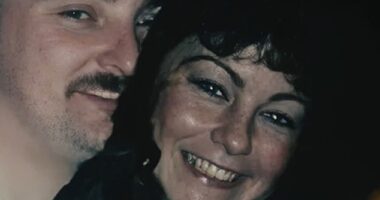
The actor is backing the Daily Mail’s Defeating Dementia campaign in memory of what his Aunt Mair (pictured) endured when she suffered from the condition
Although he doubts he will reprise the role, he says he felt ‘a great responsibility’ in taking it on, as he did playing David Cartwright.
‘Both have reached very big audiences, and I wanted to get it right,’ he says.
‘You want it to speak to people, and yet you want to tread that line between making light of the disease and capturing how it can change a person from their very core.’
These roles have done much to raise awareness about the impact of dementia on families.

Everyone experiences dementia differently. Use this checklist to help you make a note of your symptoms before you talk to your GP.
But it is in memory of what his Aunt Mair endured that Sir Jonathan is now backing the Daily Mail’s Defeating Dementia campaign, in association with the Alzheimer’s Society, for which he is an ambassador and campaigner.
This vital drive aims to increase early diagnosis, boost research and improve care, after shocking statistics showed it is now the UK’s biggest killer. Dementia accounts for one in nine UK deaths, claiming 76,000 lives every year – and there are no drugs available on the NHS to slow, prevent or cure the condition.
‘It’s shocking how nothing can be done once it takes hold,’ Sir Jonathan says. ‘So much has changed since I was growing up.
He added: ‘Back then you’d never hear the words “Alzheimer’s” or “dementia”, and the approach towards older people was far from sympathetic.
‘You’d say they were “senile” or “doolally”, or that they’d end up in Denbigh, the local mental hospital. That’s changed enormously now, but we still have a long way to go.’
As a boy, Sir Jonathan spent countless happy weekends staying with his Aunt Mair.
She and his Uncle Bill lived just a mile from his family home in a village in Flintshire, North Wales, and he loved packing a bag and trundling up the road to their house.
‘They lived in a tiny two-up, two-down with an outside toilet, but I had my own room,’ he recalls.

The actor, 78, made his name in the West End and on Broadway and then in films such as the 1985 sci-fi hit Brazil, Evita (1996) and Tomorrow Never Dies (1997)
‘There was a little suitcase of toys for me under the bed, and I’d get sixpence pocket money to spend.’
Mair, his mother’s older sister, had lived with his parents before getting married, and worked in the grocery shop his father, Isaac, a former coalminer, ran.
‘She was a second mother to me and my two sisters,’ Sir Jonathan, 78, says fondly.
‘She had no children of her own and we were very, very close to her.’
As Mair grew older, however, and both her husband and sister – Sir Jonathan’s mother – passed away, he began to worry that she was no longer able to take care of herself.
She had several falls down the steep stairs in her terraced house, and, as he began to spend more time in London for work, he worried she wasn’t safe there on her own.
‘She’d say to me, “I don’t mind dying. It’s time”. And I’d say, “I don’t mind you dying either, but I don’t want you dying in pain at the bottom of those stairs.”’
As his aunt reached her 90s, he began to notice a change in the fiercely independent, proud, witty Welshwoman he’d known all his life.
‘It wasn’t until quite late on that the signs started showing,’ he says.
‘One day I went to visit and she didn’t remember me. I said who I was and she said, “I’ve got a nephew called Jon. He’s a famous actor”.
‘I was very upset, and when I went home I told my son, Gabriel, that my aunt had forgotten me.
‘He said, “No, Dad. She remembers you. She just doesn’t recognise you”.’
Watching his beloved aunt in the grip of dementia, her memories cruelly erased one by one, was heartbreaking – and he was powerless to stop it.
Eventually, she was forced to sell her home, the one he used to stay in as a child, to pay for her medical care.
She moved into a care home in Rhyl, a nearby resort, and Sir Jonathan visited often. ‘She’d remember little things about the past and get fixated on them,’ he recalls.
‘She and my mother grew up in a post office in Flint, and she remembered that one day she’d locked my mother inside the post box.
‘She must have been three or four at the time, but she became really distressed, repeatedly, that she had been cruel to my mother.’
There were still glimmers, however, of the woman Mair once was. She never became angry, as some with dementia do, nor did she lose her sense of humour.
‘There was a doctor who was examining her, I think to see if she had dementia,’ Sir Jonathan says.
‘He said, “Hello Mair. Do you know who I am?”
‘And she said, “Well if you don’t know who you are, I’m sure I don’t”.’
Following her death, Sir Jonathan thought of her and what she’d experienced often. But it was in 2018, during a play called The Height Of The Storm, on stage in America and the UK, that he took on his first dementia role – and realised the impact his portrayal was having on audience members.
He played an elderly man living in his own world, conjuring up images of his late wife, played by Eileen Atkins, now 91, as their daughters cleared out the family home.
‘It was a therapeutic experience for me,’ he admits.
‘I wasn’t there for either my mother’s or my father’s deaths, and it really made me think a lot about grief, and losing someone you love, and how that can affect you.
‘After each of the performances, there were people waiting at the stage door, and they’d tell me how much the play at meant to them because they were caring for a parent or had lost a parent to Alzheimer’s or dementia.
‘Some of them said it was the first time they hadn’t felt alone, that they could now see it as a problem shared by others.
‘I remember one guy telling me he’d given up his job and gone to care for his mother. She had died a year ago and this was the first time he’d been able to cry.’ It was shortly afterwards that Sir Jonathan became an ambassador for the Alzheimer’s Society.
But his work with the charity has been far from purely professional. Indeed, he admits, it’s made him think more about his own father’s death.
Isaac was violently attacked in his grocery shop in Holywell, north Wales, in the Seventies, when a 16-year-old thief struck him in the head with a hammer.

Pictured: Sir Jonathan receiving his knighthood at Windsor Castle in April 2022
The attack led to him having a series of strokes, which left him incapacitated and unable to speak.
Sir Jonathan, just 28 at the time and newly graduated from the Royal Academy of Dramatic Art, visited his father regularly and tried to help with his recovery, but Isaac died shortly afterwards.
‘Knowing what I know now, I wonder if he had developed dementia by the end,’ he says. ‘Something definitely changed in his attitude towards me.
‘I would take him for walks and hold his hand, but he would want to get away from me.
‘That wasn’t simply the strokes – something else was going on, I’m sure of it.’
Now in his golden years himself, with three grown-up children – Patrick, an artist; Gabriel, a chef; and Phoebe, an actor – ageing is often on his mind.
Sir Jonathan and his wife – the actor and director Kate Fahy, 75 – have been together for more than 50 years, and live in the same London townhouse where they raised their family.
‘Everything about getting old worries me,’ he admits. ‘How long we’ll be able to stay in that house, I don’t know.

‘At the moment my only exercise is going up and down the five flights of stairs.
‘Some time in the not-too-distant future we’ll have to sell it and move somewhere smaller.
‘I don’t ever want to be a burden on my children, but we are fortunate that we’re all very close – physically, as two of them still live in London – and emotionally.
‘That doesn’t happen a lot, and I am very grateful for it.’ Although neither dementia nor Alzheimer’s are commonly inherited, and neither of his parents had a confirmed diagnosis, the memory of his beloved Aunt Mair – and how this cruel disease overcame her at the end of her life – is etched deep.
He worries about the lack of decent residential homes in this country, and the crisis in the care system – from underfunding to staff shortages – and hopes to escape it all by retiring to a village in France where he and Kate have been holidaying for years.
The actor says: ‘Having been in hospital for various things, I’ve seen the best and the worst of it. I’ve experienced some of the kindest, most considerate hospital care, and I’ve had one night with a bully of a nurse.
‘I’d just had surgery and it was the most frightening experience of my life – I was completely at the mercy of somebody else.
‘It gave me an insight into what that can be like if you’re an older person and you end up somewhere where the staff are all like that.
‘It’s one of the reasons the Alzheimer’s Society is doing such important work, ensuring vital care and support for dementia patients is accessible to all.’
Sir Jonathan Pryce, Alzheimer’s Society Ambassador, is supporting its fundraising prize draw with Omaze, which is giving away a house in north-west London worth £5million, along with £250,000 in cash. Visit omaze.co.uk to enter by midnight on January 25.
Worried that you or a loved one may have dementia? Use the Alzheimer’s Society symptoms checklist by loggin in to Alzheimers.org.uk/symptoms.
For confidential advice, call the Alzheimer’s Society’s Dementia Support Line on 0333 150 3456.