It’s an all too familiar sight. Cell phone in hand, pout firmly in place, a self-appointed arbiter of taste finds petty fault in the food or the treatment they receive at a restaurant – then attempts to flounce from the scene without paying.
Welcome to the worst excesses of the world of food influencers, the ever-more entitled members of the tribe of FoodTok content creators. It’s an increasingly obnoxious and crowded domain… and restaurateurs are pushing back.
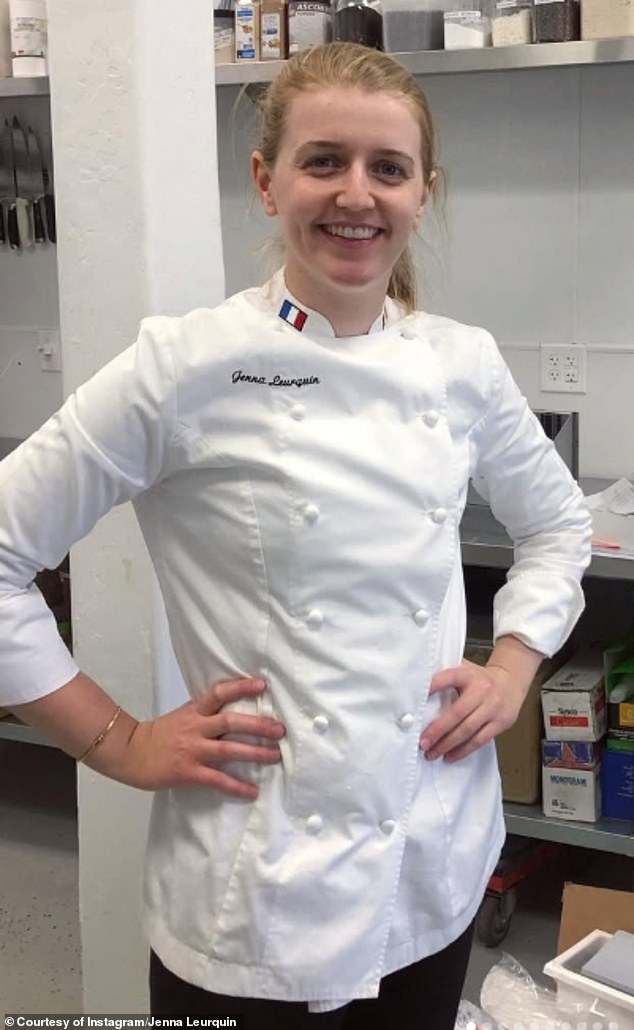
Jenna Leurquin is one. When she first opened her bakery, JL Patisserie, in 2019, she knew she would encounter challenges. What she didn’t anticipate was that the biggest would be what she claimed was a vengeful influencer.
Last October, Leurquin said she received a request from Aurora Griffo, whose now-deleted account ‘Glamorama’ had less than 20,000 followers. Leurquin said Griffo approached her, offering to feature her James Beard award-winning Phoenix-based bakery for a fee. Leurquin declined, explaining that she didn’t have the marketing budget to pay for such coverage.
According to Leurquin, Griffo then tried to pressure the bakery into giving her free food in exchange for a good review on TikTok, another offer which Leurquin said she turned down.
Yet despite these less-than-promising initial interactions, Griffo showed up at the bakery later that week, where Leurquin alleged, she treated the staff poorly, despite them offering her a free espresso.
After her visit, Griffo posted a mixed review of the pastries on TikTok, accusing the baker of using ‘fake a**’ ingredients.
Leurquin took to social media herself to film a rebuttal video with her side of the story, showing her 150-year-old sourdough starter and a 100 percent pistachio paste imported from Italy – and calling out Griffo for bullying.

When Jenna Leurquin first opened her bakery, JL Patisserie, in 2019, she didn’t anticipate that one of the biggest challenges would be a vengeful influencer

The VIP List is a notorious outrage page with voiceovers by blonde duo Audrey Jongens (left) and Meg Radice (right)
Leurquin told the Daily Mail: ‘I just felt like it was important to do because sometimes when something doesn’t go the direction that some influencer wants, they use their voice to hurt you or other businesses.’
‘Sometimes what they criticize is not correct and it really hurts businesses. I did it to stand up, not just for me, but the principle of attacking someone without knowing what their practice actually is,’ Leurquin said.
She said: ‘My team is good and they’re very passionate and to see someone talking badly about them, I felt that was wrong. I wanted to stand up for the people that find passion in what we do. They should be able to pursue that without thinking they’re going to be knocked down by a self-proclaimed influencer.’
In a now-deleted TikTok video, Griffo, who is no longer active under her ‘Glamorama’ account, apologized to the bakery, saying, ‘My goal was still to give an honest review, but I see how that message, followed by a negative video, made it seem like I only wanted free food or felt entitled and that’s not true.’ Griffo could not be reached for comment.
Leurquin isn’t the only restaurant owner left reeling from culinary content creators who have become omnipresent in the hospitality ecosystem in recent years.
In the last year alone, Michelin-starred NYC restaurant Semma was dragged online by the VIP List, a notorious outrage page with voiceovers by blonde duo Meg Radice and Audrey Jongens.
Their Semma review, which some called out for alleged racist ‘microaggressions,’ earned them the ire of industry figure Padma Lakshmi, who took to social media herself to call out what she called the ‘really annoying video.’

Michelin-starred NYC restaurant Semma was dragged online by the VIP List

The VIP List dragged Michelin-starred NYC restaurant Semma online

Padma Lakshmi took to social media herself to call out what she called the ‘really annoying video’ posted by The VIP List
Meanwhile, chef Luke Sung stepped down as chef and co-owner of San Francisco wine bar Kis Café after being blasted by influencer Karla Marcotte on TikTok. She alleged Sung was aggressive and dismissive during her July 2025 visit to the restaurant for a social media collaboration.
After stepping down, Sung issued a public statement on Kis’ social media, where he apologized to Marcotte: ‘Karla – I am truly sorry for my actions towards you. I was condescending, hurtful, and intimidating. You did not deserve to be made to feel less than or unimportant, nobody does. Regardless, I thank you for teaching me a valuable lesson in kindness and respect.’
He later told the San Francisco Standard of the incident: ‘It really takes pride to be a chef. Which is why I had that tone [with Marcotte], I guess. When you don’t have pride, maybe you won’t take the tone that I did with Karla – but the pride is the part that keeps you going.’ Sung did not respond to the Daily Mail’s request for comment.
Valued at $33 billion by Statista in 2025, the influencer industry isn’t going anywhere any time soon. But increasingly restaurant owners and hospitality workers are pushing back against the worst excesses of influencer behavior.
Veteran restaurateur Keith McNally has chosen to run his New York City institutions, like Balthazar and the Minetta Tavern, as he always has and not cater to influencers’ antics at all.
‘I can’t speak for others, but my places haven’t changed in light of the rise of food influencers,’ McNally told the Daily Mail in a written statement. ‘I’d prevent anyone from disrupting the dining experiences of my customers, regardless of if they’re influencers or not.’
As such, McNally does not give complimentary meals in exchange for coverage and has little use for their reviews.
He said: ‘I never give anything for free to anyone who’s writing about my restaurants, good or bad. I know how bad my restaurants are. I don’t care if an influencer confirms it.’
For John Truong, who helped his father open Chef Papa, a Vietnamese restaurant with two locations in Queens, a contentious incident with an influencer prompted him to call her out, suggesting she undermined his family’s business.
According to Truong, the influencer, Fahmida Sultana, reached out in September 2025 for a collaboration, asking for complimentary food and drinks in exchange for content about the restaurant.
Truong agreed and Sultana racked up a $200 bill (which was comped) and took her ample leftovers to go, leaving $6 – a meager 3 percent tip, according to Truong.
After a month, Sultana didn’t post the collaboration video, despite posting daily content on her social media platforms. Truong and his family tried reaching out multiple times, but he said the messages and calls and were ignored.
As a last resort, Truong posted a TikTok, warning other restaurant owners about what he believed was a grift. That’s when Sultana slammed Chef Papa in a video review, giving it a 1.2/10 rating. Truong believed was retaliation for him calling her out online for ghosting his family’s business.

‘I can’t speak for others, but my places haven’t changed in light of the rise of food influencers,’ NYC restaurateur Keith McNally told the Daily Mail in a written statement. I never give anything for free to anyone who’s writing about my restaurants, good or bad. I know how bad my restaurants are. I don’t care if an influencer confirms it’

For John Truong, who helped his father (above) open Chef Papa, a Vietnamese restaurant with two locations in Queens, a brazen incident with a possible scammer prompted him to call out influencers
‘There’s a lot of entitlement,’ Truong told the Daily Mail, noting that opening the restaurant was a ‘dream’ for his father, who immigrated to the US as a Vietnam War refugee.
‘It’s a family restaurant and we’re trying to run a business and do good things for people. We just gave free food to this influencer, and they just completely took advantage of us and ghosted us.’
Truong wrote on Instagram that he and Sultana eventually spoke privately and that the influencer apologized.
Sultana told the Daily Mail it was all a misunderstanding and said that she had already resolved the matter.
She said: ‘I did not scam Chef Papa or act dishonestly in any way. If I had intended on scamming I would’ve never shot content at the restaurant to begin with. This was a case of poor communication and relaxed deadlines that got blown out of proportion. I have made multiple efforts to resolve the matter directly with Chef Papa and to make things right. Despite everything that has been said, I genuinely wish him the best.’
Truong, however, said that the experience has been a cautionary tale, making them reluctant to work with content creators now. He believes that more restaurant owners should call out influencers who take advantage of them.
He said: ‘Expose them. Speak your truth. I feel like being authentic is a better way to run a business than being professional, especially if you’re a family or small business and not a corporation. This is how we’re making a living, this is how we pay our bills.’
McKenzie Barnes, a hospitality and retail operations consultant and NYC-based influencer who calls herself ‘your favorite restaurant industry insider,’ the food influencer scene has gotten lost in the sauce.
‘The kind of “TikTok-ification” of restaurants has affected both regular diners and restaurant management so much,’ Barnes told the Daily Mail: ‘There’s a level of entitlement within the content creation space that has really hit kind of every industry.
‘What people don’t realize is that within restaurants, the margins are so thin. I genuinely think it’s like a general lack of awareness and social graces that has made it significantly worse.’
Barnes, who has worked in the hospitality industry for 15 years, said she’s hyperaware of how content creation can intrude on someone else’s dining experience, noting that she foregoes elaborate setups and tries to be as discreet as possible.
She said: ‘What I really try to avoid when I’m making my videos is using lights or disturbing other guests. And if I’ve been offered a comp meal, I usually tip at least what the estimated bill would be in cash. I’ve had multiple servers and managers tell me that some influencers will come in for comp meals and not even tip.’

McKenzie Barnes, a hospitality and retail operations consultant and NYC-based influencer who calls herself ‘your favorite restaurant industry insider,’ the food influencer scene has gotten lost in the sauce
As the backlash against food influencers has grown in recent years, Barnes has moved away from curated recommendations, instead focusing on posting vlogs of her life, in an effort not to feed into toxic food influencer culture.
‘It’s hard from both sides, with everyone turning their life and their whole worldview into content,’ Barnes said. ‘If you’re used to having your camera on 100 percent of your life, it feels like a natural integration for you, but the guests around you and the servers didn’t sign up for that.
Leurquin, who’s worked in the baking industry for a decade, said that the food landscape has notably shifted in recent years as influencers have become more powerful.
‘When Instagram and TikTok started taking off, it was a really good opportunity to showcase your product to a much broader audience, which was great because food is such a difficult industry,’ Leurquin said.
‘But the last two to three years, influencers have realized that they have a leverage with the businesses in regard to the audience that they have and they’ve started increasing rates and demanding more things in exchange for promoting.’
She also believes that reviews are best when people post them out of appreciation for the product. One such creator is Keith Lee, who has become known for his positive reviews.
When the popular influencer anonymously visited Leurqin’s bakery in October 2025 following Griffo’s controversial video, his glowing review of her pastries brought in a fresh wave of customers and gave her a new perspective about content creators.
She said: ‘We like to work with people that genuinely share our product because they love it, not because they weren’t paid to say this was so good. I still think that people can positively influence and impact businesses, and we’ve seen the positive side of social media on our end.’
McNally, however, had a more cynical response when considering whether there was a place for food influencers in the hospitality world.
‘Anyone who can call himself an influencer without dying from shame has my vote.’