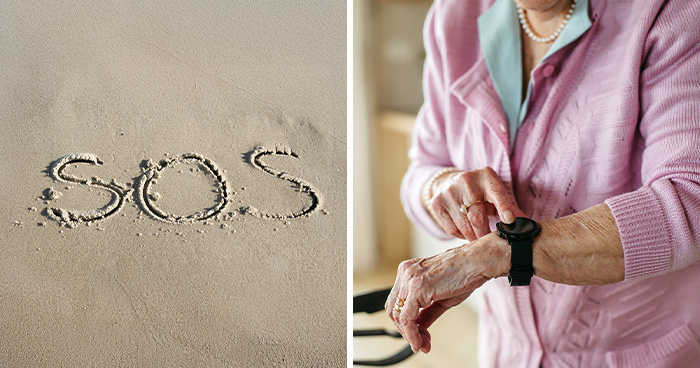

Today, the signal is casually tossed into texts during dating disasters or outfit emergencies, but its roots come from genuine life-or-death situations at sea.
SOS entered official use in 1905 under German maritime radio regulations, and despite the popular myth, it was never meant to stand for “Save Our Souls” or “Save Our Ship.”
The letters themselves are meaningless by design. SOS was chosen because its simple, unmistakable Morse code pattern could cut through static and language barriers, which mattered long before global communication standards existed.
That practicality is what pushed it from a technical radio signal into the worldwide distress call we still recognize today.
Before SOS, Distress Calls Were Inconsistent and Often Ignored
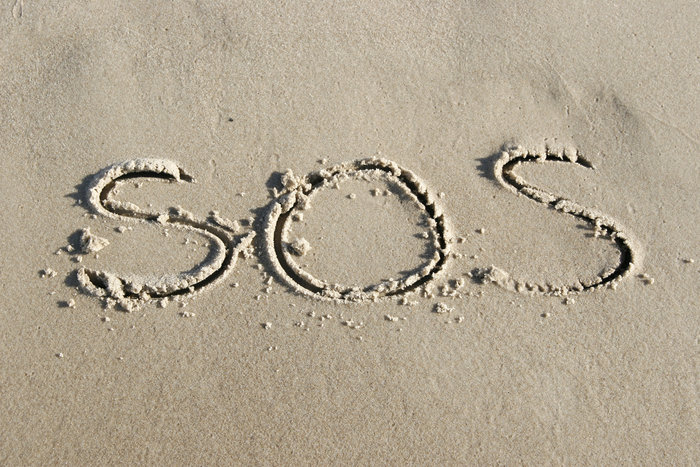
Image credits: zoomstudio / Getty Images
SOS is an international distress signal used in Morse code, first established for maritime emergencies and later adopted in aviation. Morse code transmits information through sequences of dots, dashes, and spaces, allowing messages to travel long distances without spoken language.
Samuel F.B. Morse developed the original system in the 1830s, and it was refined in 1851 into what became known as International Morse Code. Before SOS was introduced, distress signaling lacked consistency, which made emergencies harder to identify and respond to.
Earlier signals varied by country. British operators relied on CQD, meaning “seeking you, distress” or “all stations, distress,” while German operators used SOE. American operators often sent NC, which translated to “call for help without delay.” This patchwork approach created dangerous delays during emergencies, as USA Today noted.
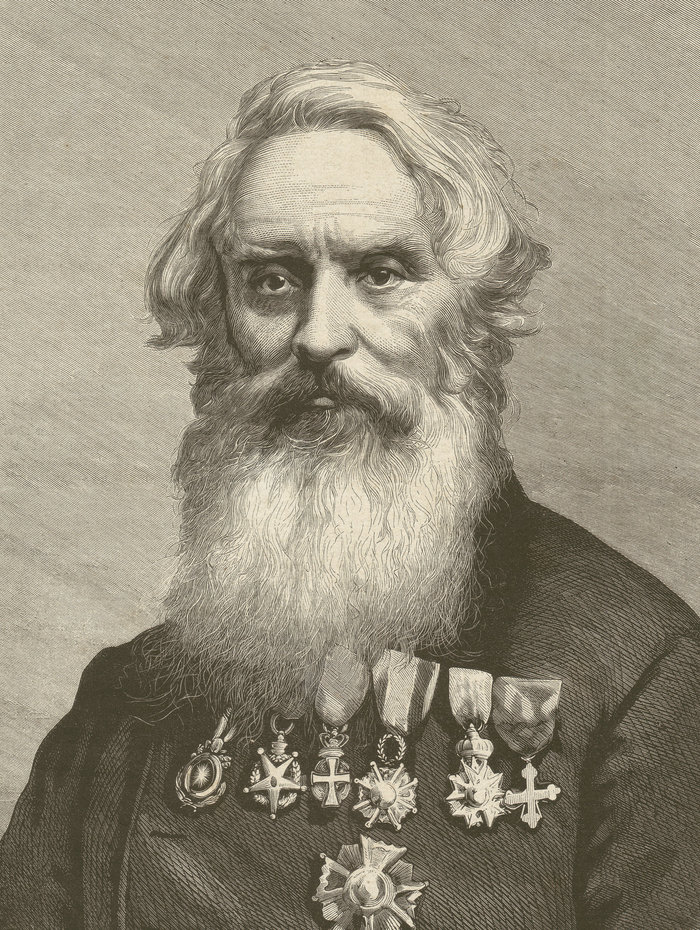
Image credits: ZU_09 / Getty Images
To solve the problem, delegates at the 1906 International Telegraphic Radio Conference pushed for a single, universal distress signal. SOS stood out because of its clear rhythmic pattern, three dots followed by three dashes and three dots, which made it easier to recognize even in poor transmission conditions.
By 1908, most conference members had formally adopted SOS, though the United States was slower to follow. In Morse code, SOS is transmitted as a single continuous signal, without pauses between letters, which helps it cut through static and reduces the chance of confusion.
America’s First SOS Call Came From a Ship That Nearly Went Unanswered

Image credits: Rafael Elias / Getty Images
The first SOS distress signal sent from the United States went out on August 11, 1909, off the coast of Cape Hatteras. Telegraph operator Theodore Haubner transmitted the call from the steamship S. S. Arapahoe after the vessel became disabled at sea.
Because SOS was still new and not yet universally trusted, he sent both SOS and the older CQD signal to be safe.
That transmission marked the first recorded use of SOS in America. The message was picked up by the wireless station at Hatteras, which helped coordinate the successful rescue of the S. S. Arapahoe.
Later that same year, Haubner found himself on the receiving end of an SOS when the S. S. Iroquois sent a distress call. This moment made him the first American radio operator to both send and receive an SOS signal.
The code required other radio traffic to stop so emergency messages could be handled immediately, and operators were expected to respond if they were able (via DNCR).
The Titanic Sent SOS, But Confusion on the Airwaves Cost Lives
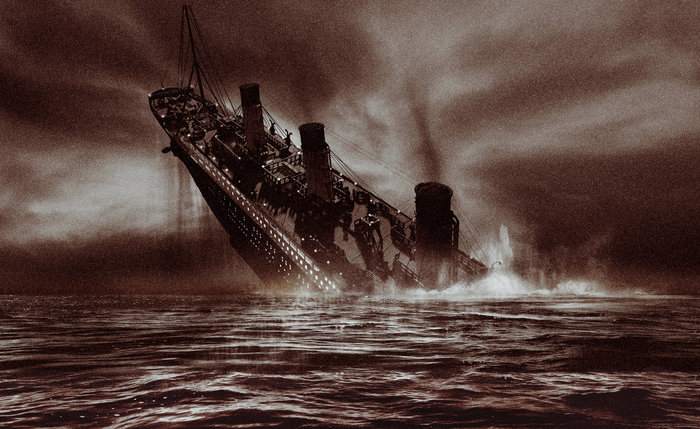
Image credits: Max Dannenbaum / Getty Images
The most famous early use of SOS came during the Titanic disaster in 1912, when chief telegraphist Jack Phillips and his assistant, Harold Bride, transmitted both SOS and the older CQD distress calls.
The Titanic was equipped with a wireless telegraph primarily for handling passenger messages, not emergencies, making the system an unexpected lifeline after the ship struck an iceberg.
Those distress signals ultimately helped bring rescue ships to the scene, saving hundreds of lives. At the same time, the tragedy exposed how confusion around competing distress codes and radio procedures could cost lives, with more than 1,500 people dying as the ship went down.
The Titanic’s wireless system was designed by Guglielmo Marconi, a telecommunications pioneer and Nobel Prize winner, who developed early radio communication technology.
During the voyage, Phillips and Bride spent nearly all their time sending Morse code “Marconigrams” for wealthy passengers, a workload that kept the radio room operating nonstop.
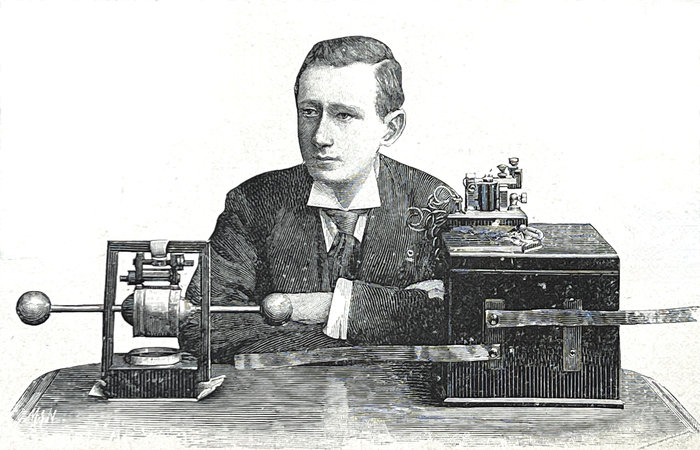
Image credits: clu / Getty Images
Because the telegraph was treated primarily as a commercial tool, emergency communication was not always prioritized.
The Encyclopedia Britannica notes that when the nearby SS Californian warned the Titanic, it was surrounded by ice, Phillips, overwhelmed with traffic, replied, “Shut up! I am busy.”
After the collision, Phillips initially sent CQD since the United States had not fully adopted SOS at the time.
Bride later recalled that he joked about trying SOS as well, calling it “the new call,” and the operators began alternating between the two signals as the situation worsened.
As the ship sank, radio interference and confusion slowed responses from other vessels. The Californian never received the Titanic’s distress calls because its wireless operator had shut down for the night (a detail later confirmed during official inquiries).
Phillips continued transmitting calls for help until the ship went under, dying at his post.
Corporate Rivalries Delayed SOS Adoption Despite Clear Safety Risks
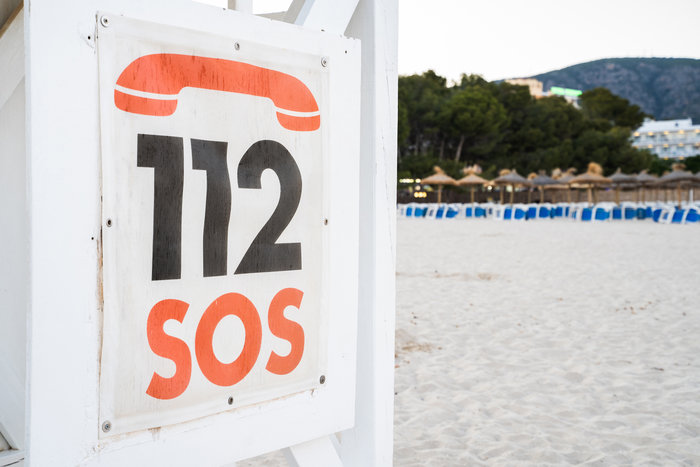
Image credits: Alberto Case / Getty Images
While most nations quickly agreed on SOS as a universal distress signal, the United States lagged behind, largely because of a corporate power struggle led by the Marconi Company. At the time, Marconi dominated the American and British wireless markets and promoted its own distress signal, CQD, as the superior option.
That rivalry had real consequences at sea. Ships outfitted with Marconi equipment often refused to communicate with vessels using Germany’s Telefunken systems, creating dangerous gaps in emergency response. Historians later pointed to this competition as one of the clearest examples of why international standards were urgently needed, as reported by National Geographic.
Marconi aggressively worked to shut out competitors, even instructing his operators not to exchange messages with rival networks. Years later, he publicly acknowledged the harm caused by that approach. In a 1927 speech, he admitted, “Now I have realized my mistake.”
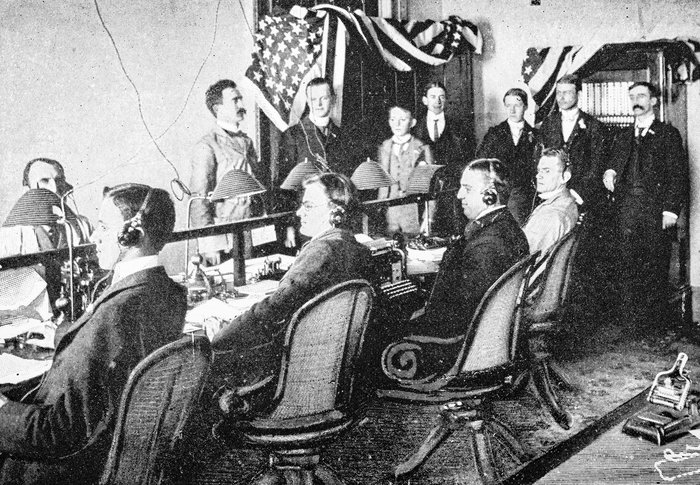
Image credits: ilbusca / Getty Images
It took the sinking of the Titanic to finally force change in the United States. After the disaster, SOS was officially adopted as the nation’s standard distress signal. It remained in use for decades, until Morse code itself was phased out of marine communication in 1999, when the United Nations approved modern digital systems (via National Geographic).
Today, maritime emergencies are handled through the Global Maritime Distress and Safety System, which relies on satellites and automated alerts rather than manual radio signals.
SOS in The Age of Tech

Image credits: Cavan Images / Getty Images
What began as a maritime radio signal has since moved into everyday life. SOS is now used to flag everything from serious emergencies to moments of urgent need, far removed from its original role aboard ships at sea. That shift reflects how deeply the signal has embedded itself into modern culture.
Smartphones have given SOS an entirely new function. Apple explains that iPhones starting with the iPhone 14 include Emergency SOS via satellite, which allows users to contact emergency services even when there is no cellular or Wi-Fi connection.
The system is designed for extreme situations. When a phone cannot place a regular emergency call, it attempts to connect to a satellite instead, guiding the user through short prompts to send critical information.
Emergency responders can receive location details, and users can automatically share their Medical ID and alert emergency contacts, as outlined by Apple.
There are also multiple ways to trigger help. Users can activate an on-screen SOS slider by holding the side and volume buttons, or enable a setting that automatically calls emergency services after pressing the side button five times in quick succession.

Image credits: Halfpoint Images / Getty Images
Outside of smartphones, SOS still appears in unexpected places. Doctors sometimes write “SOS” on prescriptions to indicate medication should be taken only when urgently needed, a practice noted by Reader’s Digest.
The signal also saves lives in its simplest form. Stranded sailors and hikers still rely on writing SOS in large letters to catch rescuers’ attention overhead.
Even as technology evolves, the meaning behind those three letters has stayed remarkably consistent.