
When the first branch of the hipster burger joint MEATliquor opened in London’s West End in 2011, the capital’s trendy set scrambled to indulge in grass-fed burgers and truffle fries amid exposed brick and industrial-style lighting decor.
Items like the ‘Dead Hippie Burger’ (featuring mustard-fried beef patties), the ‘Booze and Bad Decisions’ cocktail menu, and the unconventional venues with graffiti-covered walls and late opening hours until 3am attracted long queues and big names like David Cameron and David Beckham.
On Monday news broke of the permanent closure of the bulk of MEATliquour restaurants, leaving just two of the original five left.
Bosses at the Leeds branch, which shut after 11 years of trading, blamed increased market prices: ‘Cost of living up. Cost of beef up. Cost of EVERYTHING up.
Much as it’s been a challenging climate for the hospitality industry with rising business rates and Rachel Reeves’ national insurance hike, which has pushed staff costs, that’s by no means the only issue.
TripAdvisor reviews brand the chain ‘overpriced’ and ‘totally overrated’ while another compares the food to ‘something you would buy from Iceland’, indicating that customers have fallen out of love with the proliferation of posh burger joints that have arrived on every high street in the past 10 years.
Days after news of the MEATliquor closures, Patty&Bun announced four of its six venues have shut their doors, following in the footsteps of Byron Burger, which has collapsed into administration three times since 2020 and GBK, which closed 26 restaurants and axed 362 jobs.

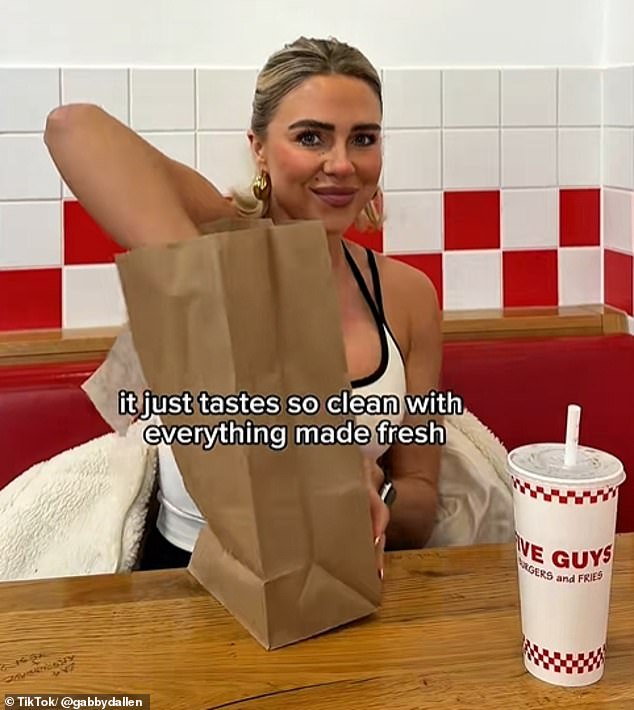
It was once the trendiest dining out option available – but now burger joints are slowly fading for Britain’s streets (pictured: Influencer Gabby Allen at Five Guys)
MEATliquor founder Scott Collins confirmed that the group had appointed BPI Asset Advisory to assess its options, adding to trade publication RestaurantNews: ‘We’re in the same position as a lot of others in the industry and I’m just getting ahead of things before we’re forced to.
‘On top of VAT, rates, beef and energy costs, we’ve not got a new war creating uncertainty and more tube strikes to deal with.’
Soon after, the once-equally as trendy burger joint Patty&Bun revealed the closure of four of its six venues on Instagram, writing: ‘We’ve loved being part of these communities and just wanted to say a huge thank you to everyone who’s walked through these doors.
‘It’s been a privilege to serve you. To our teams past and present, the graft, the energy, the madness and the love you put into every shift… we’re endlessly grateful.’
Among the closures was the brand’s first-ever location in Marylebone, London, which launched in November 2012.
The chain was, in its heyday, known and loved for its gourmet, quirky burgers with options including the Ari Gold (a messy cheeseburger named after the Entourage character) and laid-back atmosphere.
Now, just two brick-and-mortar sites remain – perhaps unsurprising after the group, founded by Joe Grossman, last year announced a restructure that saw the group’s assets acquired by a new company.
Hardships have even spread to the cult favourite Five Guys, with losses widening at the European arm.

Content creator @lifebychyna is seen dining at Byron Burger in London’s Tottenham Court Road location

Patty&Bun, famed for its dirty burgers (pictured), announced the closure of four of its six venues


In October last year, the division, headquartered in London, shared a pre-tax loss of £36.7m for 2024, following a pre-tax loss of £16.7m in 2023.
Five Guys, founded by the Murrell family in 1986, also made a pre-tax loss of £35.6m in 2022, City AM reported.
The losses may be related to the brand’s high cost points, with prices of £13.35 for a bacon cheeseburger and £6.95 for a large fries in the London Portobello branch, meaning a single meal could reach a total of £20.30.
On TikTok, numerous posts show adults purchasing the £9.50 kids’ meal, perhaps to keep costs down.
2025 also marked a tumultuous year for Byron Burger, which suffered its third collapse.
Gen Z entrepreneur Akshat Tibrewala, 21, saved the brand for £2.5 million after its previous owner, Tristar Foods, announced plans to bring in administrators, The Times reported.
It comes after the once-booming GBK closed 26 restaurants and axed 362 jobs in 2020.
The burger chain had been purchased in a rescue deal by Boparan Restaurant Group, which also plucked Carluccio’s from insolvency in the pandemic.
GBK said it had started to see improvements in trading the year prior after a major restructuring process in 2018, which saw it shut a raft of sites.
However, the company, which had been owned by the South African group Famous Brands, said it slid into administration after the pandemic impacted its liquidity and potential to be sold as a solvent business.