Daily Mail journalists select and curate the products that feature on our site. If you make a purchase via links on this page we will earn commission – learn more
Every January, thousands of tech journalists, influencers and industry analysts swarm to a freezing Las Vegas: their mission, to see what new gadgets and innovations the world’s geek-masters have come up with.
This is CES – the Consumer Electronics Show – and I’ve been to 20 of them. Predicting what’s going to take off and what’s not is the fun part. Less fun is walking ten miles a day round the vast exhibition halls and paying £15 for a bad coffee and stale croissant.
One of my big prediction failures was for a combined refrigerated beer glass with a speaker, invented by boffins in Canada, to enable listening to music while you drink. Strangely enough, it never caught on.
Among my proudest CES finds is the selfie stick, now obligatory for all Chinese tourists. Then there was the Ember self-heating coffee mug, which, since it cost £179, everyone laughed at (especially when then-chancellor Rishi Sunak was spotted with one at his desk). They’re a little cheaper now and wildly popular because they work so well; full disclosure, we have three Embers and even the family Luddites love them.
So what was new at this year’s CES? I was on the hunt for gizmos that might particularly interest the grown-ups among us – let’s say the 50-plus contingent, who have no interest in gaming or making TikTok selfie videos, but are always up for a gadget that makes life better. Here’s what I found:
1. The memory-jogging smart ring
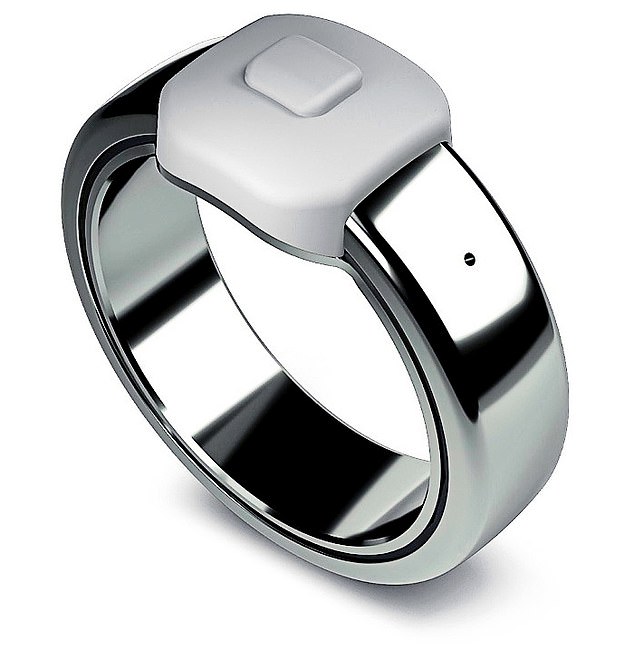
In terms of ‘I could use that and almost afford it’, the standout for me this year was a smart ring being launched by Pebble, the start-up that made the first smart watch in 2012, only to be squished out of existence by the Apple Watch three years later.
The new Pebble Index 01, which will cost around £75, has one job – to help you note down things you need to do, fleeting thoughts you’ve had during the day and so on. All you need to do is click a button on it and speak. The swim-proof device records what you say and wirelessly transfers both the recording and a transcript to your phone. Just open the accompanying app and you’ll find all your brilliant on-the-hoof thoughts ready to hear and read. The Pebble ring never needs charging and doesn’t require an annoying subscription, a big plus in gadget land.

2. The power-up for your legs
Another product that would have been unimaginable even two years ago is the exoskeleton, coming in from China and designed to make walking, running and cycling easier. An exoskeleton is a motorised harness: you strap the belt around your waist and its two robotic arms gently cup the back of your thighs. They then help push up each leg in turn as you step.
Exoskeletons are aimed at people who have problems walking and those who don’t, hikers and runners included. It doesn’t do the walking for you, but means you get ten to 40 per cent more power, depending on the setting, for the same effort. So the device leaves your heart thumping as it should during exercise, but your legs notably less tired.
Exoskeletons from one of the leading brands, Hypershell, range from £700 to £1,600 for the Ultra X version I tried.

3. The fridge you can speak to
Gadgeteers have been obsessed with fridges for decades. They can’t leave them alone, inventing fridges that track the food you use and order more, fridges with video cameras inside that you can log into from the supermarket… All rubbish and not useful. However, one innovation promised at CES by Samsung is interesting. Its Family Hub smart fridges (priced around £2,000) now have a new feature: voice-activated door opening and closing. When your hands are loaded with groceries, or are covered in pastry, you’ll be able to say, ‘Shut the fridge door’, or ‘Open the door’, and it will do just that.
Gadgets you can talk to have never been as handy as you’d think. We had a bin that opened when you asked it – the snag was, it could only recognise an American accent and putting one on sounds very silly. I do think self-opening fridge doors could catch on, though, especially if they understand the King’s English.

4. The four-in-one health scanner
Health is a topic of some interest to us over-50s – and gadget-makers are keener than ever to help us track our vital signs. French company Withings has been devising products for what doctors call ‘the worried well’ – people not ill but anxious to pick up symptoms of anything nasty early – for nearly 20 years and its stuff is excellent. At CES there was a lot of media fuss about its new £450 (seriously) bathroom scale, the Body Scan 2, which takes so many measurements that they call it a ‘longevity station’ rather than a weighing scale.
I was more impressed, though, by the Withings BeamO. This is a neat handheld device costing a mere £230, which is a four-in- one health scanner featuring a contactless thermometer, an ECG checker, a digital stethoscope (for lungs and heart health) and a pulse oximeter to check on your blood-oxygen level.

5. The AI home help
A lot of over-50s have aged parents to worry about – and at some point may think of looking into an AI electronic companion for them.

ElliQ hasn’t launched yet in the UK, but it’s becoming popular in the States and is promised for us soon. It’s not a clinking-clanking, tea-spilling robot, but a tabletop or bedside machine that has a huge range of capabilities: messaging, reminding you to take medication, health tracking, entertainment, flagging up relatives’ birthdays and much more. It’s likely to cost about £250 plus a £50-a-month subscription.
6. The sound booster
Do you find yourself unable to follow what’s being said in your favourite TV shows? British company Geemarc, which specialises in devices to aid hearing, is here to help. Its £198 Sonarya ports the sound from your TV wirelessly to a stylish portable speaker, using AI to enhance the audio clarity.

7. The really handy recording device
My final pick of the goodies from CES 2026 is the £149 Plaud NotePin, a tiny recorder that you can keep on you all day to track conversations. I’d often imagined – mostly as a joke – a life recorder that helped sort out domestic arguments. ‘Did you really remind me to put the rubbish out? Let’s check the transcript from this morning, shall we?’

You wouldn’t really use it so creepily, but you’ll find a dozen practical applications for the NotePin, which automatically relays recordings and transcripts to your phone. I’ve used it (with permission) in meetings with lawyers and doctors, work discussions and elsewhere. It really is useful, I promise. Unlike that infamous Canadian singing beer mug…