Would it work? It certainly would help American consumers, even if it does little for the price of oil on global markets. It might even cheer up libertarians who have agitated to end the Jones Act for years, specifically on the issue of energy costs.
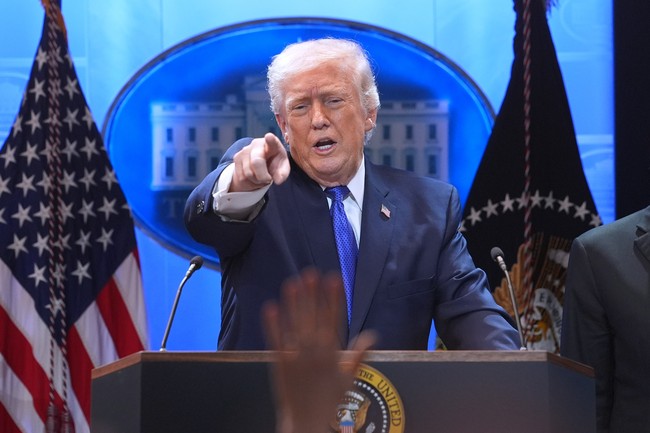
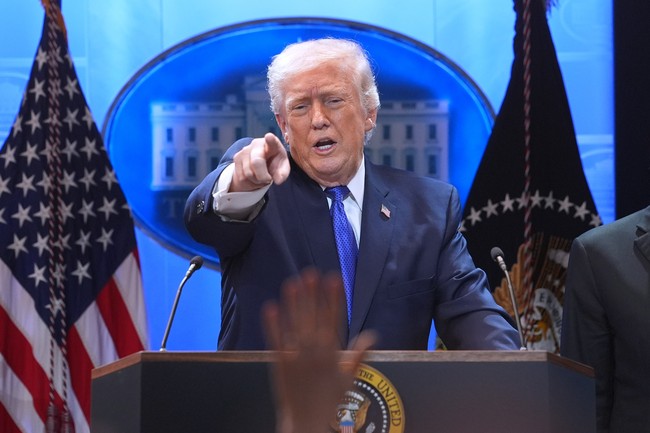
Donald Trump’s decision to finally settle matters with Iran has made the desire to hold prices down at the pump particularly acute. The White House announced this morning that the president may order a limited-time waiver of the Jones Act to make those distributions less costly and more efficient:
The Trump administration is considering waiving the century-old Jones Act for a limited period to ensure energy and agricultural shipments can move freely between U.S. ports, press secretary Karoline Leavitt said on Thursday, in a bid to combat Iran-related supply disruptions.
“In the interest of national defense, the White House is considering waiving the Jones Act for a limited period of time to ensure vital energy products and agricultural necessities are flowing freely to U.S. ports,” Leavitt said in a statement. …
Under the Jones Act, goods shipped between U.S. ports must be carried on vessels that are U.S.-built, U.S.-flagged and mostly U.S.-owned. The requirement sharply limits the number of tankers available for domestic shipments.
Waiving the rule temporarily would allow foreign ships to carry fuel between U.S. ports, potentially lowering shipping costs and speeding deliveries.
How would that counteract the effects of a Hormuz squeeze? It wouldn’t directly counter the rise of the market price on a barrel of oil. However, it would alleviate the costs to bring that oil to the US refineries that produce gasoline and heating oil, and that would tend to lower costs to consumers.
Just how much would it lower costs? Colin Grabow wrote an analysis for the Cato Institute in 2022, when the Joe Biden Regency’s energy policies drove up the costs of gasoline … along with everything else. Grabow proposed that the Biden Regency could get enough relief through a suspension or repeal of the Jones Act to get some political credit:
Just how much of an increase is the subject of some debate, but a new J.P. Morgan calculation shows it would be significant. In particular, the firm’s analysts find that suspending the Jones Act to allow the domestic shipment of petroleum on less expensive foreign ships could save drivers on the East Coast 10 cents per gallon.
While some apparently think this is a meager sum, they ignore two big things:
- As my colleague Scott Lincicome noted recently (and as the current TV news incessantly reminds us), Americans care a lot—a lot —about gas prices and are willing to drive miles out of their way to save a few cents at the pump. We also tend to obsess over small movements in gas prices, especially when they cross salient (though admittedly arbitrary) thresholds like, say, $5 per gallon. Thus, as purely an emotional (and political) matter, saving “only” 10 cents per gallon would surely affect millions of inflation-weary U.S. drivers.
- Second, these savings quickly add up—especially when one considers just how much gasoline the East Coast consumes. According to the Energy Information Administration, consumption of gas last year in PADD 1—essentially the East Coast—was roughly 117 million gallons per day, or nearly 43 billion gallons per year (total U.S. consumption in 2021 was almost 135 billion gallons). Thus, reducing the price of each gallon of gas by 10 cents would save American drivers over $4 billion dollars per year. That sum represents not only a little weekly relief for individual families and workers during a painful inflationary period, but also collectively big savings for the U.S. economy—savings that would be redirected toward other, more productive endeavors (such as spending at other American businesses that are struggling in today’s uncertain economy).
Every little bit helps, perhaps especially now. A suspension of the Jones Act makes more sense now than it would have at the time that Grabow wrote his analysis. The Biden Regency imposed energy policies that restricted American oil production and especially exploration, which restricted supply as a deliberate outcome. Democrats wanted the price of oil and gas to rise as a means to force a transition to “green” energy sources. There was no appetite for lowering gas prices, at least not until inflation really started running away later in 2022 and 2023, and even then, the White House did nothing to roll back the regulations that disincentivized expansion of production.
Now, however, we have an administration creating policies and regulations that encourage American production, exploration, and exports. The sharp increase in price is not the desired result of restrictionist policies, but the acute effect of an emergency situation (a war). Trump’s decision to release oil from the Strategic Petroleum Reserve is similar in nature. Unlike Biden, who used an SPR release simply to buffer his own policies, Trump used the SPR for its intended purpose of dealing with acute crises.
A dime per gallon may not seem like a big impact now, either, but it’s at least something. Perhaps even more valuable is the perception that the White House would be willing to pull out all stops to buffer consumers as much as possible from the economic effects of the war. That has political benefits of its own.
Editor’s Note: For decades, former presidents have been all talk and no action. Now, Donald Trump is eliminating the threat from Iran once and for all.
Help us report the truth about the Trump administration’s decisive actions to keep Americans safe and bring peace to the world. Join Hot Air VIP and use promo code FIGHT to get 60% off your membership!