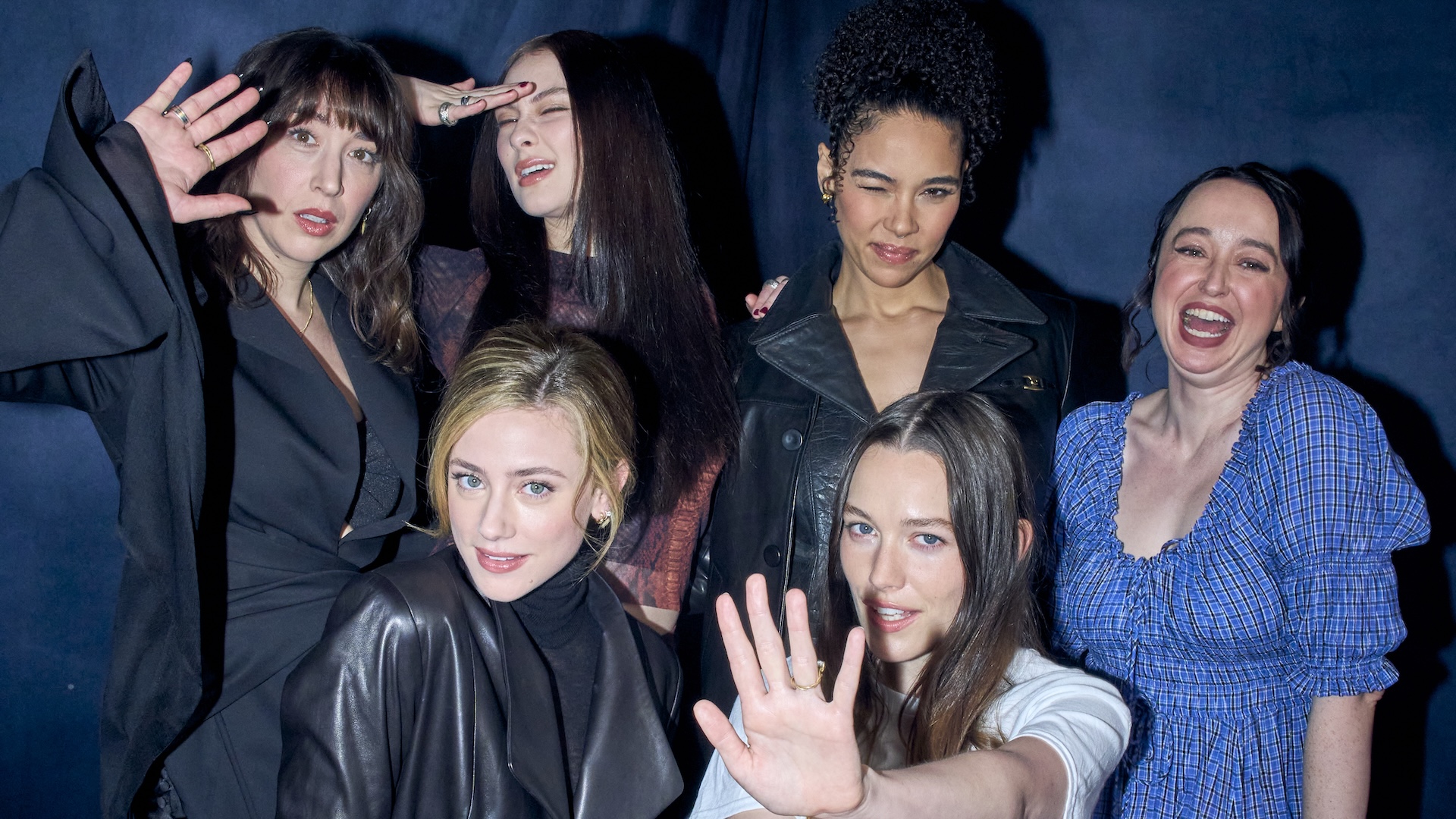

Viewers watching the first 15 minutes of Forbidden Fruits might think they’re on familiar ground. We watch as the Fruits—fashion store employees Apple (Lili Reinhart), Cherry (Victoria Pedretti), and Fig (Alexandra Shipp)—swoop through the mall food court like ’80s mean girls, receiving free food from the guys and expressing disgust at those who don’t meet their standards. But when the Fruits welcome newcomer Pumpkin (Lola Tung) into their number through a pagan ritual, it’s clear that director Meredith Alloway has something more complicated in mind.
“I do love the idea that women are told we’re quite literally the origin of evil and sin,” Alloway tells Den of Geek after the SXSW premiere of Forbidden Fruits. “The source material is a play written by Lily Houghton, Of the woman came the beginning of sin, and through her we all die. In it, all these women are reclaiming that. I think witchcraft, and being in a coven are ways that we make that sin narrative ours.
“I think when women get together and they set an intention, whether it’s magic or literally just everyone talking at a sleepover, that is really powerful.”
cnx.cmd.push(function() {
cnx({
playerId: “106e33c0-3911-473c-b599-b1426db57530”,
cnx({
playerId: “106e33c0-3911-473c-b599-b1426db57530”,
}).render(“0270c398a82f44f49c23c16122516796”);
});
Forbidden Fruits certainly features women with intention, both fictional and real. The Fruits may seem like familiar stock characters at first, but Alloway, who co-wrote the screenplay with Houghton, finds more complexity within them, without sacrificing any potential for comedy.
“I think the comedy comes from playing something completely straight,” Reinhart says of her process. “This is the most serious thing in the world to my character, Apple, and that’s where the comedy comes in, because ultimately, this is a silly, crazy thing that these girls are doing. But it means everything and more to them, to Apple in particular.”
“I think what’s really powerful about everyone’s performance is that no one’s actually playing a stereotype,” adds Pedretti. “There are a lot of cues that might lead you to misjudge these women before you get to know them throughout the film. Each character really ends up, hopefully, ends up surprising the audience with their humanity.
“Because, at the end of the day, we’re all humans. For women especially—though men deal with this too, frankly—there’s this idea that we just can’t do it right. If you don’t wear enough clothing, you’re a slut. If you wear too much clothing, you’re a prude. There’s no way to make everyone happy.
“I think that relates to this Biblical idea of being innately flawed and human. But it’s okay to be flawed!”
Shipp adds, “We all play very complex human individuals who just so happen to have been born in a female body in this lifetime, and who are just trying to navigate the structures of this world. The world tells us that we have to be one way, and we can feed into it and play along with it, or rebel against it. We play with those themes in the film.”
For Reinhart, these tensions allowed her to craft a complex portrait of someone in a mental health crisis. “I’ve had a lot of discussions with Meredith about how we’re watching a woman slowly crack, watching the facade of her slowly fading away. When we get to the third act of the movie, my voice changes and my physicality changes.
“I wanted that to show the audience that Apple is shifting, the mask is being dropped, or the robe and veil, shall we say, is being thrown on the ground.”
According to Pedretti, Apple’s breakdown creates tension within her character, Cherry. “Cherry has lost her entire family,” she explains, promising that the information is background and not a spoiler, “So this community is her serenity in her world. It’s everything to her to have a relationship with these women. Having these rules and structure helps her know that she’s okay because, unlike Apple, Cherry understands that there is something deeply wrong with her.”
“Apple’s so busy helping Cherry with healing her wounds and, genuinely, doing what she thinks is best for her, that she’s ignoring her own very open wounds, which mascara and countering cannot cover,” observes Alloway.
The precarious nature of the relationship means that Pumpkin’s addition to the group creates immediate rifts between the Fruits. “Pumpkin is someone who knows everyone and is friends with everyone, but doesn’t have a close group of friends and certainly not a close group of female friends,” observes Tung. “She has a little bit of a mission, which I won’t spoil, but she really does find a sense of belonging with these women. She toes the line of wanting to be part of the community because it’s something really special that she’s never really experienced before.
“They’ve created something so special and intriguing with glitter and rhinestones,” she laughs.
Glitter and rhinestones, witches in malls, mean girls with complicated vulnerabilities: these are the ingredients that Alloway and her cast use to create the spell that is Forbidden Fruits, a spell powerful enough to undo sins of patriarchy.
Forbidden Fruits opens in theaters on March 27, 2026.
The post Forbidden Fruits Director and Stars on Reclaiming Original Sin appeared first on Den of Geek.