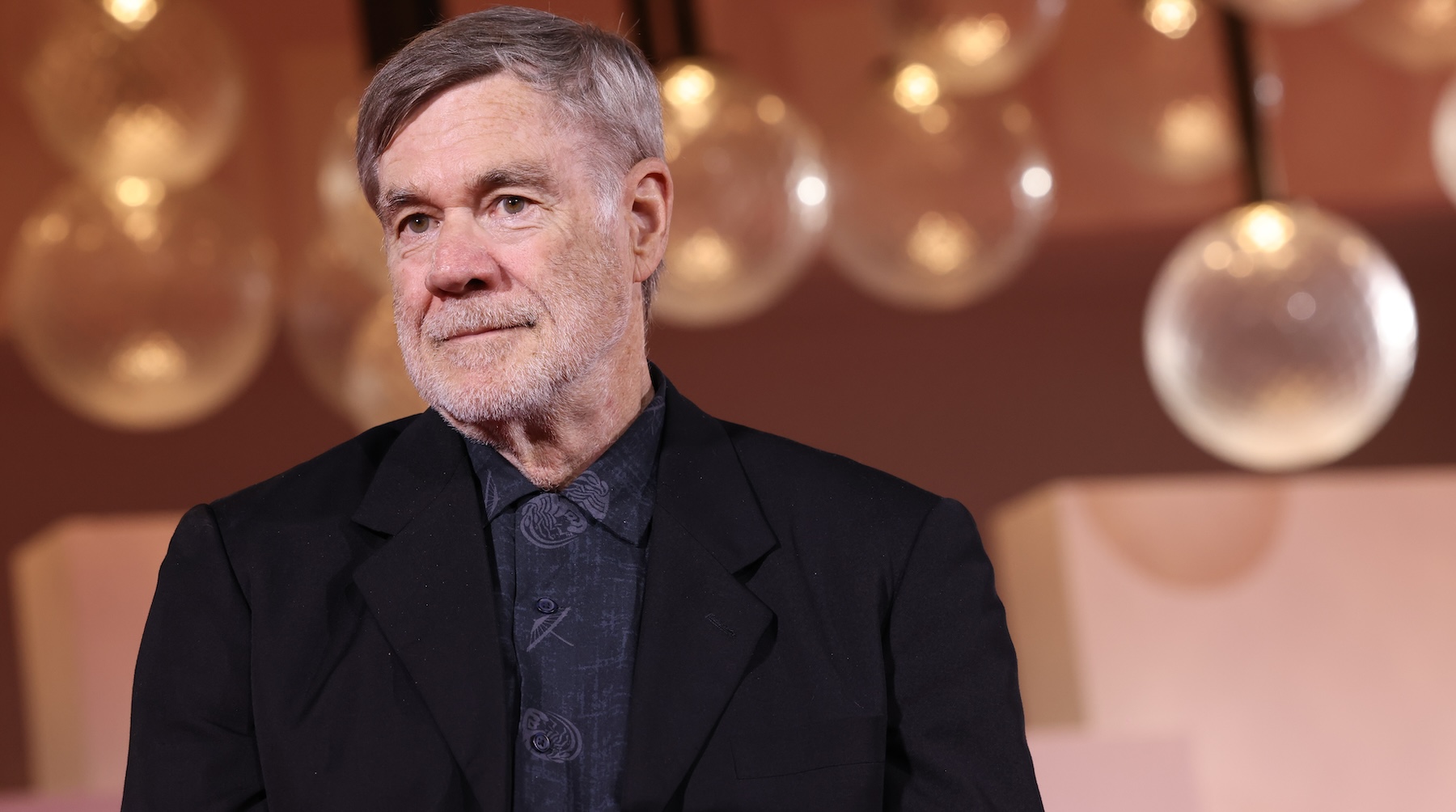

“Right now, because of [Luigi] Mangione, yes, there are some similar things,” Van Sant acknowledges. “But I think just like Dog Day Afternoon is based on a real story, there are hostage-taking stories that have similar processes to them that just go back in history.”
Nonetheless, the way other processes are changing weighs as strongly on Van Sant’s mind as it does old collaborators like Damon and Affleck. When we catch up with Van Sant, it is shortly after comments were shared by Affleck and Damon about the ways Netflix has changed storytelling, including on their very own Rip. In effect, they seemed to suggest, we might be seeing the language of cinema shift.
“There’s a lot of observations to be made because of the streaming business and technology affecting cinema,” Van Sant considers. “I’m a big fan of a book called A Million and One Nights [by Terry Ramsaye], which was written in the 1920s. It’s kind of explaining the birth of cinema and the advent of sound, and how that affected the form. There was then an addendum to the book when sound came along, and it was about the change that happened between silent and sound films. We’re sort of going through that again with this technology change.”
Van Sant makes special note of how the format of film exhibition was always dictated, for better or worse, by commercial interests.
Says the director, “The reason I think that films were projected in the first place was that they were like originally on [kinetoscopes] or nickelodeons, which was a small screen that you would see in like an arcade or a shopping area. People would look at little passion plays on a small screen, and it was on a small screen because they didn’t really know how to project film without burning it. It would melt. So when they figured out how to [exhibit it in a larger format], it made sense business-wise that every time you showed it, to fit in as many people as you could. It made sense to have a crowd and to make it like a play, and now it makes a different sense to be able to send it to everyone’s personal computers. It’s a different technology.”
He continues, “We’re living in a different age where we don’t necessarily gather in the same place. So I don’t know if it’s good or bad, but I don’t think that people knew if it was good or bad when it was created. It was a business, and the businesses are usurping how we are used to cinema.”