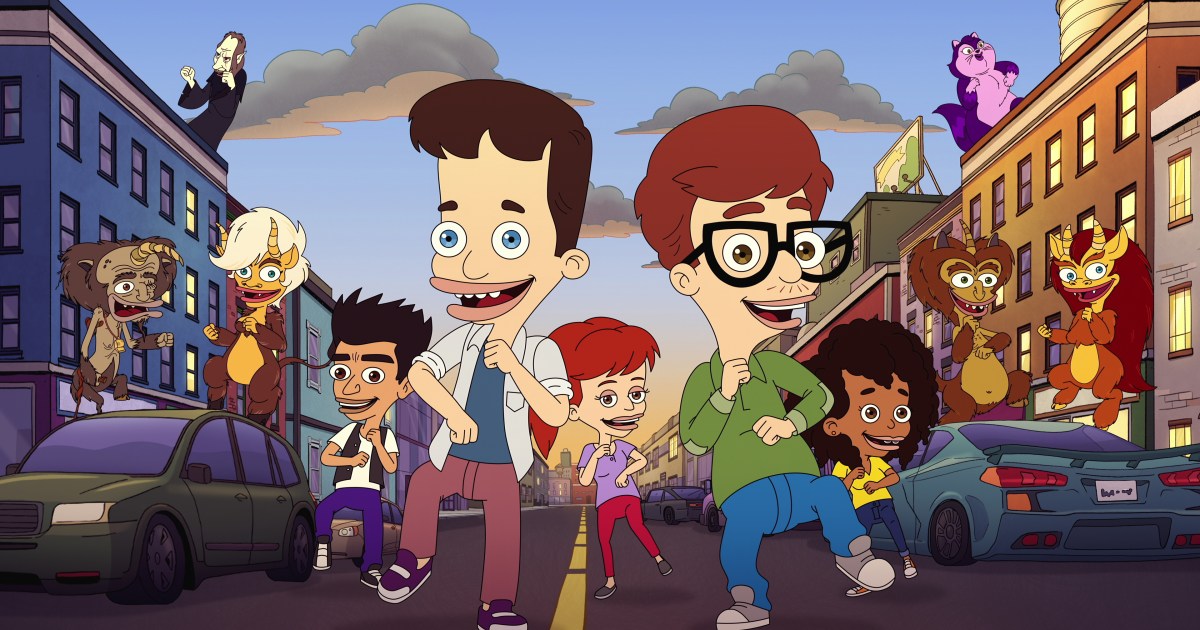

Big Mouth is obviously very silly, but it pushes some really important messages, too. It’s filled with encouraging examples of representation as well. Which storyline or piece of character development are you the most proud of bringing to life here?
JF: I just think we all learned so much about human sexuality and human development making this show. I can really say I learned a lot and I feel like we really created something where the things that we learned–we really wanted to tell people about things like female pleasure. I did not think that was a story that I was going to do. Like, I knew there’d be periods. I knew there’d be masturbation, right? But beyond that–going into asexuality and all these things that really came from real students that we spoke to who said, “I don’t feel represented.” That was really interesting and we didn’t really know about that. I think that always interested us in all these different ways. Consent is something – both in the first and the last season – that we really talk about in a specific kind of way. Those were things we learned as the world changed. The world changed so much while we were making the show, so we had to really keep abreast of everything.
And Holly Hunter is Compassion. I really will say that Holly Hunter’s Compassion was a real thrill for all of us.
AG: I agree that the learning experience of making this show has been incredible and the breadth of who we’ve learned from. We had this moment in season one where we did “Girls Are Horny Too,” where we realized–we had read Peggy Orenstein’s book, Girls & Sex, and she had come to the writers’ room to talk to us. One of the things that she writes about is that in sex ed, we teach boys about their boners and ejaculation and girls about menstruation. We don’t teach–we don’t imply to girls as we’re teaching about sex–that they’re supposed to experience pleasure, too. We realized, “Oh my God, our first episode is literally about a boy masturbating and in the second episode a girl gets her period. We did the very thing that we’re not supposed to do. So we course-corrected with the fifth episode of the first season, “Girls Are Horny Too.”
Then, like Jen said, the idea for having an asexual kid was totally born out of how we speak to teenagers every year with their sex ed teacher, Shafia Zaloum, who’s a great sex ed teacher in the Bay Area. That storyline came directly from one of her students being like, “Hey, I’m asexual, and I’d really love to see a character like me on TV.” We were like, “Absolutely.” He actually read scripts for us and gave us his thoughts. It was a really great collaboration. So, we’ve had this amazing experience where we’re learning from experts, but also from teenagers; from kids.
The pornography episode from this season is really strong, but it’s also exciting that you’re able to do an episode that helps normalize pornography, break it down, but also explore the more toxic behavior it can reinforce, too. Did this feel like significant subject matter to explore?