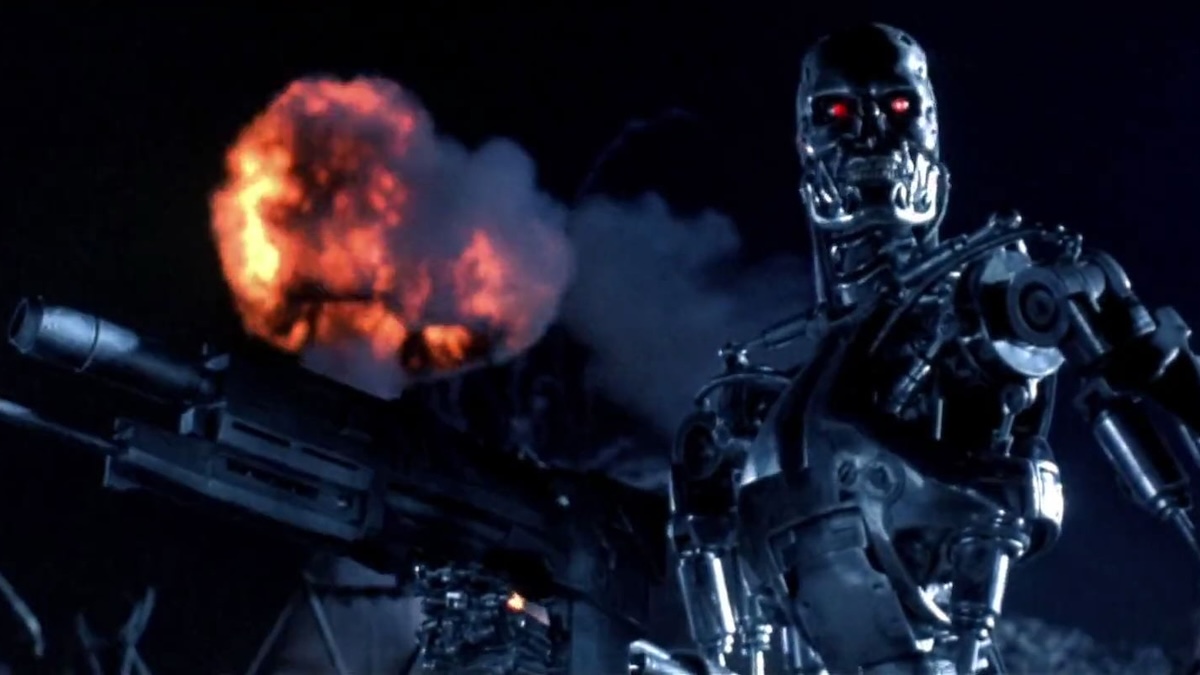
Such nuanced takes are rare in the AI conversation, but Cameron has always understood the tension between humanism and technological advancement. He may make giant blockbusters with high-cost special effects, and he may tell stories about cutting-edge technology—whether it be the T-800 or the Titanic—but Cameron always puts humanity first. His movies are about the mother and child bond formed between Ripley and Newt, the romance between Jack and Rose, or the found families in the Avatar franchise. Cameron may be interested in the next invention or device, but only to the degree that it aids humanity.
That level of nuance allows Cameron to make important distinctions when discussing AI. “Everybody sort of conflates AI, especially people that don’t work in it, don’t really know it, but there’s really two massively different flavors of AI,” he points out. “There is artificial super intelligence—which we don’t quite have yet, but people see pathways to it and they’re going full tilt boogie toward it.” Cameron insists that he doesn’t support artificial super intelligence “without guardrails” because “it will be Skynet.”
Shocking as it is to hear the man who created Skynet talk about real-world Skynet, that point about guardrails cannot be ignored. Ultimately, Cameron believes that it’s up to us, the people whose lives are affected by AI and other tools to figure out what we want from it.
Because, as Sarah Connor said at the end of T2, “The future is not set. There is no fate but what we make for ourselves.”