
Predictably, this involves a lot of ridiculous technobabble and other vaguely scientific-sounding nonsense, involving everything from Sam cracking a complex chemical algorithm to stabilize the compound to Tarima using her emotional connection with Caleb to essentially follow his feelings to where his mother is being kept. It’s all kind of ridiculous from a “should this be possible” perspective, but emotionally, it hits all the necessary beats to show us just how far these kids have come this year.
Like so many Star Trek episodes before it, “Rubincon” also revolves around a trial. In it, Nahla Ake, and through her, the Federation, is prosecuted by Nus Braka for the sins of the Burn, for both the broad choices that were made in its wake (who was given help and who wasn’t) and the specific decisions in the time that followed that saw women like Anisha swallowed up by a system that didn’t always live up to the ideals it so (loudly) espoused. The heart of the episode isn’t in the collective fight against Braka, or even the kids getting their respective chances to step up at various points throughout the area. It’s in the ridiculously gutted set of the Academy itself that’s on fire for some reason, as Anisha and Ake finally have a confrontation that has been building for over a decade.
It’s about Caleb, of course — the woman who lost him versus the woman who found him and the specter of lost years in between that hovers them both — but also it isn’t. It’s about the Federation, sort of, but also really about responsibility and accountability, both in what we owe to one another and what we owe to ourselves. “Rubincon” is remarkably even-handed in its presentation of both Ake and Anisha’s failures, the choices they’ve made, the regrets they carry, and the ways they’ve chosen to frame their actions to center themselves as doing things for the right reason. It’s an hour that lets neither woman off the hook, yet simultaneously doesn’t condemn either. Every villain, after all, is the hero of their own story, and it follows that everyone who thinks they’re the good guy is too, even when the truth sits firmly in shades of grey.
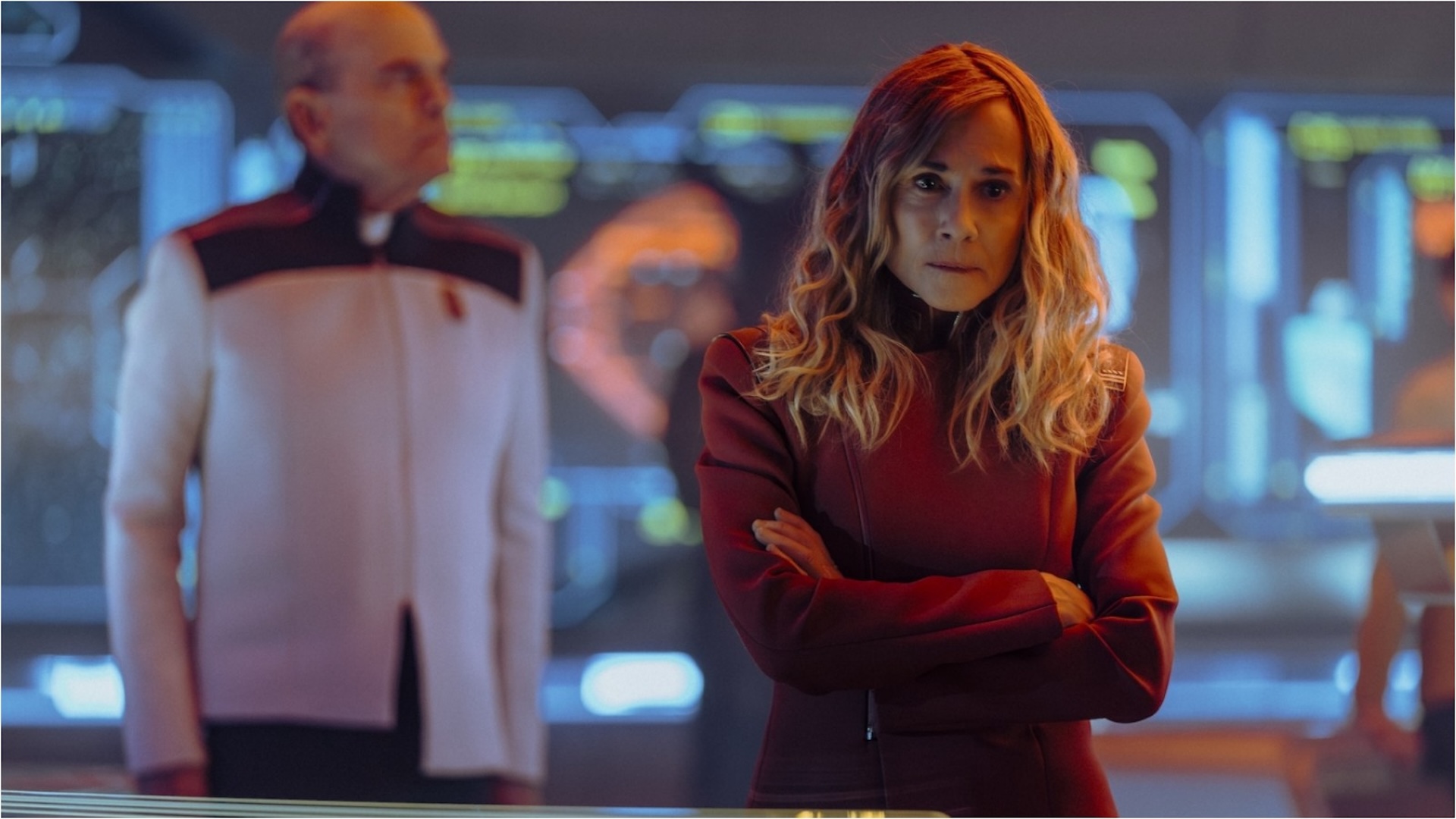
Hunter both commands and conveys immense sympathy throughout, largely through little more than shifts in facial expressions. Nahla Ake is not a particularly demonstrative or even emotionally expressive woman, but Hunter somehow makes her eyes seem ancient, full of competing griefs all snarled together. Maslany gets the showier part, allowed to rage and scream in a way that Hunter is not, yet both feel equally matched against each other in terms of both emotion and argument.
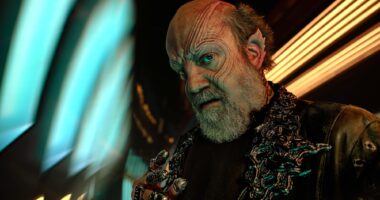
Even Braka himself is given some unexpected humanity, his story of growing up on a starving mining colony doing a lot to explain, if certainly not excuse, his hatred for the institution he views as having personally left his people behind. Unfortunately, we don’t really have time to dig back into his over-the-top hate for Ake herself. Instead, she’s more of a convenient stand-in for the Federation writ large, as she’s old enough to have been alive before the Burn and the devastation that came after. (And, to be fair, perhaps that’s always been the case, but they certainly felt more immediate and personal back in “Come, Let’s Away”.) At any rate, the lesson here is something along the lines of everyone carries their own tragedy, and it’s how you allow it to shape you that matters.
Thankfully, by the end of the hour, the kids really are alright. Caleb’s speech in the wake of Ake’s guilty verdict buys everyone enough time for Sam and the Athena to take down the wall of mines encircling Federation space, the cavalry quite literally arrives, Braka’s arrested, and all is well. Sam and Genesis have patched things up, Tarima has embraced her abilities, and the Doctor’s garbled demeanor is put right again. More importantly, perhaps, Caleb has finally understood that he doesn’t have to abandon who he once was in order to fully embrace who he is now — he’s allowed to love both his mothers, so to speak, by choosing himself and the larger world he’s made at the Academy. Ake and Anisha seem to have reached a detente of sorts, and Caleb’s off on a summer adventure during the break between school years. It’s a happy ending because this is Star Trek, but it’s one that comes with a real sense of growth and accomplishment for almost every character on the series’s canvas. Top marks, all around.