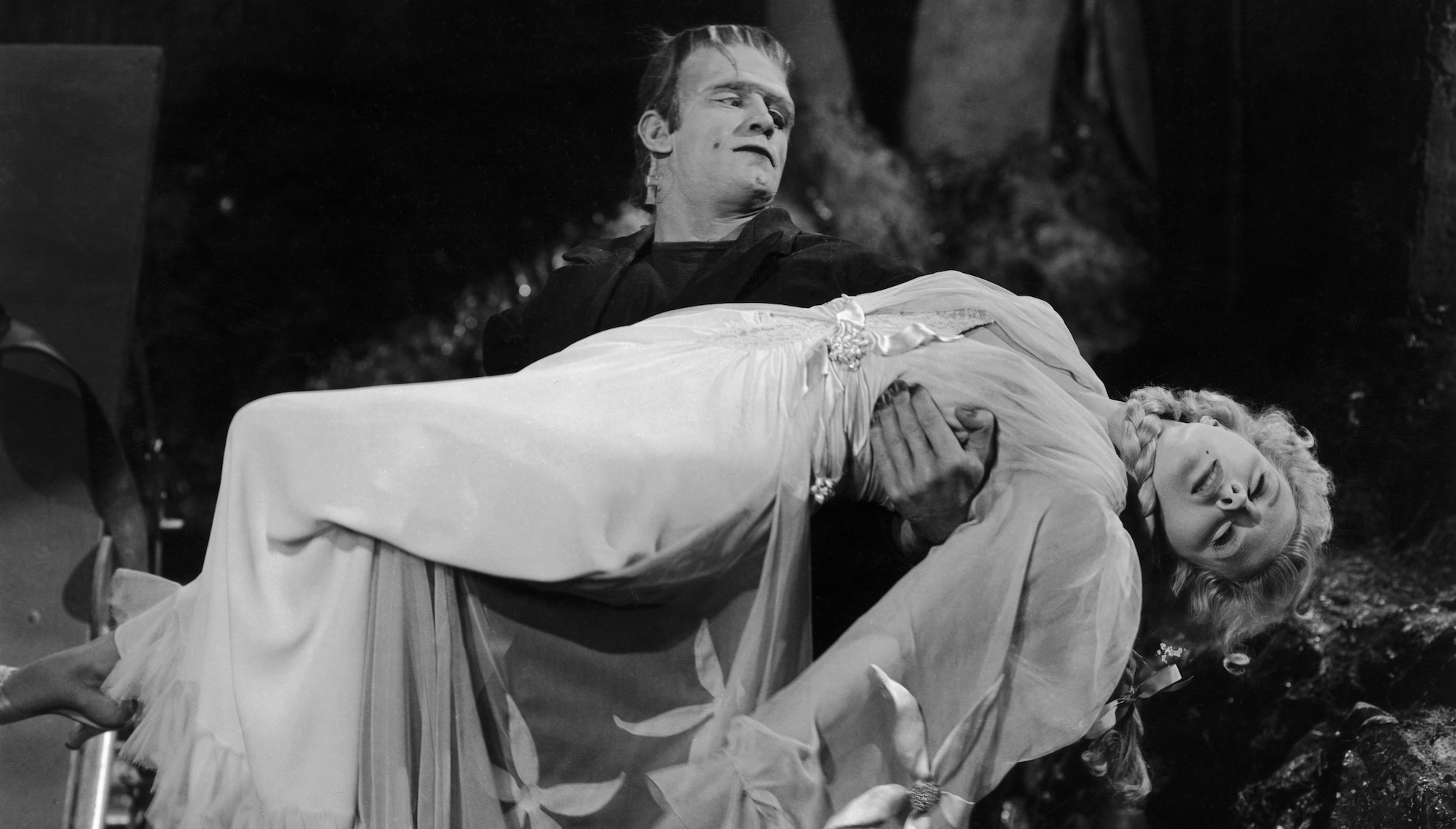

In that movie, we see Lugosi portray Frankenstein’s Monster as a lumbering beast with his arms awkwardly outstretched. Even the simplest description of that walk likely triggers an image of it in your mind, as it has become one of the defining images of the characters in the decades of pop culture that followed.
Yet not only was that walk “invented” by Lugosi’s portrayal 12 years after the original movie, but it was seemingly the result of a rather strange set of circumstances. Reportedly, Lugosi is walking like that because the original script called for the monster to be blind at that point. However, that crucial detail was cut in the final version of the film, which understandably led to many audiences wondering what the hell Lugosi was doing. Abbot and Costello’s almost meme-like response to Lugosi’s movement accelerated its place in pop culture five years later.
The Chronological Confusion of The Mummy Movies
Generally speaking, the continuity of the original Universal Monsters movies is a disaster. You can form theories as to why the films never seem to quite exist within the timeframes they reportedly do (or are otherwise unstuck from time altogether), but it’s best to just roll with it. Even then, it’s challenging to watch the entire Mummy series and not pay more attention to some of the most curious timeline decisions in horror movie history.
In The Mummy’s Tomb, we learn that about 30 years have passed since the events of the previous film, The Mummy’s Hand. However, The Mummy’s Hand is seemingly set sometime around the film’s release year of 1940. That means that The Mummy’s Tomb would be set sometime during the 1970s despite the fact it features 1940s fashion, 1940s technology, and even makes reference to current 1940s events (including being drafted into World War II). 1944’s The Mummy Curse makes matters worse by jumping forward another 25 years or so, which—based on the previous timeline—would put it somewhere in the mid-’90s. Though these are closer to amusing inconsistencies than enjoyment-destroying errors, this writer would have loved to have seen what that film’s crew thought the 1990s was going to look like.
The Creature From The Black Lagoon’s Design Was Inspired by the Academy Awards Statue
Despite being the last major monster to join the Universal lineup, the Gill-Man from Creature From the Black Lagoon instantly became a celebrated member of that roster. His instantly iconic status is due in no small part to the creature’s incredible design and the advanced filming techniques used to convincingly bring him to life. Interestingly enough, the roots of the creature’s design can be traced back to the award caliber ambitions of its director Jack Arnold.
In an interview with Cinefantastique, Arnold said that he was still trying to finalize a functional and effective creature design when he received an Academy Award nomination certificate for his work on the documentary With These Hands. Arnold said he looked at the picture of the Oscar statue and thought, “If we put a gilled head on it, plus fins and scales, that would look pretty much like the kind of creature we’re trying to get.” While the creature’s final design ended up being slightly more complicated than that, it’s easy enough to look at it and see the statue that the movie probably should have been in the running for.