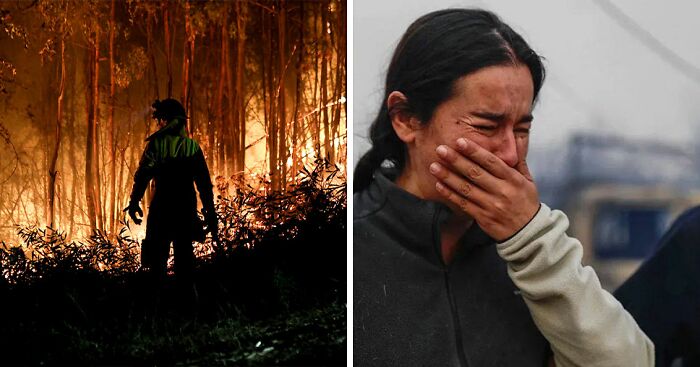
When Santiago Vergara arrived in Penco, Chile, with a volunteer convoy loaded with bottled water and non-perishable food, the southern town’s geography felt unfamiliar.
The 34-year-old engineer knew the coastline of the Biobío region well, having vacationed in the area in the past, but now whole blocks had been reduced to ash and twisted metal, as if the wind had taken the outline of the neighborhood and rubbed it out overnight.
On January 14, fast-moving wildfires fueled by extreme heat and strong winds tore through Penco and surrounding communities in Chile’s south, taking the lives of at least 21 people, injuring more than 300, and destroying more than 2,300 homes in a matter of hours.
Vergara described streets lined with burned-out vehicles and homes that looked “hollowed,” their interiors exposed to the air.
“This is what the end of the world must look like,” he thought.
Volunteers are struggling to rebuild Chile’s south after massive wildfires reduced entire towns to ash overnight
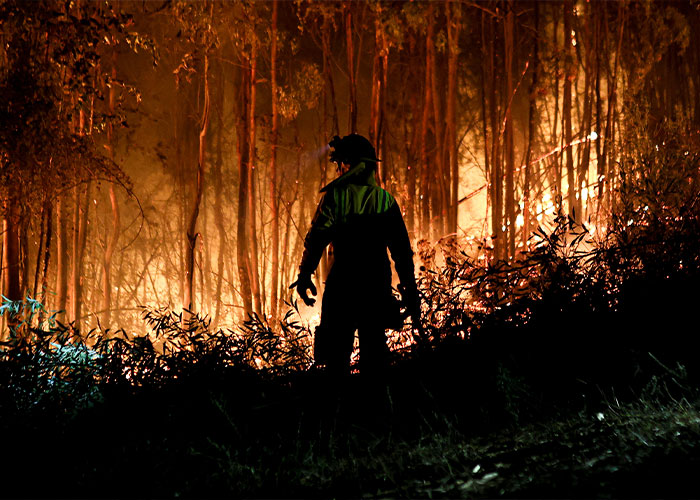
Image credits: Getty/Anadolu
Speaking with Bored Panda, Vergara said that even after returning to Chile’s capital, Santiago, the memory of the smell stayed with him.
“You could smell the smoke in the clothes, in people’s hair, in the aid boxes. The air was heavy and hot.”
The human toll across the affected zones has been staggering.
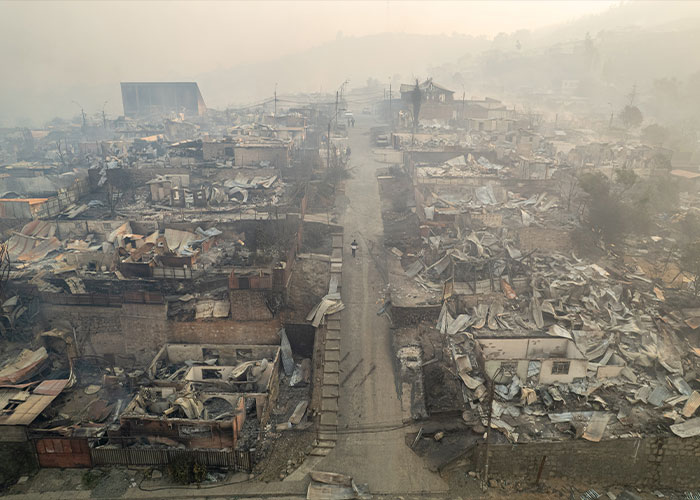
Image credits: Getty/Anadolu
According to the latest information provided by Chile’s Ministry of Agriculture, at least 21 people lost their lives and 305 were injured.
625 people were sheltered, and 20,471 were counted as affected. The report also revealed that 2,359 homes were destroyed, and 693 people were treated by health personnel.
But Penco’s fire is far from an isolated event. It is part of a much larger wildfire crisis taking place across Chile.
As of January 30, the 2025–26 fire season had recorded 3,241 fires, with 65,772 hectares affected nationwide.
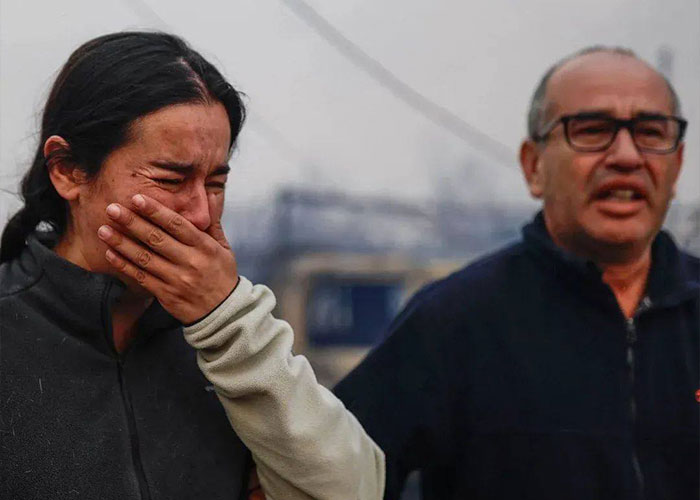
Image credits: leslie_moll_contigo
At the time of writing at least 10 fires are actively being fought, 47 were considered controlled, and nine have been extinguished.
For Vergara, the scale of the disaster stopped being abstract at the distribution points, where families lined up asking for the bare essentials: water, food, diapers, phone chargers, blankets, and medication.
“Almost everyone said the same thing,” he recalled. “We left with what we had on.”
“A lot of people were still paying off their homes,” Vergara added. “They went to sleep one night and by morning there was nothing left.”
Volunteers from across the country traveled to the area to help firefighters and residents in whatever way they could
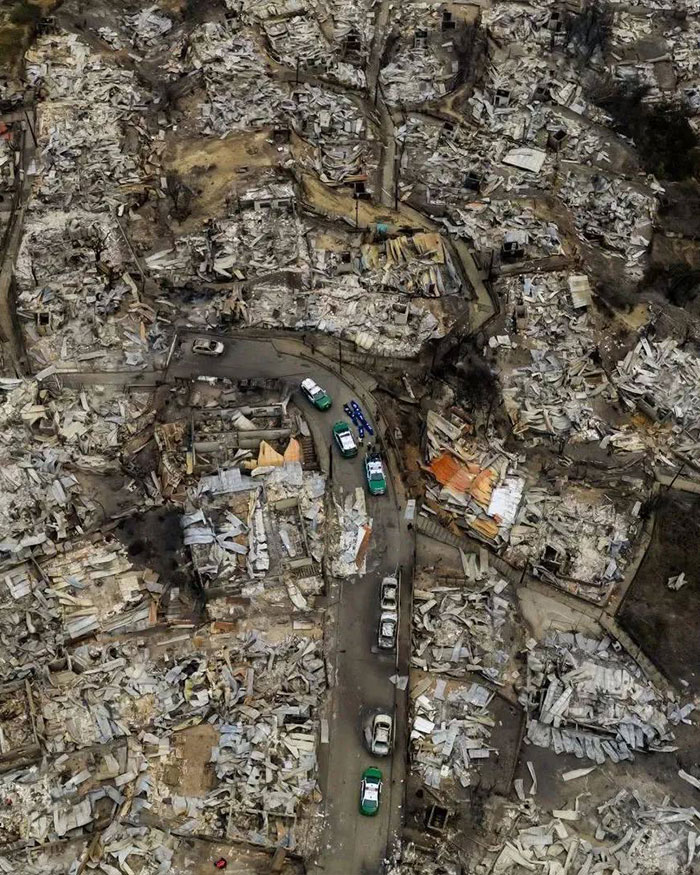
Image credits: leslie_moll_contigo
Vergara said his group was only one among many responding to the emergency. Volunteers from social organizations, universities, neighborhood groups, and even political parties joined local residents.
Young men, armed with nothing but t-shirts over her heads and buckets of water, helped however they could, removing debris and forming bucket brigades.
“The resilience has been inspiring but that’s when it really hits,” Vergara said.
“The fire is gone, but the suffering isn’t. This is the part that lasts, when people realize they don’t know where they’re going to live, or how they’re going to start over.”
What comes next for Penco, and for nearby localities such as Lirquén and Punta de Parra, is a reconstruction effort that local academics insist cannot be treated as a simple replacement of what burned.
An analysis published on January 28 by the University of Concepción (UdeC) warned that the fires escalated so quickly because Chile remains poorly prepared for fires that move from forests into cities.

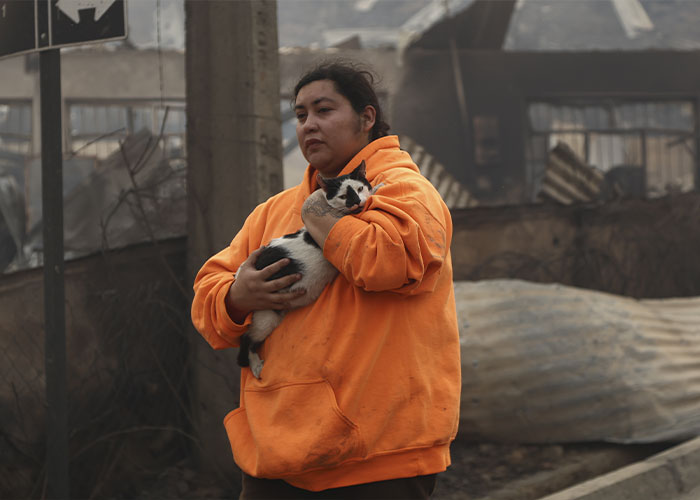
Image credits: Getty/Anadolu
Dr. Alejandro Lara San Martín, vice dean of UdeC’s Faculty of Architecture, said the disaster exposed serious weaknesses in how towns like Penco are planned and protected.
“When urban planning, fuel management and housing protection standards are not integrated, the fire jumps very quickly from the landscape into dense neighborhoods,” Lara said.
He explained that many communities lack the basic tools needed to slow fires before they reach homes, from firebreaks and vegetation control to clear access routes and hydrants. At the same time, he said, responsibility is spread too thin across institutions.
Experts warned the combination of dense vegetation and poor urban planning left the area particularly susceptible to wildfires
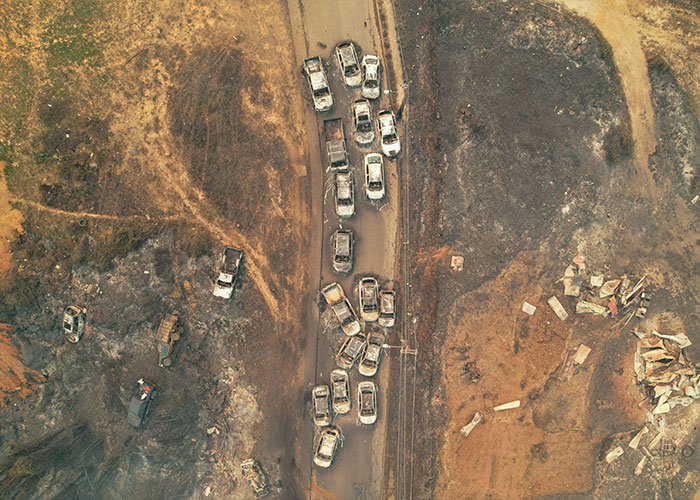
Image credits: Getty/Anadolu
For Vergara, those warnings were easy to understand on the ground. He saw the consequences of the fire, swallowing most of Penco in a single night and leaving little time for people to react.
Dr. Paulina Espinosa Rojas, director of UdeC’s master’s program in sustainable urban processes, said the areas hit hardest were already set up in a way that allowed fire to move unchecked into towns.
“In Penco, Lirquén and Punta de Parra there is a direct continuity between forestry monocultures and residential areas, without protection strips or transition spaces,” Espinosa said.
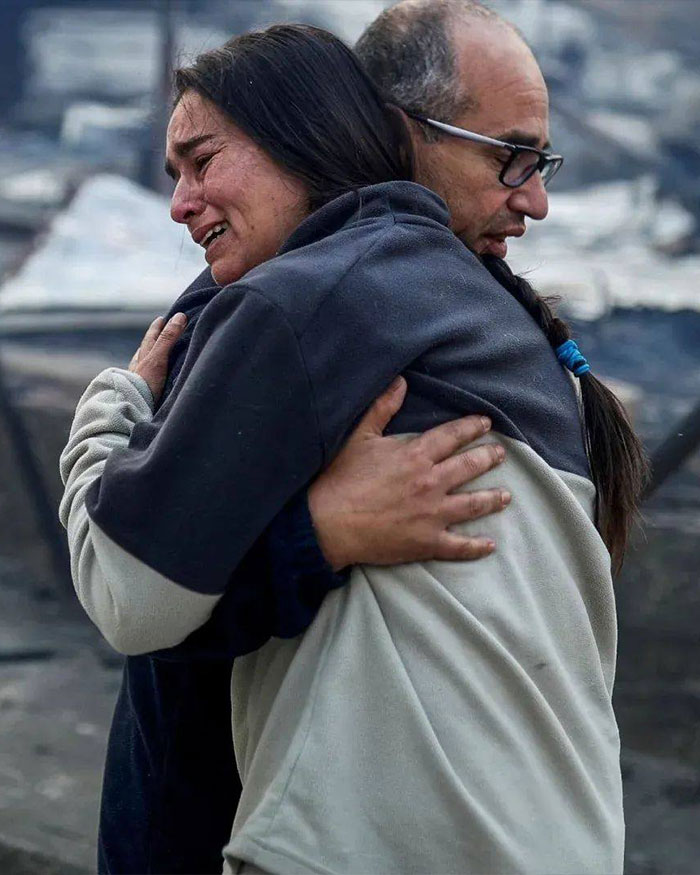
Image credits: leslie_moll_contigo
Espinosa stressed that rebuilding cannot simply mean putting houses back where they were. “The reconstruction process cannot be addressed only as structural replacement,” she said.
That includes breaking up continuous forest areas, adding open spaces and green zones that can act as buffers, and avoiding dense housing in high-risk areas.
She also called for changing how plantations border residential zones and restoring ravines and natural systems that currently act as fire corridors.
“It is not just about preventing fires,” Espinosa said. “It is about reorganizing the territory so it does not amplify the danger.”
The US sent Chile an estimated $1 million to fund supplies and equipment for Chile’s firefighters
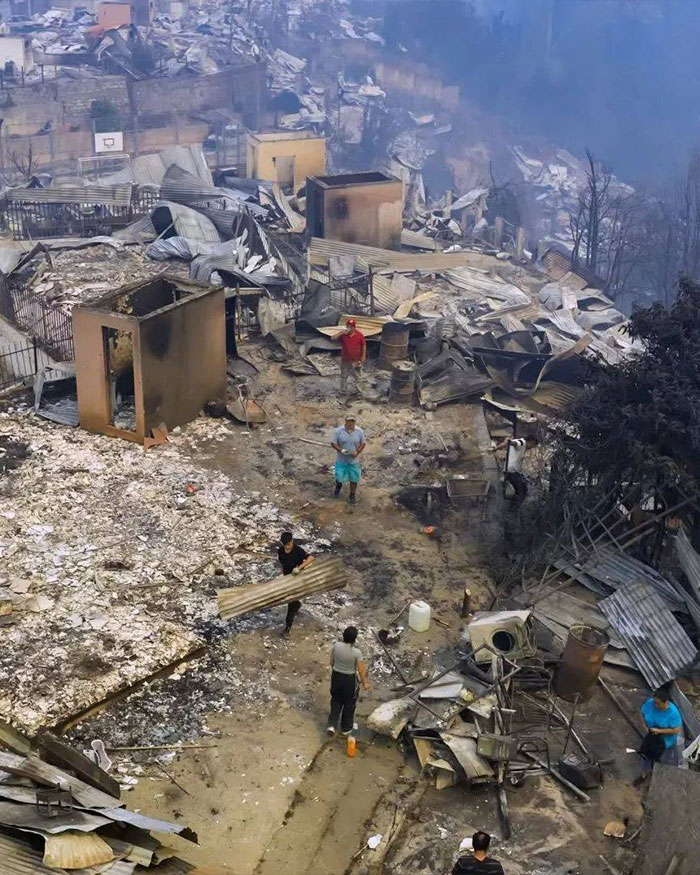
Image credits: leslie_moll_contigo
Even as the rebuilding debate begins, the fire season remains active, and Chile’s response increasingly depends on both domestic mobilization and outside support.
In January 2026, US officials announced assistance for Chile’s wildfire response, describing upcoming donations of equipment to Chile’s firefighters, including equipment deliveries to reinforce wildfire response.
That support has precedent. During past wildfire emergencies, including the 2023 season, US assistance for Chile’s wildfire response exceeded $1 million.
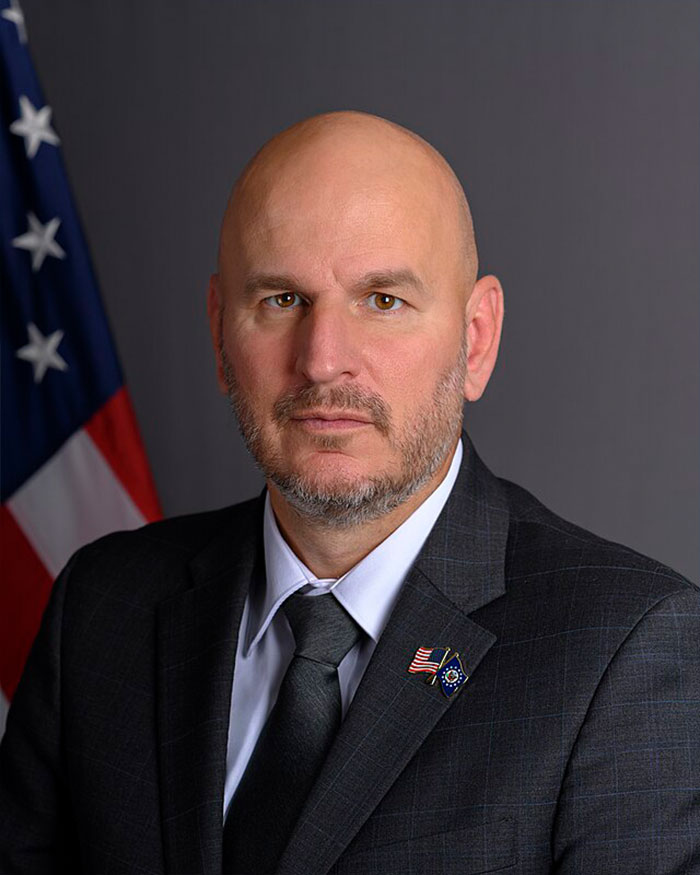
Image credits: Wikimedia
For Vergara, the question is whether that support, along with Chile’s own reconstruction effort, will reach people fast enough to keep them from slipping into permanent displacement.
He said volunteering in Penco left him with a sense that the disaster’s second phase is quieter but just as brutal.
“This is something people are going to be dealing with for the rest of their lives,” he said. “You start thinking about what ‘home’ actually means.”
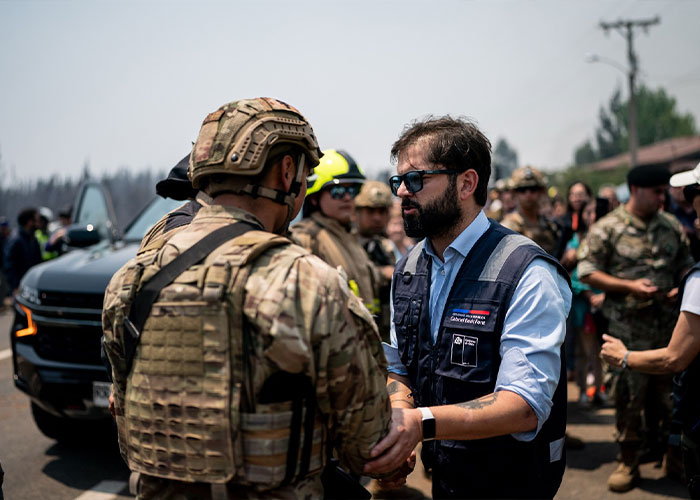
Image credits: gabrielboric
For now, Chile’s current administration said the next steps will focus on moving families out of uncertainty as quickly as possible.
The government plans to move forward with demolitions in burned-out sectors so the land can be expropriated and later reassigned as part of the reconstruction process.
In the meantime, emergency housing continues to be delivered across the region, with officials saying the goal is for displaced families to have a roof over their heads before winter arrives.
“So sad.” Netizens sent the people in Chile’s south their prayers and condolences