In a red-hot property market, the idea of owning a home has shifted from an expectation to a question mark.
What was once seen as a natural milestone of adulthood now feels increasingly out of reach for so many Australians, shaped by a perfect storm of soaring house prices, stagnant wage growth, and the lingering impact of higher interest rates.
The bigger picture is terrifying for anyone on the outside looking in, particularly with Sydney on track to surpass a $2million median house price by 2027. To make matters worse, tenants will need double the amount of superannuation compared to homeowners who have paid off their mortgage.
But Sydney Property Wealth Strategist Rasti Vaibhav told Daily Mail all hope is not lost – the lens through which people view and approach property has simply changed.
It’s possible to get your foot on the property ladder, but how you do so has changed since your parents bought their first home. Now, buyers need a strategy and long-term plan.
‘The Australian property market is unlikely to move in one direction. We’re heading into a more fragmented phase, where location and supply constraints matter more than national headlines,’ he said.
‘There are unique forces that are driving the market – strong population growth and low housing supply will keep supporting prices in the right locations, even with higher interest rates. Some of it is irreversible.
‘Buyers can get ahead by focusing on scarcity, cash flow buffers and long-term fundamentals, rather than trying to perfectly time the market.’

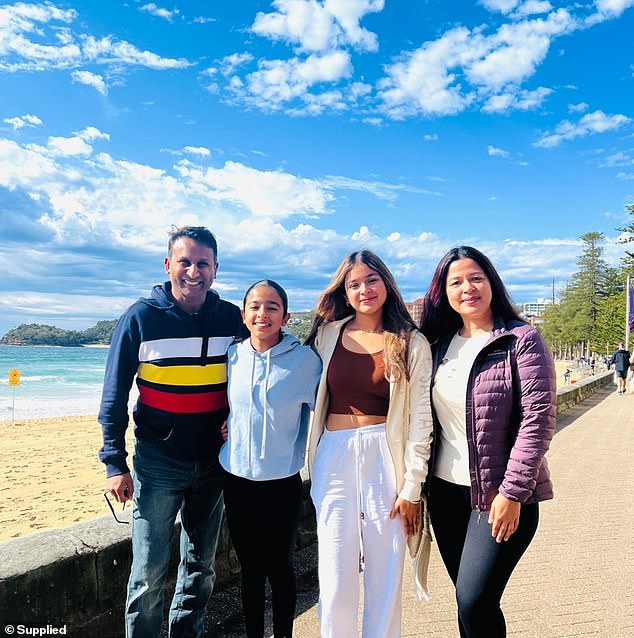
Sydney Property Wealth Strategist Rasti Vaibhav (pictured left with his family) told Daily Mail all hope is not lost to get your foot on the property ladder – the lens through which people view and approach property has simply changed
The father-of-two, 49, and his wife Rupali Rastogi, 43, moved from India to Australia in 2006 with a background in IT and banking.
In 2011, they used a 10 per cent deposit to start their investment journey and built a $440,000, four-bedroom house in the Newcastle suburb of Fletcher. The same property is now worth an estimated $1.04million.
Now, they have an impressive $14.3 million portfolio of 20 properties spanning across Sydney’s outer west, Melbourne’s north, on Brisbane’s fringes and south of Perth.
This strategy of rentvesting – living in your desired suburb while buying property elsewhere – has worked perfectly, despite the prospect of eviction as a tenant.
To Mr Vaibhav, the biggest mistake Australians can make is spending years saving up for a mortgage deposit to live in a nice suburb of Sydney, as an owner-occupier – only to find prices have increased and put their dream out of reach.
Mr Vaibhav added that both time spent in the market and timing the market are important.
‘Property should be seen as a long-term investment, not something you buy for a year or two. Each property should have a holding period of seven years to give it the opportunity to grow in value,’ he said.

The father-of-two, 49, and his wife Rupali Rastogi, 43, moved from India to Australia in 2006 with a background in IT and banking
To get ahead, Mr Vaibhav shared his insider knowledge on how to beat the boom regardless of your age or stage in life.
The property guru warned while it’s important to secure your financial future by purchasing property as soon as you can, it’s just as essential to avoid rushing financial decisions.
And as we enter 2026, it could be the last growth spurt we see this decade.
Unique irreversible forces driving the market
Thousands of people are quick to blame the government or immigration for driving property prices up. But the truth is, it’s far more complex than this.
Supply and demand continues to be an ongoing issue as well as an undersupply of labour and fewer people per household.
‘The government’s intent with policies and grants available is a good approach but, to me, it’s a short-term Band-Aid approach,’ Mr Vaibhav said.
‘A long-term fix would probably come from solving the supply issue. They’re trying to do it, but then it’s the undersupply of labour.
‘Yet at the same time, sentimental buyers are feeling a fear of missing out, so there’s a higher quantity of people pushing the price up more.’
Waiting for certainty is the biggest mistake you could make
While no one can predict the future of the property market, one thing remains clear: waiting for certainty is pointless.
‘The biggest mistake people make is waiting for certainty – it never comes,’ Mr Vaibhav said.
‘While you’re waiting for the perfect opportunity or until you’re ready, house prices are increasing quicker than you’re able to save.
‘Getting ahead isn’t about predicting the next boom. It’s about buying assets with long-term demand, planning for cash flow pressure, and holding through cycles.
‘Buyers who stay flexible on location, keep buffers, and focus on fundamentals tend to outperform those chasing short-term sentiment.’
Mr Vaibhav’s personal strategy of rentvesting proves even tenants can get ahead and prepare for retirement, especially if you’re over 45.
The married couple choose to live a much cheaper life renting at Narraweena, near Dee Why, on Sydney’s northern beaches, rather than buying their dream $3.5million home nearby. Meanwhile, as house prices grow at a much faster pace than wages, the couple have set themselves up for life by nurturing an impressive portfolio.
While this might not be everyone’s dream, it’s certainly an option Mr Vaibhav said others should consider.

In 2011, the couple used a 10 per cent deposit to start their investment journey and built a $440,000, four-bedroom house in the Newcastle suburb of Fletcher (pictured). Now the property has an estimated value of $1.04million
Understand property cycles and your personal goals
When asked what he would do if he were starting from scratch, Mr Vaibhav said he would consider a practical approach by thinking of your goals and what you want your future to look like.
This will help you understand your goals, the type of property you should buy, and whether you should invest.
‘For me, the goal is to buy more property to build equity to gain financial freedom,’ he said.
‘Being financially free doesn’t mean retirement, it means choice. Investing can be a solution and property is the vehicle to get there.
‘People buy for three main reasons: to minimise tax, for additional income or cash flow to fund a particular lifestyle, or to save or build for the future. Sometimes it’s a combination of all three.’
In addition to this, understanding the four different phases of a property cycle can help you decide if a property is over or undervalued.
Don’t follow the crowd
Whether you’re looking at owner-occupier homes or investments, one of the best things you can do to get ahead is avoid giving in to the fear of missing out.
Rasti Vaibhav said sometimes people make the wrong financial decision because of pressure and stress, so they snap up whatever they can and regret it later.
‘Not acting is a risky choice but rushing in without a plan is risky too,’ he said.
‘The people who succeed are focused on what they can control today and actually plan very conservatively. Think of it like a business plan backed by research, strategy, and subjective to your conditions.
‘Before jumping in, prepare for the worst case scenario and control your risk. That means building cash buffers and setting yourself up for long-term demand rather than short-term hype.’
Once news of property hot spots has reached the headlines, it’s most likely already too late so act with caution.
For example, currently Melbourne is at the bottom of its property cycle, whereas Adelaide and Brisbane are at the top in the ‘boom phase’ of the cycle.
Regardless of whether you feel prepared or not, one question remains in everyone’s mind – how will future generations afford to live if prices continue to rise?
Rasti Vaibhav is the author of The Property Wealth Blueprint and the co-founder of Get RARE Properties with his wife Rupali Rastogi