Summary
- “Assistant Editors’ Month” was a humorous event where Marvel comics released mostly funny stories while the main editors were away at a convention.
- “The Kid Who Collects Spider-Man” is a notable exception in which a more emotional and serious story was told, revealing the secret identity of Spider-Man.
- The twist in the story is that the kid, Tim, is dying, adding a poignant element to Spider-Man’s interaction with him.
In every Look Back, we examine a comic book issue from 10/25/50/75 years ago (plus a wild card every month with a fifth week in it). This time around, because October has a fifth week, we head back to October 1983 to see a memorable visit between Spider-Man and the kid who collects Spider-Man!
In September 1983, Marvel tried out an unusual company-wide event. Dubbed “Assistant Editors’ Month,” it was the brainchild of Marvel’s Editor-in-Chief at the time, Jim Shooter, but was directed mostly by Mike Carlin. Carlin recalled the origin of the event to Danny Fingeroth in a great discussion about it in TwoMorrows’ Back Issue #19:
Macy’s would have sales where their assistant buyers would be in charge of buying all the stuff that they’d sell. So the idea was that Jim was going to be taking all the editors out to the Comic-Con in San Diego-all the main editors were going to be out of the office at the same time-and wouldn’t it be funny if the books that came out the month that they were traveling to San Diego reflected the fact that the editors were gone. That, to him, meant the books wouldn’t be quite normal.
Of course, the books weren’t actually edited by the Assistant Editors for that month, but it was a fun idea for an event. Some groups of titles got more into it than others, with full issues being based on the event, while other titles just did one-page jokes at the end of the issue. The books were mostly labeled with a stamp that read “Beware: It’s Assistant Editors’ Month! Don’t say we didn’t warn you!”
As a general rule, the books that participated went for humorous approaches to stories (with some of the comics only even acknowledging the month-long event in a humorous back-up that had nothing to do with the main story in the issue.), but there were some exceptions, and one fo them was “The Kid Who Collects Spider-Man,” a short story that Roger Stern had written with the intent for regular Amazing Spider-Man artist, John Romita, Jr. to draw it, but instead, editor Danny Fingeroth assigned it to Ron Frenz, and it was published as part of Assistant’s Editor Month (it came out in very early October, so it was a late story for Assistant Editor’s Month, but there was no September 1983 issue of Amazing Spider-Man, so it was all good). It was published in Amazing Spider-Man #248’s second story, “The Kid Who Collects Spider-Man” by Stern, artist Ron Frenz, inker Terry Austin, colorist Christine Steele and letters by Joe Rosen.
Who was the kid who collects Spider-Man?
One of the inspirations for this brilliant short story was just as simple as Roger Stern noting that there was a Daily Bugle columnist, Jacob Conover, established in an old issue of Daredevil that Stern wanted to use for this story (later writers were not so kind to ol’ Jacob Conover). The story opens, then, with a snippet from Conover’s column (Stern perfectly nails the style of Conover. You can totally read that columnist voice here) that leads Spider-Man to visit “The Kid Who Collects Spider-Man”…
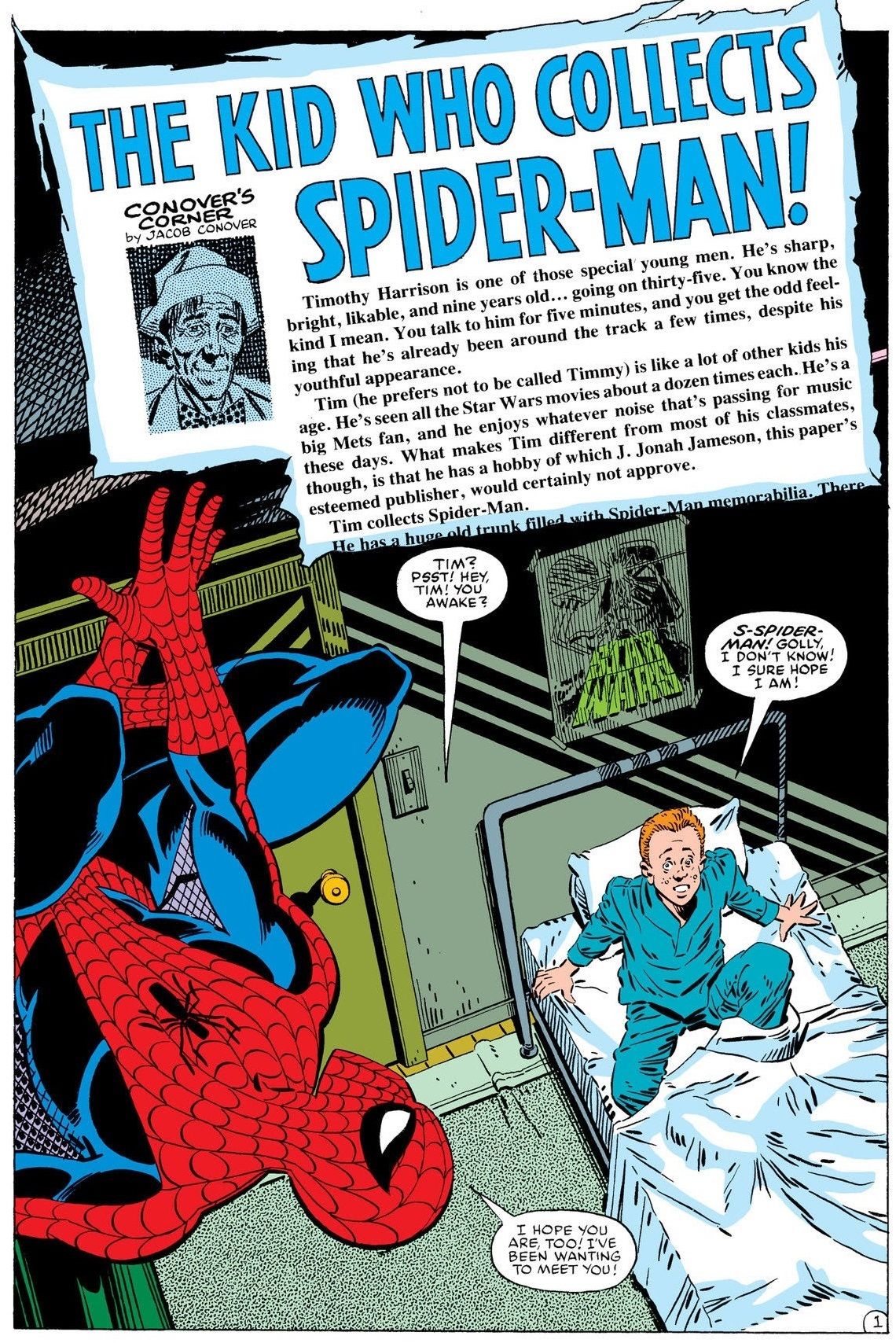
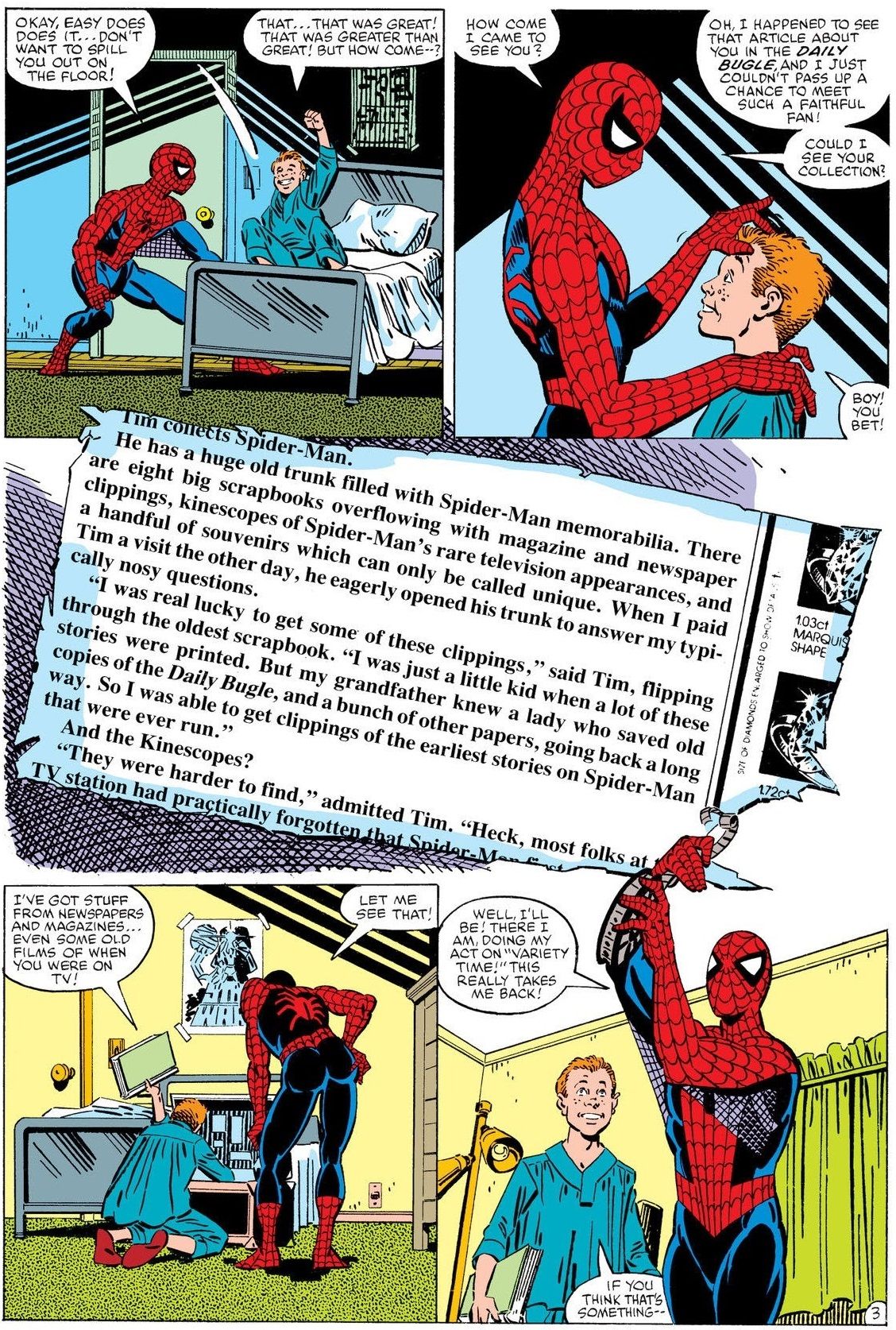
The Conover column is used to fill us in on some important stuff, like the fact that little Tim here has an amazing collection of Spider-Man stuff, including kinescopes from Spider-Man’s earliest appearances back when he was still an entertainer and not yet a superhero. Spider-Man is suitably impressed…
Read Related Also: If Biden Gets His Way, Your Next Adventure Out West Will Be Canceled
However, over time, Spider-Man and Tim’s conversation gets a bit heavier, as Tim asks about why Spider-Man became a superhero, and Spider-Man essentially recaps his origin, but there is a whole sense of gravitas to it that doesn’t really come up as often in simple retellings of Spider-Man’s origin.
What was the twist in “The Kid Who Collects Spider-Man?”
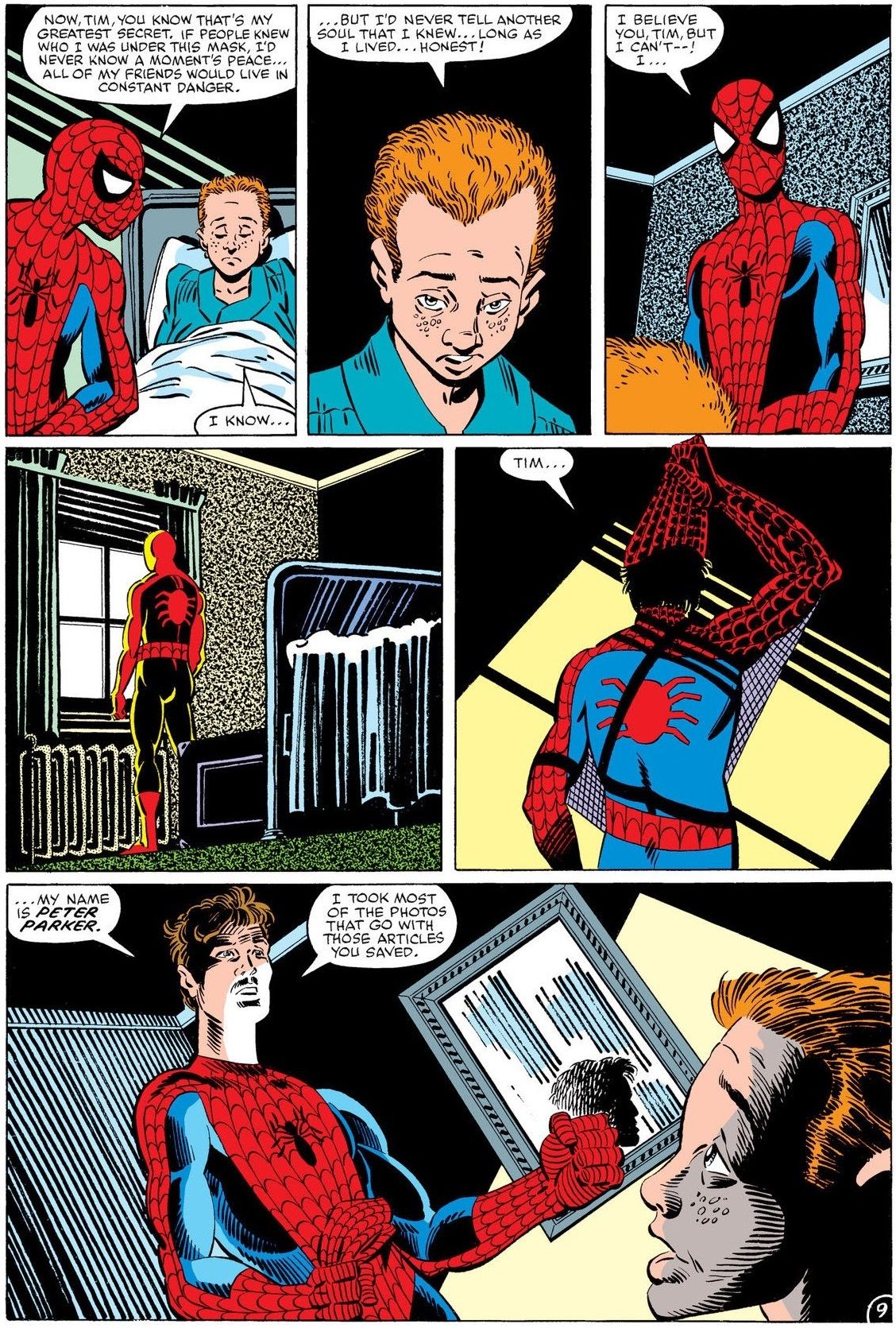
There is a clear sign that something else is going on when Tim asks what Spider-Man’s secret identity is, and Spidey hesitates, but then ultimately decides to just go for it…
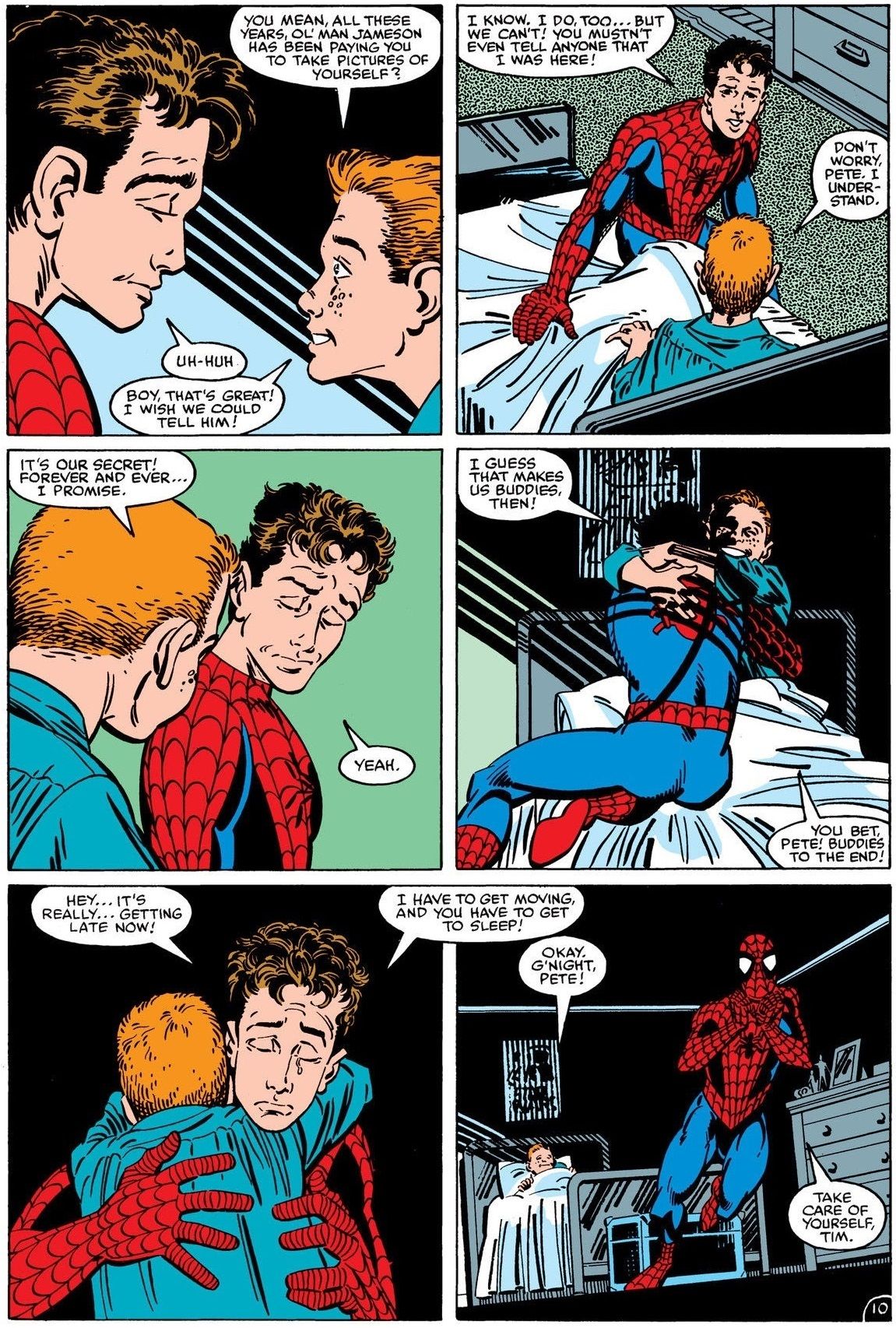
There is a great bit where Tim reacts with glee over the fact that Spider-Man sells the Daily Bugle pictures of himself, and it is nice to see that fun aspect of Spider-Man’s deal be appreciated by someone and not just the readers. However, as the two hug, Spider-Man is oddly emotional about the whole thing (by the way, it is fascinating to see just HOW MUCH Frenz goes for the Steve Ditko-vibe in this story. There are some outright swipes, but the whole mood of this Spidey is pure Ditko)…
And then there’s the big reveal, the last part of the column, where we learn that Tim is dying, and thus Spider-Man revealed his secret identity because he knew Tim didn’t have much time left to live…
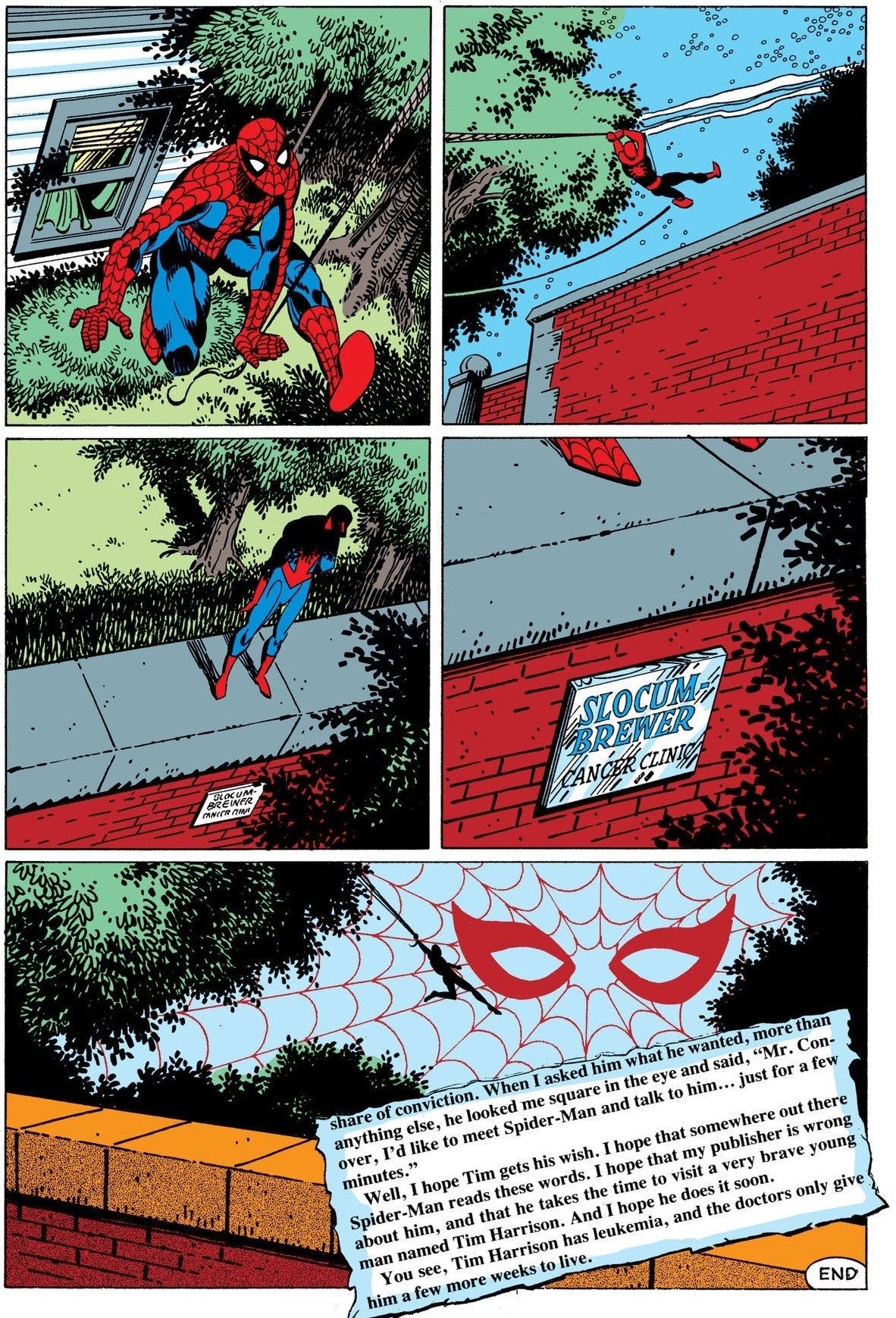
This is why it is so important to make sure you call this story its proper title, “The Kid Who Collects Spider-Man” and not “The Kid Who Collected Spider-Man,” as it sort of gives away the whole twist otherwise.
If you folks have any suggestions for November (or any other later months) 2013, 1998, 1973 and 1948 comic books for me to spotlight, drop me a line at [email protected]! Here is the guide, though, for the cover dates of books so that you can make suggestions for books that actually came out in the correct month. Generally speaking, the traditional amount of time between the cover date and the release date of a comic book throughout most of comic history has been two months (it was three months at times, but not during the times we’re discussing here). So the comic books will have a cover date that is two months ahead of the actual release date (so October for a book that came out in August). Obviously, it is easier to tell when a book from 10 years ago was released, since there was internet coverage of books back then.