
Civil war and famine spurred many Somalians to immigrate to the United States in 1991 and settle in Minnesota. That was 34 years ago. Somalians could have assimilated into U.S. culture by now, but American taxpayers have been roped into funding programs that coddle Somalians’ Third-World culture and disincentivize their assimilation.
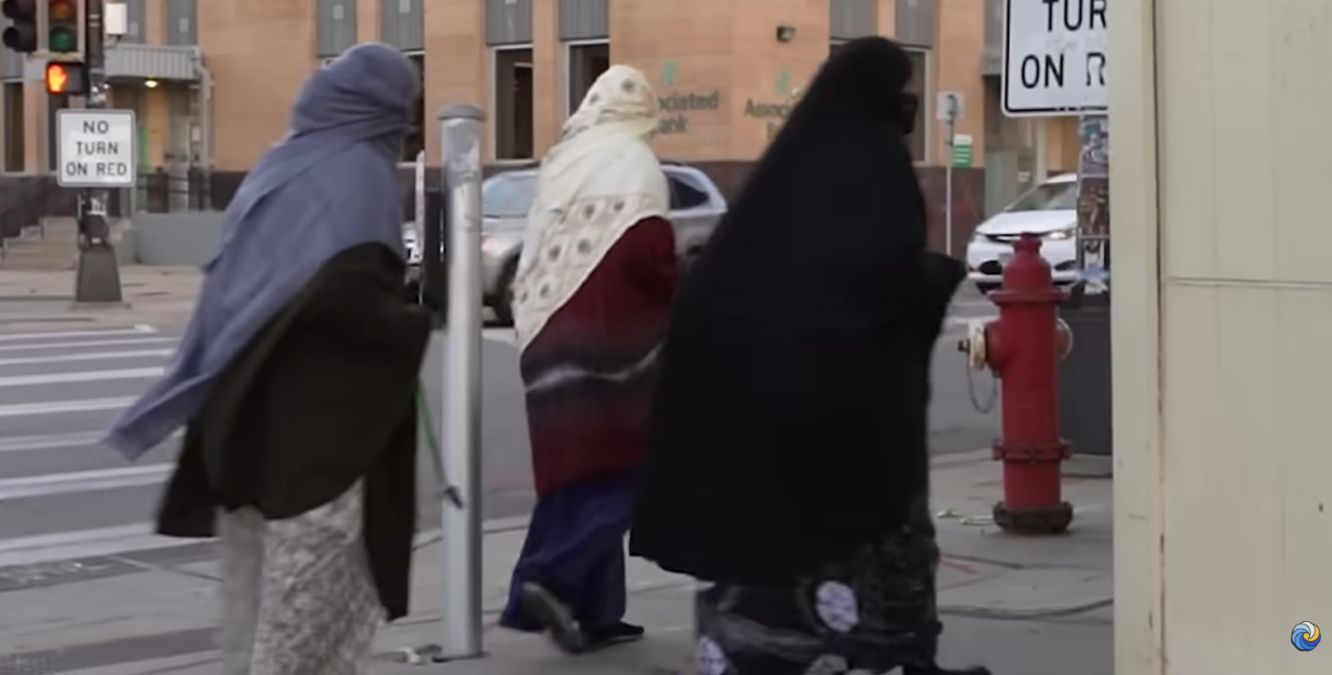
The Somali population explosion has rendered parts of Minneapolis unrecognizable as they impose a decidedly non-American culture on every aspect of the city. Somalis are members of the police force, city council, state legislature, and even Congress, still speaking their own language in those positions and, at times, cutting English speakers out of the loop. Their business signs are not in English. To the Western eye, their women’s clothing looks oppressive on a hot day. The Muslim call to prayer can be broadcast across Minneapolis five times a day.
In the name of helping Somalians in culturally sensitive ways, many federally funded programs have been tailored specifically for their population. And like other so-called refugee communities, big bucks have gone to university researchers who have made careers studying immigrant populations.
Going back as far as 2008, when USASpending.gov made finding government spending accessible to the public, taxpayers have sent more than $32 million to Minnesota for programs to support Somalis in America. That does not count the usual social programs many in that population have been gifted, including SNAP, Section 8 housing vouchers, Medicare, Medicaid, and Social Security. Nor does it count Minnesota’s scandalous $250 million Feeding Our Future scam and additional schemes that apparently total in the billions of dollars.
Here is a sampling of some of the programs funded for Somalians in Minnesota. This is just one group and location. Across the U.S., wherever there is a subculture of impoverished immigrants who won’t assimilate, someone is making money with government grants and contracts to “help” and “study” them. It is money that would be better spent encouraging assimilation or helping the U.S. taxpayers who are paying for it all.
More Pap Smears
Female genital mutilation (FGM) is a drastic cultural difference Somali immigrants brought to the U.S. The United Nations reported in 2025 that 99 percent of young girls in Somalia still undergo the excruciating religious ceremony. It is officially outlawed in Minnesota. But since in Somalia it often performed without anesthesia by family member or an older woman in the community using a sharpened rock or piece of glass instead of a sterile hospital setting, it could happen in private in the U.S.
While cancer screening is not likely a priority in their home country, in 2011, researchers at the University of Minnesota were worried Somali women were not getting enough pap smears because of modesty and their FGM. They got a $3.1 million grant from the Department of Health and Human Services (HHS) to boost cervical cancer screenings in that population. Researchers planned to develop a “culturally-tailored HPV self-sampling intervention for Somali women,” in which they could conduct their own tests.
And in 2016, HHS gave more than half a million dollars to the Minneapolis-based Isuroon, which provides “culturally specific” assistance according to its website. The grant was for Isuroon to offer a “self-help program” for Somali women to help them get “better health care” and to “prevent spreading of female genital cutting, develop leadership skills and integrate better in the Twin Cities.”
Sleepless Somalis
Some Somalis have insomnia, apparently, and that can lead to high blood pressure. The Mayo Clinic was given a grant for $3.09 million in 2022 to study that. The study is ongoing. You may have insomnia too, but this study is only for Somalians.
Cultural Heart Health
Health Partners Institute received more than $3 million from HHS to study the risk of heart disease only in the Somali community. It found that, since arriving in the United States, this population (which came from a famine-ravaged country) had gained weight and had high blood sugar, blood pressure, and cholesterol. The study was to explore how to help the Somali population specifically prevent heart disease.
One might guess that, like the rest of the human race, Somalis should lay off the salt, sugar, and preservatives, eat less, and exercise more, but it takes research to confirm it.
Put More Somali Kids in Therapy
In 2021, the Collaborative for Resilient Kids and Families in Minnesota received a grant of nearly $2 million through DHS to provide “trauma-responsive, culturally, and linguistically relevant mental health support” to youth and their families in Minneapolis. “Refugee and immigrant children in the US often present with trauma,” the grant explanation said. But they rarely get treated for mental health because of “systemic barriers,” such as language, cost, and “mistrust” of therapy.
The plan was to increase the availability of therapy by treating refugee and immigrant trauma in a way that meets their “cultural needs.” Try moving to China and expecting them to provide therapy in English. If it does not exist, would that be a systemic failure? Or should you learn to speak the language where you live?
Culturally Appropriate Food
The U.S. Department of Agriculture granted Minnesota’s Fairview Health Services $483,612 to implement its VeggieRx program, which relies, in part, on Somali farmers and aims to feed “low-income communities in Minneapolis and Saint Paul that have high cultural and racial diversity.” Fairview prescribes food boxes to low-income patients who need to improve their nutrition choices.
The boxes are provided by “local Somali/East African, Hmong, and Latino farmers who will provide culturally appropriate produce to the participants.” The program includes get “cooking demonstrations, a weekly newsletter with recipes, educational handouts, and a farm tour and community meal.” The three-year program started in June 2023.
Taxpayer-Funded Beauty Advice
The Beautywell Project, a small St. Paul, Minnesota, nonprofit, got a $250,000 grant in 2023 from HHS and the Food and Drug Administration to teach black women not to use skin-lightening products that expose them to harsh chemicals. According to the grant explanation, a Somali woman in Minnesota lost her sight after exposure to skin-lightening cream.
“In order to address this huge health disparity that is disproportionately impacting communities of color we need to get support to expand the current outreach and education we are doing to combat skin-lightening and chemical exposures. The use of these products is also driven by colorism, where social and racial pressures lead to feelings of inadequacy or internalized racism,” the grant reads.
The Beautywell Project planned to produce an infographic, short videos, and an animated video in Somali, Spanish, and Hmong. The Beautywell Project is led by Amira Adawe, a Somali woman who teaches at the University of Minnesota School of Public Health and is a public health advisor to the government of Somalia, according to her LinkedIn page.
Nail Necessities
The Environmental Protection Agency granted the University of Minnesota $663,475 in 2024 to develop a “voluntary ‘healthy nail salon’ recognition program.” The program offers “expert advice” on reducing exposure to harsh chemicals and “encourag[ing] the use of safer products” for better indoor air quality in “immigrant owned nail salon businesses.” At least $60,000 goes to Adawe at the Beautywell Project to train and translate materials for Somali salon workers.
Study Smoking Somalians
In Minnesota, where recreational marijuana use is legal, the University of Minnesota was granted $201,000 to “[Reduce] tobacco-related health inequities among U.S. immigrants. The proposed study will modify an existing evidence-based parental tobacco cessation intervention (the clinical effort against secondhand smoke exposure, or cease) delivered in pediatric primary care clinics to address shared tobacco use determinants and barriers to smoking cessation treatment among Somali Americans, an immigrant population facing significant combustible tobacco use disparities.”
The plan is to gather focus groups of “Somali parents who smoke” and non-smokers who live with them in order to develop “interventions aimed at reducing tobacco use in U.S. immigrant and refugee communities.”
“Somali male first generation immigrants smoke at two to three times the rate of the general U.S. population, and Somali women have a high prevalence of shisha (hookah) use,” according to the University of Minnesota. The study runs from August 2025 to December 2029, but it was approved through HHS under Biden on Dec. 12, 2024.
Your Money, Their Benefit
Taxpayers have also generously donated to the Somali Museum in Minneapolis and to the Walker Art Museum (also in Minneapolis) so that it can produce more programs for the non-English speaking community there. They have also provided “agriculture education for underserved” “farmers of color” and funded the expansion of community gardens for minorities and specifically for Somalis.
Beth Brelje is an elections correspondent for The Federalist. She is an award-winning investigative journalist with decades of media experience.