Up next

Barbara Pierce Bush Net Worth
Six years ago, cities across America tore down statues of noted historical figures with little thought to why these individuals had warranted honor in the first place. The Trump administration is seeking to right this wrong — just in time for the semiquincentennial.
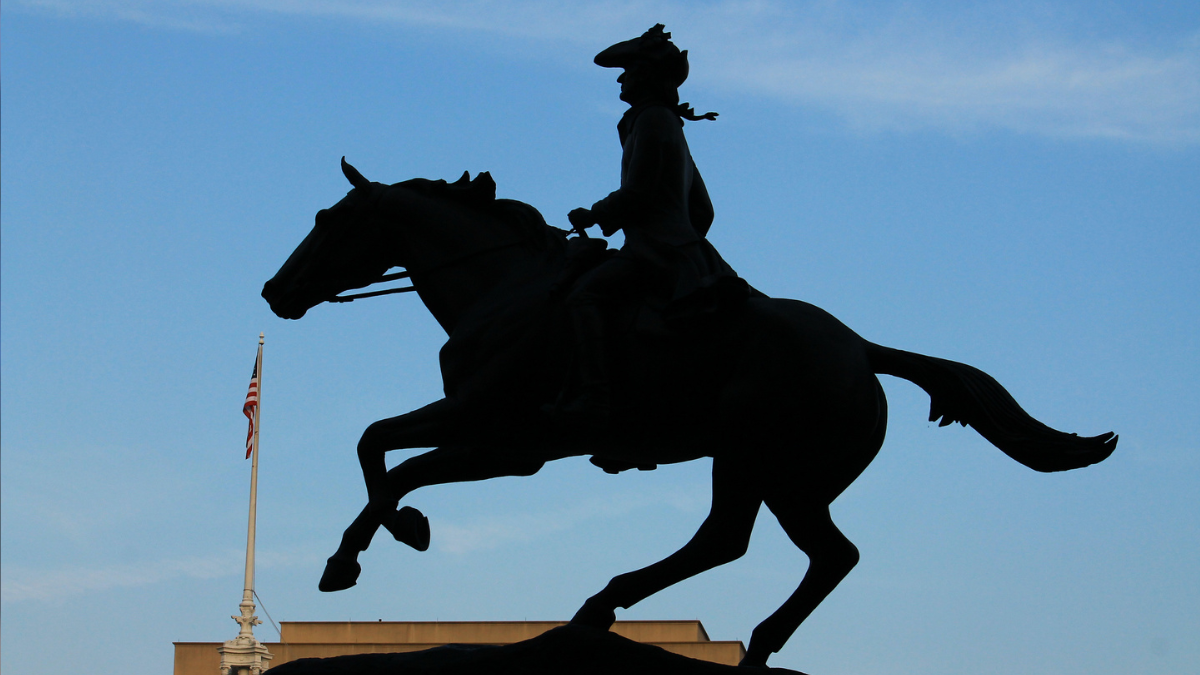
Recently, a statue of Christopher Columbus was installed in front of the Eisenhower Executive Office Building. Additional steps are being taken to honor these disgraced monuments, including plans to display a statue of Caesar Rodney in Freedom Plaza, which has been gathering dust in a Delaware storage facility since it was taken down in 2020.
I graduated from Caesar Rodney High School in June of 1987. Like many students in the Caesar Rodney School District, I grew up hearing the story of the man whose name our community bears: a public servant whose midnight ride helped secure Delaware’s support for the Declaration of Independence.
In the summer of 1776, the delegates from Delaware were divided over whether to break from Great Britain. Thomas McKean favored independence. George Read opposed it. The delegation was deadlocked, and time was running out. When McKean realized the vote might be lost, he sent word to Caesar Rodney, who was in Delaware, urging him to come at once.
Rodney was not a well man. He had suffered from severe asthma his entire life and was already battling the facial cancer that would eventually kill him. Still, he mounted his horse and rode roughly 80 miles through the night, from central Delaware to Philadelphia, arriving on July 2, 1776, dusty, exhausted, and ill. His arrival broke the tie and aligned Delaware with the cause of independence.
That vote mattered. Without unanimity among the colonies, the Declaration would have carried less moral and political force. Rodney’s ride helped ensure that Delaware stood with the revolution at the moment history turned.
Rodney was not a saint. He was a slaveholder, a reality that must be stated plainly and without qualification. He was, in that respect, deeply flawed, like many men of his time, including several of the most celebrated founders. He lived within institutions we now rightly judge as unjust, dehumanizing, and an affront to the equality declared in the Declaration they were soon to sign.
And yet, he was also a public servant who risked his health, his fortune, and, ultimately, his life in service of a revolutionary idea: that legitimate government rests on the consent of the governed, and that a people may rightly declare independence from tyranny.
In July of 1923, Delaware erected a statue of Caesar Rodney in Wilmington to commemorate that act of service. On June 12, 2020, amid the turmoil following George Floyd’s death and the broader Black Lives Matter protests, the statue was removed. Around the same time, there were calls to rename the Caesar Rodney School District altogether. Fortunately, those calls were not successful.
But the impulse behind them remains very much alive. What, exactly, do we accomplish by canceling Caesar Rodney? We do not make slavery vanish from history. We do not repair its lasting wounds. We do not gain moral clarity by pretending that only perfect people are worthy of remembrance. Instead, we flatten history into a simplistic morality play and deprive ourselves of the harder, more honest work of judgment.
A reasoned approach to honoring the founders does not require denial of their flaws. It requires discernment. We can acknowledge that Rodney held slaves and still recognize that his decisive action helped bring into being a nation founded on principles that would, over time, provide the moral and legal resources to challenge slavery itself, in pursuit of the equality objective of the Declaration.
The question is not whether the founders were flawed. All were. The real question is whether anyone who acted within a fallen world, compromised by inherited injustice, can still be judged honorable for specific acts of courage and statesmanship. If the standard for public honor is moral perfection, then no one qualifies, past or present.
When we erase figures like Rodney, we do a disservice not only to history but to ourselves. We teach the next generation that moral complexity is intolerable and that the past exists only to be judged, not understood. We trade humility for self-congratulation.
These statues serve as eternal markers of our heritage. They deserve to be displayed and honored because they provide us the opportunity to examine these individuals in their fuller context: honoring their courage and service while also remembering their complicity and sin.
As we approach the 250th Anniversary of the Declaration of Independence, we must relearn how to model what it looks like to honor the good without excusing the evil. In discarding our past, we not only reject the cultural inheritance of our forefathers, but we also lose sight of the model of their humanity to show us how we, as fellow flawed individuals, can make a difference in our society.