Keir Starmer will allow Donald Trump to use America’s UK-based bombers to blast Iranian missile sites preventing oil and gas shipments using the Straits of Hormuz, No10 said tonight.
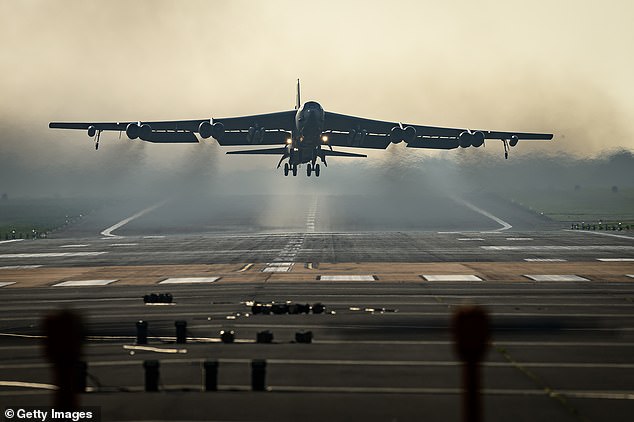
Downing Street gave the US the green light to use B-52s and other aircraft flying out of RAF Fairford and Diego Garcia to unlock the strategically important waterway amid spiralling fears of a major energy crisis.
In a statement the Government said that strikes were covered by its agreement with Trump to allow UK-based assets to be deployed in the ‘collective self-defence of the region’.
It came as fears grew over the impact of the ‘Trumpflation’ spike in oil and gas prices triggered by the conflict between the US, Israel and Iran.
Brits were today urged to work from home and use air fryers instead of ovens to reduce demand for energy.
At a meeting today the Cabinet ‘condemned Iran’s expansion of its targets to include international shipping’, a No10 spokeswoman said.
‘They agreed that Iran’s reckless strikes, including on Red Ensign vessels and those of our close allies and Gulf partners, risked pushing the region further into crisis and worsening the economic impact being felt in the UK and around the world.
‘They confirmed that the agreement for the US to use UK bases in the collective self-defence of the region includes US defensive operations to degrade the missile sites and capabilities being used to attack ships in the Strait of Hormuz.’

Downing Street gave the US the green light to use B-52s and other aircraft flying out of RAF Fairford and Diego Garcia to unlock the strategically important waterway

It came as fears grew over the impact of the ‘Trumpflation’ spike in oil and gas prices triggered by the conflict between the US, Israel and Iran
The International Energy Agency (IEA) today suggested governments should consider advising people to work from home more to reduce demand for oil amid the fallout from the Iran war.
Warning the conflict had triggered ‘the largest supply disruption in the history of the global oil market’, the IEA said widespread adoption of measures to rapidly cut demand would ‘help cushion the shock’.
The agency’s list of 10 measures also includes encouraging public transport usage and car-sharing, avoiding air travel and cutting speed limits by 6mph.
IEA executive director Fatih Birol said the proposals provide ‘immediate and concrete measures that can be taken… to shelter consumers from the impacts of this crisis’.
He added: ‘I believe it will be of use to governments around the world, in both advanced and developing economies, in these challenging times.’
But asked about the IEA’s suggestions, Downing Street said the public should carry on as normal.
The PM’s official spokesman said: ‘This is the IEA’s general advice for countries across the world. It is not in place in the UK.
‘We have a diverse and resilient supply. People in the UK should continue to go about their days in normal fashion.’
In other twists and turns today:
- Cornwall Insights has projected that the typical energy bill will rise £332 to £1,973 a year in July when the cap next changes;
- Iran’s foreign minister has fuelled concerns about direct reprisals against the UK, saying helping the US-Israeli strikes is seen as ‘aggression’;
- Donald Trump branded America’s Nato allies ‘cowards’ over their lack of support for the US-Israel war
- Interest rates on ‘gilts’ – the main way the government borrows money – have surged to nearly 5 per cent, as investors price in more risk to the public finances;
- A major poll found 88 per cent of Brits saw the cost of living as one of the biggest challenges facing the country even before the Iran war erupted.

The South Pars gas field in Iran after a strike in recent days
A fifth of global oil supplies are shipped through the Strait of Hormuz, which Iran has effectively shut since the start of the war.
That has steadily pushed oil prices higher, before a sharp rise on Thursday to nearly $118 after Iran threatened ‘full-scale economic war’ before striking Qatar’s main liquefied natural gas (LNG) facility, which suffered ‘extensive further damage’.
The chief executive of QatarEnergy said the attacks on gas facilities would take between three and five years to repair.
Drivers have already been feeling the effects at UK pumps, and experts estimate that energy bills could go up by more than a fifth when the cap next changes in July.