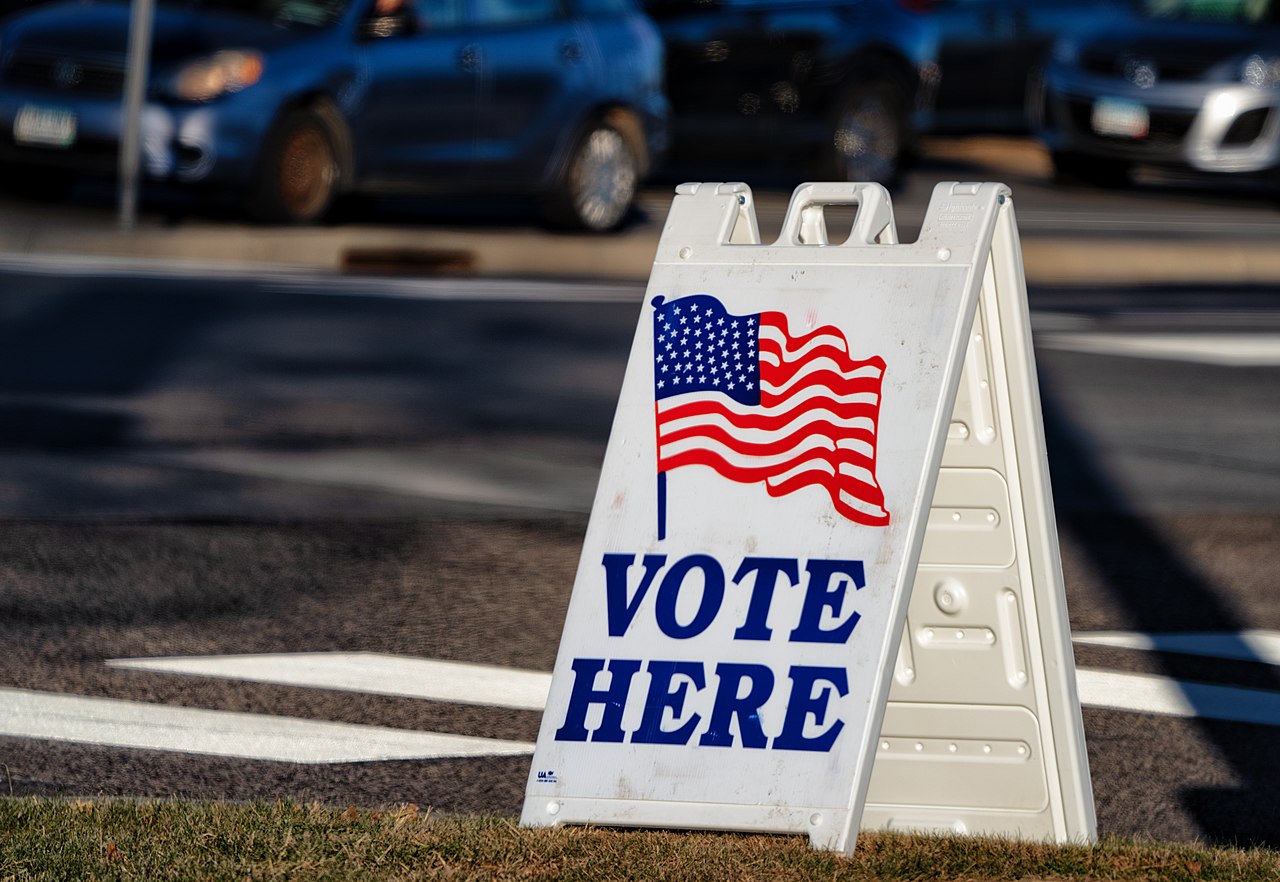
Sometimes, a news item’s symbolic meaning far exceeds its immediate effects. For instance, a new voter identification measure in California has implications far beyond the issue of election integrity or even the Golden State’s borders.
Particularly if it succeeds on the November midterm election ballot, this measure can demonstrate to conservatives how they can influence policy outcomes even in the bluest of states. It’s a formula that the movement can and should attempt to replicate in other states and on other issues.
Public Support
At this early phase of the process, the proposed amendment to the California Constitution requiring the submission of ID for in-person and mail-in voting has a decent chance of enactment. Supporters claim they have collected 1.3 million signatures, or nearly 50 percent more than the 875,000 they need to get the measure on the ballot.
Assuming the measure makes it to the ballot, it appears to have support from a broad swath of the Golden State’s electorate. A poll taken last May found that a whopping 71 percent of California registered voters, including nearly 6 in 10 Democrats, support “requiring proof of U.S. citizenship when people register to vote for the first time.” The support erodes slightly when voters are asked about “requiring proof of U.S. citizenship each time a voter casts a ballot in an election” (emphasis mine), but even here, a majority of California voters (54 percent) approve strongly or somewhat.
A recent Politico article on the measure noted the obvious: “[F]or Republicans, advancing conservative-leaning policy in California, the nation’s most populous state, would be a monumental prize.” Which raises an equally obvious question: Given the potential for such a “monumental prize,” why haven’t conservatives advanced referenda like the voter ID measure sooner?
Template for Future Success
I have raised this point before in this publication and others, noting that conservatives need to take the initiative — pun intended — particularly in blue states like California. When Democrat-controlled legislatures refuse to pass popular conservative policies, conservatives can and should use ballot measures to put otherwise-ignored issues directly before voters.
As I have previously noted, Democrats haven’t hesitated to use ballot measures to try to enact their preferred policies in red-leaning states. The past decade-plus has seen at least two waves of referenda promoted by the left in red states — one designed to get states to embrace Obamacare’s expansion of Medicaid to the able-bodied and the other promoting pro-abortion policies after the Supreme Court struck down a contrived federal right to abortion in Roe v. Wade.
In some cases, conservatives have sat back and let these referenda happen. In others, red states have tried, with varying success, to raise the threshold needed to pass ballot measures, particularly those classified as constitutional amendments.
But conservatives haven’t attempted in any organized fashion to pass ballot measures focused on popular topics in blue states. As the California polling data on voter ID demonstrates, that silence isn’t because conservatives can’t find issues where they could win discrete majorities in Democrat-run jurisdictions.
While Congress enacted Medicaid work requirements — also popular with voters — at the federal level last summer, conservatives could use referenda to promote other issues at the state level. Why not go into a state like California and use ballot measures to enact real school choice or undo some of the costly energy mandates that raise gas prices for struggling families? (While I have worked for school choice groups in the past, they played no part in writing this article, the views expressed in which are mine alone.)
A Chance Worth Taking
Of course, the initiative process can become costly in a hurry. Californians for Voter ID spent nearly $7.8 million last year just to try to get its proposed constitutional amendment on the ballot. If the measure does qualify for this November’s election, the cost of its fall campaign will rise significantly.
But the alternative of doing nothing amounts to writing off California and other blue states to Democrat one-party rule for who knows how long. California’s nearly 40 million residents — a notable percentage of whom still vote Republican — deserve better than that, as do those in other blue states.
Conservatives can and should do more to leverage initiatives and referenda to enact popular policies over the objections of Democrat politicians. Hopefully, the success of California’s voter ID amendment this fall will provide them with a road map and motivation to do so.