
The Zero Line: Inside Russia’s War (BBC2)
Donald Trump famously watches a lot of television, and there’s nothing wrong with that.
We can only hope The Zero Line: Inside Russia’s War finds its way on to the White House widescreen.
No one who watches this brutal, stomach-churning documentary can be left in any doubt that Vladimir Putin’s ‘special military operation’ in Ukraine is one vast war crime.
It’s not simply the eyewitness accounts of mass slaughter, torture and cold-blooded murder by Russian soldiers, related by defectors who defied the hunt-and-kill squads to escape into Europe.
The most compelling evidence is phone video footage, often recorded by the perpetrators, of sickening atrocities committed against troops on their own side.
This is the first European war to be filmed by its combatants, and the veracity of the footage appears beyond question.
One clip showed laughing guards opening a dungeon hatch, to taunt the naked, starving prisoners huddled inside, tortured as punishment for refusing to take part in suicidal attacks. The treatment meted out to them is too repugnant to be printed here.
‘Zero’ in Russian military slang refers to the front line. But it also means summary execution. To ‘zero’ a soldier is to kill him.

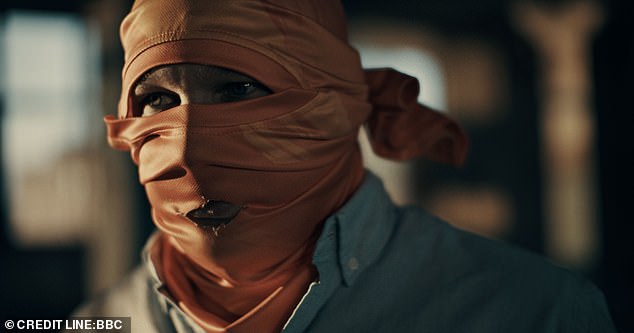
No one who watches this brutal, stomach-churning documentary can be left in any doubt that Vladimir Putin’s ‘special military operation’ in Ukraine is one vast war crime. Pictured: An anonymous contributor to the documentary

The most compelling evidence is phone video footage (pictured), often recorded by the perpetrators, of sickening atrocities committed against troops on their own side

This is the first European war to be filmed by its combatants, and the veracity of the footage (pictured) appears beyond question
Director and cameraman Ben Steele interviewed three escapers, all of them brave enough to show their faces, though they were not named.
Their location was a secret: they appeared to be in a derelict multi-storey building, though this was probably a ‘green screen’ backdrop.
All of them chain-smoked.
Steele also talked to two civilians whose partners were dissidents serving long prison sentences.
With most interviews conducted in Russian, and subtitled, the constant switching between stories became confusing, and the hour-long programme could have benefitted from having less squeezed into it.
One interviewee was the only survivor from an intake of nearly 80. A former primary school teacher for children with autism, who had dreams of being a dancer, he was apparently volunteered for the Russian army by his parents, who told him to ‘go and defend the motherland’.
He watched comrades being executed, not by a firing squad but by an officer who simply put a gun to their forehead.
Another was a former paramedic, who described how seriously wounded soldiers would be euthanised by lethal injection rather than being sent back to Russia for treatment.
This, he said, was a kindness to their families, who would receive a benefit payout on the death of a son or husband on active service — though it emphasised how completely expendable the men were.
Fresh recruits were routinely murdered by veterans who stole their bank cards, he added. Each arrival was paid 200,000 rubles (a ruble is worth about 1p).
Murdering a unit of 20 new men was a crime potentially worth four million rubles (£40,000).
‘It’s completely lawless at the front,’ he said. ‘You can get away with anything there.’