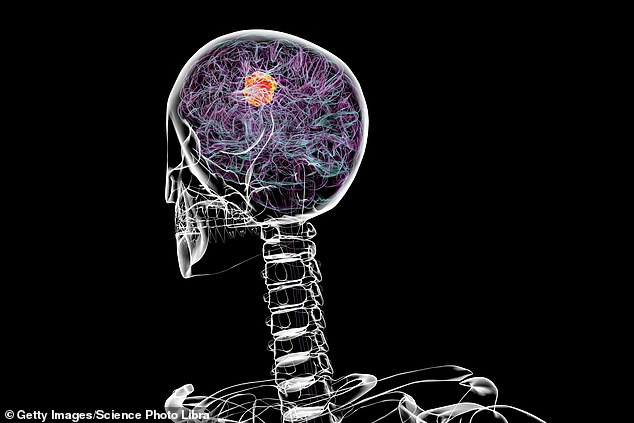

A newly surfaced CIA document suggests US intelligence once reviewed research that hinted at a possible cancer treatment more than 60 years ago.
The document, produced in February 1951 and declassified in 2014, summarizes a Soviet scientific paper that examined striking similarities between parasitic worms and cancerous tumors.
The report describes how researchers believed both organisms thrived under nearly identical metabolic conditions and accumulated large reserves of glycogen, a form of stored energy.
The research also highlighted experiments showing that certain chemical compounds were capable of targeting both parasitic infections and malignant tumors.
One drug, Myracyl D, was reportedly effective against bilharzia parasites as well as cancerous growths, hinting that treatments developed for parasites might also attack tumors.
Other compounds were found to interfere with nucleic acid production, a process essential for the uncontrolled growth of cancer cells.
Experiments on mice even showed that tumor tissues reacted differently to certain chemicals than normal tissues, further reinforcing the perceived biochemical overlap between parasites and cancers.
Although the document was declassified more than a decade ago, it has recently resurfaced online, fueling outrage among some Americans who say it raises troubling questions about why Cold War research hinting at possible cancer treatments sat in intelligence archives for decades.

The document, produced in February 1951 and declassified in 2014, summarizes a Soviet scientific paper that examined striking similarities between parasitic worms and cancerous tumors
‘The Americans knew. They read it, classified it CONFIDENTIAL, and locked it in a vault for 60 years,’ one person shared on X, including the CIA documents in the post.
Another X user said: ‘The CIA knew from 1951 that cancer was parasites.’
However, the document itself does not say cancer is caused by parasites, only that a Soviet study noted biochemical similarities between tumors and parasitic worms and observed that some compounds affected both in experiments.
Daily Mail has contacted the CIA for comment.
The CIA document was based on a 1950 article published in the Soviet scientific journal Priroda by Professor V V Alpatov, a researcher studying the biochemical behavior of endoparasites, organisms that live inside the body of a host.
American intelligence analysts translated and circulated the paper because it was considered potentially relevant to biomedical and national defense research during the early years of the Cold War.
According to the Soviet research summarized in the report, one of the most striking similarities between parasitic worms and cancer cells was their metabolism.
Parasitic worms that inhabit the human intestine rely heavily on anaerobic metabolism, meaning they generate energy without requiring large amounts of oxygen.
Join the debate
Should governments ever keep medical breakthroughs secret?

The research also highlighted experiments showing that certain chemical compounds were capable of targeting both parasitic infections and malignant tumors. One drug, Myracyl D, was reportedly effective against bilharzia parasites as well as cancerous growths
Tumor cells appear to behave in a comparable way, often relying on altered metabolic pathways that allow them to survive in oxygen-poor environments inside the body.
Both parasites and tumors were also observed to accumulate large stores of glycogen, a molecule used by cells as an energy reserve.
This buildup suggested that both types of tissue might operate under unusual metabolic conditions compared with healthy cells.
Researchers classified these tissues as an ‘aerofermentor’ metabolic type, a term used by German scientist Th. Brand, meaning they can produce energy even when oxygen is low, and can also survive in an oxygen-free environment
This dual metabolic ability may help tumors survive in densely packed tissue where the blood supply is limited.
The Soviet scientists also pointed to experimental drugs that appeared to affect parasites and tumors in similar ways.
One example cited in the CIA document was Myracyl D, a compound synthesized in 1938 by German chemist H Mauss.
The drug had already shown effectiveness against bilharzia, a parasitic disease caused by blood flukes. According to the Soviet research, it also demonstrated activity against malignant tumors.
Another compound discussed in the report was Guanozolo, a guanine-like molecule that interferes with the production of nucleic acids, the chemical building blocks of DNA and RNA.

Although the document was declassified more than a decade ago, it has recently resurfaced online, fueling outrage among some Americans who say it raises troubling questions about why Cold War research hinting at possible cancer treatments sat in intelligence archives for decades
In laboratory tests, the substance suppressed nucleic acid synthesis in certain microorganisms as well as in cancer tumors grown in mice.
Because cancer cells require rapid DNA replication to divide uncontrollably, blocking this process can slow tumor growth.
The research also examined how tumors and parasites reacted to a chemical known as atebrin, which exists in two mirror-image forms known as enantiomers.
In most animals studied, the left-rotating version of the compound proved more toxic. But tumor tissues from mice, certain mollusks with left-spiraling shells, and parasitic worms inside frogs were more sensitive to the right-rotating form.
This unusual response suggested that tumor cells and parasites may possess chemically inverted receptors, meaning their molecular structures interact with drugs differently than normal tissues do.
Based on these findings, the Soviet researchers proposed several biological features that tumors and parasites might share.
These included the presence of unique antigens, unusual purine metabolism involved in nucleic acid production, and altered enzyme systems within the cell’s protoplasm.
The scientists theorized that malignancy might arise from chemical changes within the cell’s internal environment, particularly changes affecting enzymes and the proteins that carry them.
The CIA document concluded by noting that ongoing Soviet research into tumor proteins and cancer cell chemistry was considered especially important at the time.
During the early Cold War, American intelligence agencies closely monitored Soviet advances in medicine and biology, fearing that breakthroughs could have implications for both public health and potential biological warfare research.
Although modern cancer science does not treat tumors as parasites in the literal sense, many aspects of tumor biology, including altered metabolism and immune evasion, remain active areas of research today.
The declassified report offers a rare glimpse into the scientific ideas being explored behind the Iron Curtain during the mid-20th century, when researchers were still grappling with the fundamental nature of cancer and searching for clues that might one day lead to effective treatments.