
A woman with ‘rejection sensitivity’ has been awarded £12,000 after complaining her boss told her to ‘stop thinking outside the box’.
Sophie Stone, a neurodivergent events freelancer, was left ‘triggered’ when her boss Julie Knox made a remark along the lines of ‘no thinking outside the box, get back in your box.’
The claimant said she admonished when she asked whether there would be a ‘break-out area’ at the work summer party, in case she got overwhelmed.
Mrs Stone claimed that the comment violated her ‘human right to respect’ because she was being instructed to ‘act neurotypical and don’t rock the boat’.
She has now won £12,000 after successfully suing her company for disability harassment, a type of disability discrimination, and victimisation.
The employment tribunal in Croydon was told Mrs Stone is dyslexic and neurodivergent. She also has ‘rejection sensitivity dysphoria’.
The claimant began her employment with the Events team of MA Business Limited in March 2022. The work was remote but there was an expectation to attend the office in Dartford for at least one day a month.
Mrs Stone was diagnosed with ‘moderate to severe’ dyslexia in 2004, which ‘has more to do with information processing than with reading and writing’.

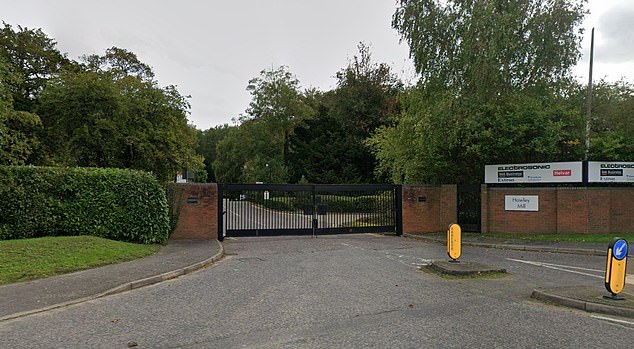
The claimant began her employment with the Events team of MA Business Limited in March 2022. The work was remote but there was an expectation to attend the office in Dartford (pictured) for at least one day a month
Join the debate
Would YOU feel unsafe at work after being told to get back in your work box?
Her ‘relatively poor working memory and very slow information processing’ meant she took four hours to do a task which would take her colleagues no more than two hours.
In December of 2022, an email was sent out to staff inviting them to the company’s annual summer party on June 22.
Mrs Stone responded to the invitation on June 9 requesting that she be provided with a break-out area at the summer party in case she became overwhelmed but did not receive an answer.
At a Teams meeting in between her email and the party, Mrs Stone raised the fact that she had not received a reply with Events Director Mrs Knox, who told her that she shouldn’t have requested it at such short notice.
Mrs Stone got talking with another neurodivergent person known as JS on the Teams call, who suggested that they were going to use their car as a safe space.
At the end of the meeting, Mrs Knox put a stop to a discussion about reasonable adjustments, saying that they were not ‘work-related’.
Mrs Knox said that Mrs Stone and JS were discussing what they would wear and so said ‘that’s enough chat, let’s get back to work’.
But Mrs Stone alleged that their boss told them they should ‘stop being all outside the box’.
This offended Mrs Stone, who emailed another boss that her ‘human right to respect had been violated’.
She wrote: ‘My colleague suggested going and sitting in my car as a possible solution to which Julie responded, “stop being all outside the box and get back in your boxes”.
‘I consider this direct harassment. Ridicule of my neurotype is completely unacceptable and I feel that my human right to be respected has been violated.’
The Tribunal also saw WhatsApp messages between Mrs Stone and her husband showing her distress at the comment.
Mrs Stone told her husband: ‘I’ve been going over the team meeting where Julie said “no thinking out side the box, get back in your boxes” which given that I have no choice in being outside the box is really problematic for me.
‘She is basically saying, mask, act neurotypical and don’t rock the boat.’
The incident was looked into in a grievance procedure, but JS said Mrs Knox’s version of events were correct and that she didn’t remember making the comment.
She said: ‘Never was a sentence said to me using derogative words such as “in your box” or “in your lane”. And certainly not from Julie.’
But the Employment Tribunal found that this comment did in fact take place and that it was ‘unwanted conduct’ – even saying it added ‘far less weight’ to JS’s evidence because they did not attend the Tribunal.
Employment Judge Kathryn Ramsden said: ‘We found that Mrs Knox said something like “get back in your work box”, attempting to switch (Mrs Stone’s) mindset from being focused on the summer party and adjustments related to that, and back to the workload in front of her.
‘In doing so we have given far less weight to JS’s apparent account, as whilst we heard evidence from Mr Allen that that is what JS said, we have not been able to question JS about it.
‘Moreover, (Mrs Stone) tells us that JS’s first language is not English, and so the connotations of “getting back in the box” for a neurodivergent person might not be picked up on by a person whose first language is not English, and so might not be remembered by them two months after the meeting.’
She continued: ‘We have found that Mrs Knox said to Mrs Stone and JS words along the lines of “get back in your work box”.
‘This was unwanted conduct – it clearly distressed her greatly, as shown by her WhatsApp to her husband when she was still thinking about, and was very distressed about, it two days later.
‘It did relate to disability – Mrs Knox was trying to get Mrs Stone and JS to stop talking about reasonable adjustments for the summer party, and switch back into “work mode”.’
The judge added: ‘We find that Mrs Knox’s purpose was very far from seeking to violate (Mrs Stone’s) dignity, or create an intimidating, hostile, degrading, humiliating or offensive environment for her – it was to try and get her, and JS, to get on with their work, and to bring the team meeting to a close to enable others to do so as well.
‘However, we do find that it had the proscribed effect. (Mrs Stone) is neurodivergent and, she says, has rejection sensitivity dysphoria. Being effectively told that she was “outside the box” in discussing reasonable adjustments was understandably triggering for her.’
Mrs Stone won a claim disability harassment related to the comments.
She also won claims of failure to make reasonable adjustments – which is disability discrimination – over a failure to help her with software and victimisation over an email.
She was awarded £12,000 by the Tribunal. Further claims were dismissed.







!['Tony & Ziva' Bring the Laughs in New Gag Reel From Cancelled 'NCIS' Spin-Off [Exclusive]](https://citigist.com/wp-content/uploads/2026/01/Tony-Ziva-Bring-the-Laughs-in-New-Gag-Reel-260x140.jpg)