
With a major funding deficit compared to Democrats and a slow-to-start get-out-the-vote operation underway, Virginia Republicans say anti-gerrymandering sentiment and a polarizing Barack Obama will help them defeat Democrat efforts to rig the congressional map.
In a Monday briefing organized by Virginians for Fair Maps, a group co-chaired by former Rep. Eric Cantor, R-Va., and former Republican Attorney General Jason Miyares, and hosted by Republican Party of Virginia Chairman Jeff Ryer, Republican strategists said the Democrats’ plan to garner support will backfire among independents and Republicans.
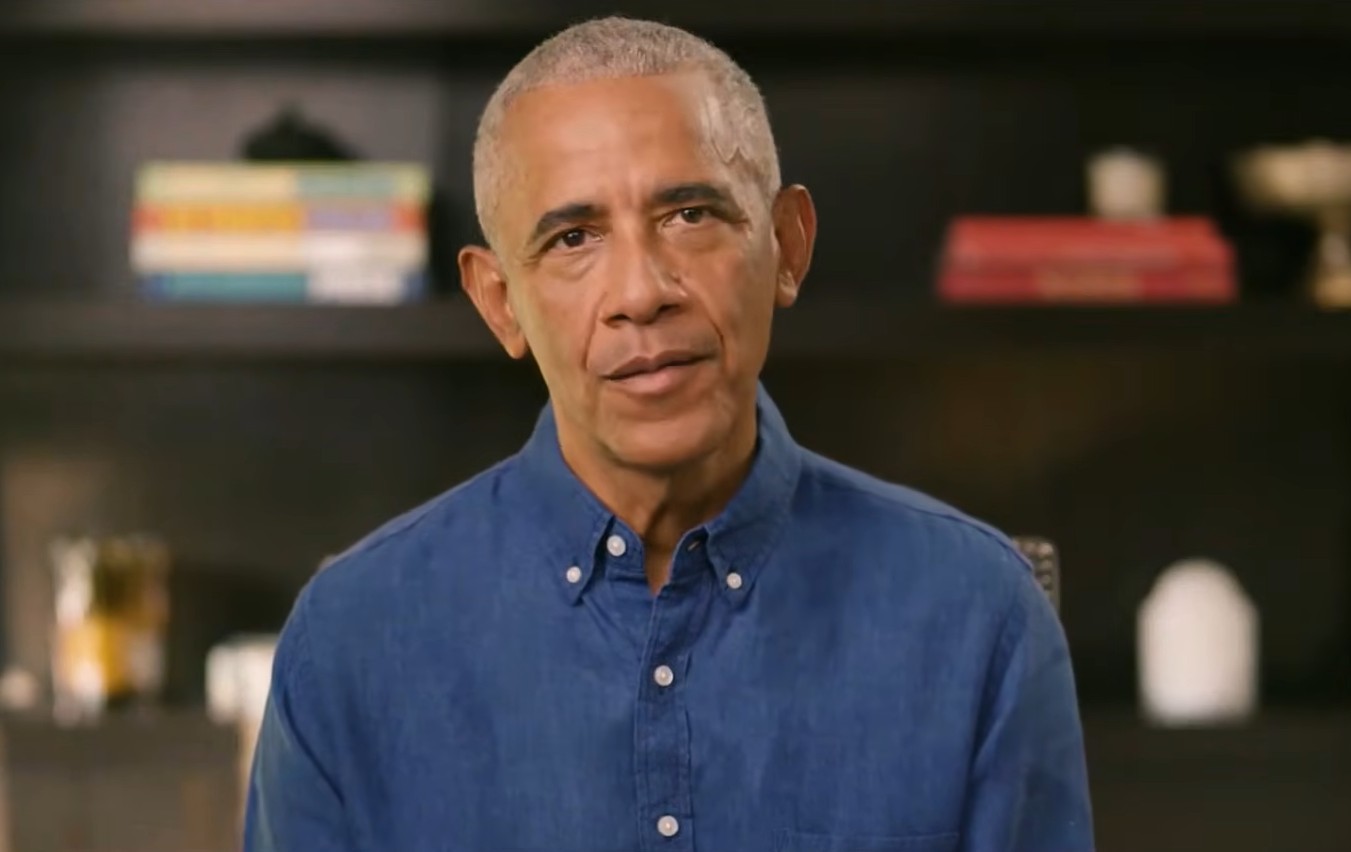
Grafting in people like Obama, who is at the center of constantly-running, pro-gerrymander ads, will polarize many across the state, the strategist who spoke on background said, because his approval rating among Republicans is essentially nonexistent.
He added that Obama’s involvement also signals the highly partisan nature of the referendum to independents who do not necessarily want their U.S. congressman decided by the handful of highly populous, deep-blue counties in the commonwealth’s northern D.C. suburbs.
The referendum — which would take Virginia’s congressional delegation of six Democrats and five Republicans and transform it into a delegation of 10 Democrats and only one Republican — links some of the most Republican counties in the rural central and southern parts of the commonwealth with the far-away D.C. metropolis. D.C.’s growing leftist influence has been a growing source of consternation for the rest of Virginia for decades.
But the fight against the gerrymander is still an uphill battle.
As The Federalist’s Shawn Fleetwood reported, pro-gerrymander group Virginians for Fair Elections is flush with Democrat dark money cash, having received somewhere between $33 million and $38.3 million.
Top groups giving them the millions are House Majority Forward, a group with ties to House Minority Leader Hakeem Jeffries, D-N.Y., and the George Soros-linked Fund for Policy Reform Inc., among others. On the other side of the coin, Virginians for Fair Maps has received $3 million.
That disparity translates to the kinds of ads in which Obama and others star, with the pro-gerrymander side outpacing the anti-gerrymander side in ad expenditures by a 14-1 margin.
Perhaps the massively disproportionate number of ads will backfire as predicted by Republican strategists in the call, but anyone who watches television or YouTube in Virginia will attest to the barrage of pro-gerrymander ads, which will likely appear compelling to many low-information voters.
As The Federalist reported, the Republican National Committee (RNC) initially was slow to help the grassroots effort opposing the gerrymander, apparently relying on lawsuits to try to stop the vote from taking place from the start.
That appears to have changed as the vote got underway starting March 6, and the RNC came in “to help underwrite our field staff, which we’ve increased and added several members,” Ryer told The Federalist.
The antics of Gov. Abigail Spanberger, D-Va., pose an additional slight to independent and conservative Virginians, the Republican strategist said. She has broken from a decades-long Virginia tradition of campaigning as a centrist and then continuing to be a centrist upon entering office, he added, which has resulted in a declining approval rating since entering office.
The circumstances have forced Democrats to pull together their electoral coalition from the 2025 election, essentially telling Democrats to vote for the overtly Democrat position, as opposed to making a case to a wider electorate.
At the same time, the Republican strategist said, the campaign opposed to the referendum sees signs that Democrats and independents are wary of the idea of reversing their 2020 referendum vote to create a nonpartisan commission to draw congressional maps. Moreover, some Democrats are worried that the safe blue district in which they currently reside would be more competitive in future elections under the new map, as the large Democrat majority is necessarily watered down by shoehorning in Republican voters.
But there has also been some recent polling that is concerning for the campaign opposing the gerrymander. A recent Heritage Action poll taken among likely Virginia voters between March 20 and 24 shows good numbers for Virginians opposing “gerrymandering” (76 percent) and maps that “disproportionately favor one political party over another” (61 percent), generally.
When presented with the misleading ballot language alone, however, those numbers start to break down. Among Democrats, Republicans, and independents, 45 percent still say they would support the gerrymandering referendum. Only 36 percent oppose, meaning a “no” vote is underwater. That was even after 50 percent of respondents said the language was “confusing,” while 38 percent said it was “clear.”
Responding to a question from The Federalist about that concern, the Republican strategist said that the Heritage Action poll does not match any other survey he had seen, and noted that support for the referendum was still under 50 percent.
He also said that the “yes” side of referendum votes typically bleed off over the course of the campaign, because people naturally want to say “yes” to things anyway, but once more information is spread about what that means, voters lose interest. That is why, he said, the “no” strategy has been to educate voters early, stratifying their focus on voters believed to be likely early voters first, and then turning focus to those who will vote later in the voting season, or on the April 21 Election Day itself.
As for the Republican strategy, Ryer said, “We have a very united front in Republican world.”
“Although we’re being heavily outspent, and we are, our efforts are very targeted, and so far, we feel very successful as far as moving and motivating voters,” he added.
As The Federalist reported, Virginia will test the resolve of the Republican Party’s ability to get out the vote, post 2024.
Ultimately, Ryer noted on the call, “It’s not going to be a television ad that wins the day. It’s going to be that person-to-person contact that ends up putting us over the top. So we’ve engineered our campaign that way.”
Breccan F. Thies is the White House correspondent for The Federalist. He is a co-recipient of the 2025 Dao Prize for Excellence in Investigative Journalism. As an investigative journalist, he previously covered education and culture issues for the Washington Examiner and Breitbart News. He holds a degree from the University of Virginia and is a 2022 Claremont Institute Publius Fellow. You can follow him on X: @BreccanFThies.