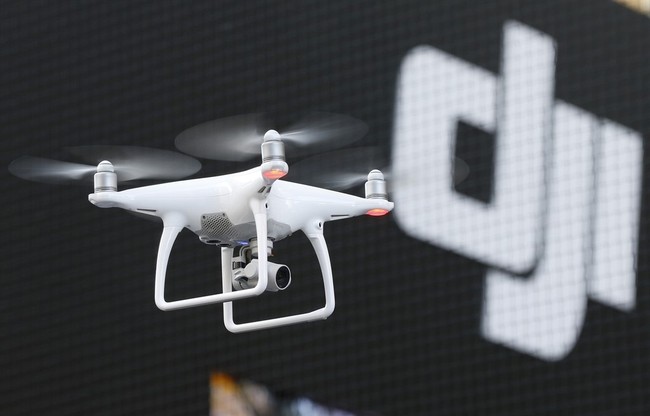


The Federal Communications Commission (FCC) recently announced that it was adding foreign-produced unmanned aircraft systems (UAS) and drone components to its Covered List, effectively banning all new drone models from being imported into and sold in the U.S.
The FCC acted pursuant to Section 1709 of the 2025 National Defense Authorization Act (NDAA) that directs agencies to review certain UAS technologies that pose potential national security risks.
READ MORE: Massive Military Funding Package Passes Senate
This decision is a major win for American national security and the domestic drone industry. It impacts Chinese drones, including DJI, which dominates U.S. drone sales. Securing America’s UAS supply chain is something that should have been done years ago, before these devices flooded our market.
Reacting to the FCC’s decision, DJI said that it was “disappointed” and was unclear about “what information was used by the Executive Branch in reaching its determination.” The company then went on to state that the FCC’s “concerns about DJI’s data security have not been grounded in evidence and instead reflect protectionism, contrary to the principles of an open market.”
To our U.S. community and everyone who has been following developments in the U.S. and speaking up – thank you. Your support means a lot. We remain committed to our U.S. customers and are actively exploring paths forward. Thank you for standing with us. #DroneAdvocacy #FCC #dji pic.twitter.com/WtZwFQavB0
— DJI (@DJIGlobal) December 23, 2025
A Chinese Ministry of Foreign Affairs spokesperson also responded:
Reuters: The Federal Communications Commission of the U.S. said on Monday it is adding China’s DJI to a list of companies determined to pose unacceptable risks to U.S. national security and will bar approvals of new types of drones for import or sale in the United States. Does the Foreign Ministry have any comment?
Lin Jian [Ministry of Foreign Affairs spokesperson]: China firmly opposes the U.S. overstretching the concept of national security and making discriminatory lists to go after Chinese companies. The U.S. should stop its wrong practice and create a fair, just and non-discriminatory environment for Chinese companies.
It is telling that DJI chose to use protectionism, Beijing’s favorite word, in its response. Earlier in the year, China’s State Council Information Office put out a long white paper criticizing what it referred to as years of American “unilateralism, protectionism, and economic bullying” and accused Washington of violating World Trade Organization (WTO) rules.
This is a bit rich coming from the country that steals intellectual property to bolster its military-industrial base and replace foreign competitors, uses economic coercion, engages in dumping and illegal transshipment, heavily restricts market access, and manipulates its currency. China has consistently failed to meet its WTO commitments.
The FCC’s ban on foreign-made drones and drone parts has everything to do with national security.
China’s national security laws compel all Chinese nationals and companies — especially in the tech sector — to cooperate with state intelligence agencies and grant officials access to data to advance national interests, such as Beijing’s military-civil fusion strategy.
Federal agencies have warned that Chinese drones could collect and transfer sensitive data, like user information and confidential details from law enforcement agencies, back to manufacturers in China. The Chinese Communist Party can use these drones to map our entire country, including critical infrastructure, and pinpoint the whereabouts of civic leaders. These drones could be leveraged by Beijing to gain unauthorized access to systems and carry out distributed denial-of-service attacks.
It’s concerning that some law enforcement agencies have drone fleets entirely made up of DJI products. Their response to the ban — complaining about costs and inconvenience — reveals a troubling disregard for underlying national security concerns.
The FCC’s designation also aims to revive the American drone sector. It essentially forces an end to our dependence on Chinese and other foreign manufacturers and stimulates domestic production and innovative solutions. It may take some time to catch up, but it will sure be worth it.
Skydio, BRINC Drones, and other American UAS producers are set to benefit from this decision immensely. BRINC applauded the ban.
This was a historic decision that will change everything for U.S. drone manufacturers. BRINC and our peer companies are ready to meet the call for service to rebuild the American drone industry. https://t.co/63IT3IkQIO
— BRINC Drones (@BrincDrones) December 22, 2025
In June, President Trump signed an executive order to boost American drone development and production. Then, in early December, the Department of War unveiled the $1 billion Drone Dominance Program to acquire about 340,000 drones in the next couple of years. The administration understands that drones will play an increasingly central role in public safety and warfare (look no further than Ukraine or China’s giant drone carrier, the Jiu Tian).
SEE ALSO: China’s Giant New ‘Flying Aircraft Carrier’ Completes Debut Flight
How things move forward is yet to be seen, but the signs are very promising. DJI and other Chinese drone companies deserve the Huawei treatment.
But consistency matters, too. The same measures taken against DJI and other foreign UAS manufacturers should be applied to TP-Link, a Chinese network equipment company with a 65 percent share in the U.S. router market. TP-Link has been under investigation for over a year, and reports indicate that multiple agencies are in favor of banning these devices. Now, all the Trump administration needs to do is make it happen.
Editor’s Note: Do you enjoy RedState’s conservative reporting that takes on the radical left and woke media? Support our work so that we can continue to bring you the truth.
Join RedState VIP and use the promo code MERRY74 to receive 74% off your membership.